

Luxury Italy vacation: Venice, Florence & Rome, 13 days
Part of our luxury Italy trips.
Five in the afternoon in San Polo, and the day visitors are filing back toward the cruise terminal. The osterie are putting their cicchetti out on the counter. You order a spritz and drink it standing up, the way Venetians do, and the city you were warned was overrun has quietly handed itself back to you.
This is the trip I love designing most.
Thirteen days, three cities, and the pace changes with each one. Venice first, because nothing opens a trip better: three days in the maze, the Doge's Palace and the gold mosaics of the Basilica, a boat out to Murano where a glassblower works the furnace the way his grandfather did, and Burano, where the houses were painted bright so fishermen could find their way home through the fog. Then Florence, and five days of Tuscany that include a full day through the Chianti hills in a vintage Fiat and an afternoon tasting Brunello and Nobile where they are made.
Rome last, because Rome is the hardest to leave: the Colosseum, an evening through Trastevere eating your way from counter to counter, and the morning you will still be describing years from now, standing in the Sistine Chapel ninety minutes before it opens to anybody else, then out to the papal summer estate at Castel Gandolfo to cook lunch with produce from the Pope's own farm.
Every detail is handled: the transfers, the guides, the hotels, the reservations, the route. You just show up and live it. Picture yourself here. Tell me what you love, and I'll design the rest. Start with the planning form below.
Photo: classic canal view in Venice, Italy
Photo©: Anna Fishman / Olegana Travel Boutique
What’s included?

Photo: Venice Canals, Italy.
Photo©: Anna Fishman / Olegana Travel Boutique
Included
Private airport transfers, with a representative meeting you at arrivals to help with luggage
12 nights of boutique hotel accommodation with breakfast throughout
First-class high-speed rail between Venice, Florence and Rome, with private transfers to and from every station
Private guided walking tours in all three cities with dedicated local guides
An evening food and wine walk through three neighborhood osterie in Venice, with drinks at each stop
The Doge's Palace and St Mark's Basilica with a private guide
A gondola serenade through the back canals
A half-day private boat trip to Murano and Burano, including a working glassblower's studio and a lacemaking workshop
A Venetian carnival mask workshop, where you decorate your own
A gelato and pizza making class in Florence
A full day through the Tuscan countryside in a vintage Fiat
A full-day private tour of Chianti, Siena and San Gimignano
Brunello and Nobile wine tastings at the estates where they are made
An evening tour of Rome by Ape Calessino
A theatrical walking tour of Rome with costumed actors
Ancient Rome and the Colosseum with a private guide
The Vatican Museums, Sistine Chapel and St Peter's Basilica ninety minutes before public opening
A day at Castel Gandolfo: the papal summer residence, the private apartments, the Barberini
Gardens, and a hands-on cooking class on the estate using produce from the papal farm
A Trastevere food tour
Curated restaurant recommendations and reservations throughout • 24/7 concierge support and emergency contact
Not included
International airfare, travel insurance (quoted separately through Travel Guard), meals at leisure, personal expenses, tips and gratuities, and city tourist taxes payable directly at the hotels.
Ready to start planning?
Tell me about your travelers and what matters most. I'll build from there.
How many days do you need for Venice, Florence and Rome?
Thirteen days is the right length for all three without rushing. Three days in Venice, five in Florence and Tuscany, four in Rome, and a travel day home. Ten days works if you cut the Tuscan countryside down to a single day trip. Fewer than nine and you spend more time changing hotels than seeing anything. With more time, add the Amalfi Coast or Umbria after Rome.
Your day-by-day itinerary
This sample itinerary was designed around the three cities most people mean when they say Italy. It's here to inspire, not to lock you in. You might pick a few pieces and let me build something different around them. Your trip is yours, and we'll customize every detail until it fits.
Day 1
Venice, and an evening that starts when everyone else leaves
You land, and someone is waiting past customs to take your bags and get you to your hotel without you having to work out a single thing about Venetian transport. Sleep if you need to. The day really begins at five, in San Polo, which is where the food walk starts and where almost no day visitor ever gets to. Three osterie, in order: cicchetti first, the small plates Venetians eat standing up, calamari and salami and grilled polenta. Then a basket of fried seafood somewhere smaller. Then risotto, hot, at a counter with no English menu. There is prosecco from the tap at the first stop and a spritz at the last, and your guide is a local who eats here, not a performer. Come hungry. The walk back to the hotel afterwards, through a city that has emptied out, is the part people remember.
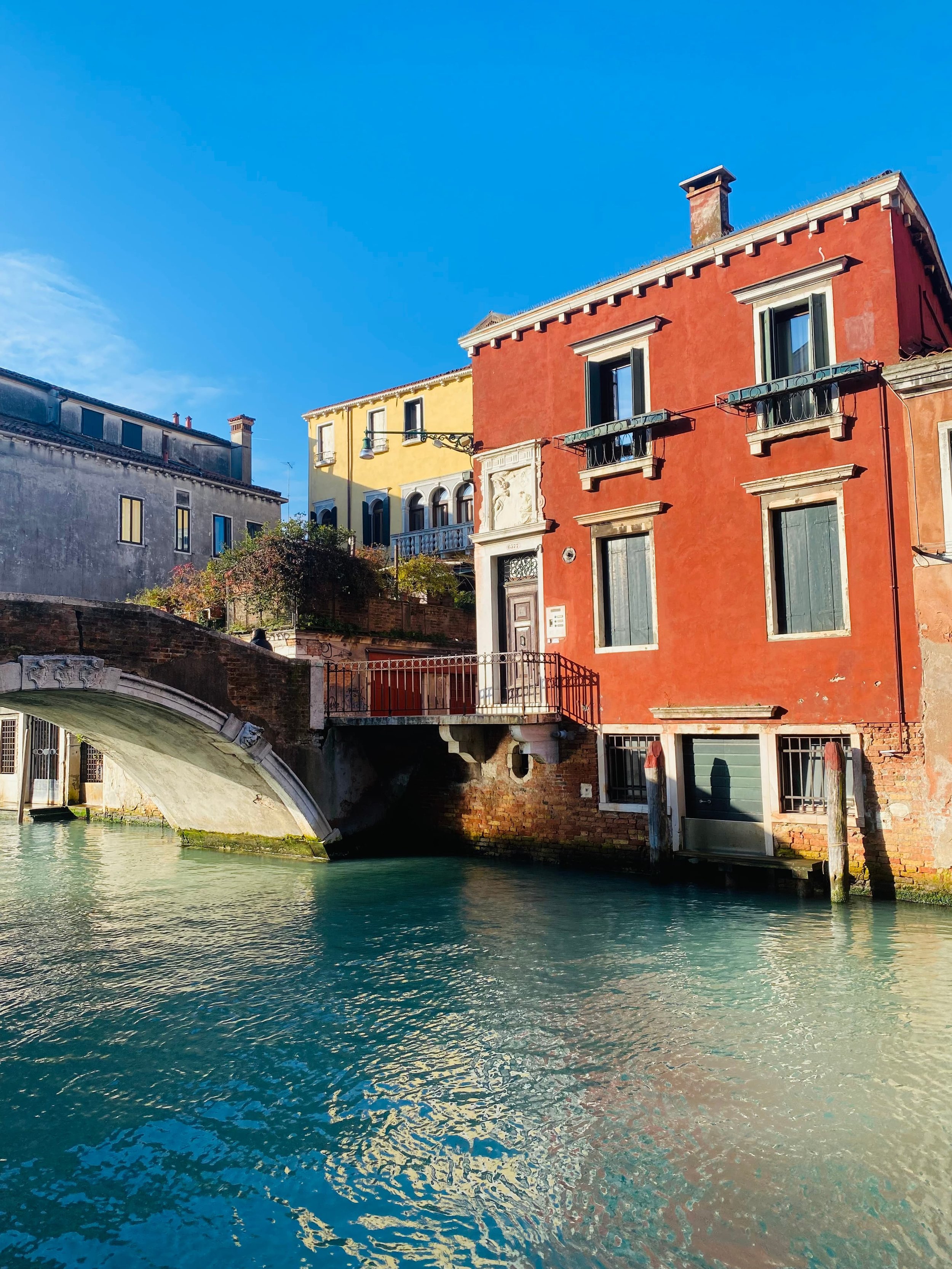
Photo: A scenic canal in Venice, Italy
Photo©: Anna Fishman / Olegana Travel Boutique
Day 2
The Doge's Palace, the Golden Basilica, and a gondola at dusk
A full morning with a guide through the Venice that made the money. Piazza San Marco first, then the Basilica, where the gold mosaics cover four thousand square metres of ceiling and the light changes what you see depending on when you stand there. Then the Doge's Palace: the council chambers, the armoury, the Bridge of Sighs, and down into the prisons on the other side of it, which is a short walk and a very long drop in standard of living. In the afternoon you walk on your own, past Marco Polo's house and through the Mercerie. The gondola comes at dusk, with a singer aboard, through the back canals rather than the Grand Canal, because the back canals are quiet and the sound carries off the walls.
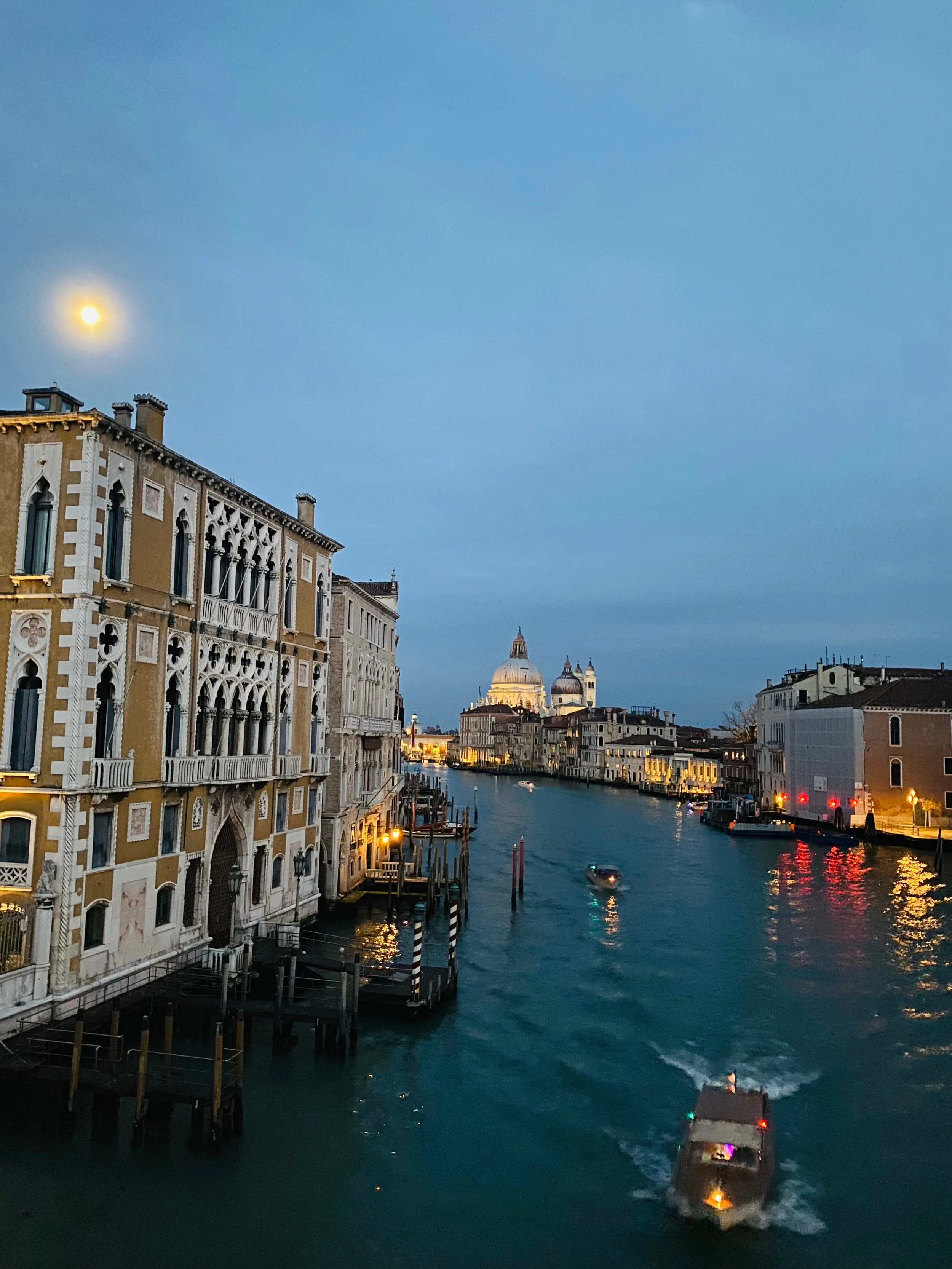
Photo: Venice’s Grand Canal from Ponte dell’Accademia
Photo©: Anna Fishman / Olegana Travel Boutique
Day 3
Murano, Burano, and a mask you made yourself
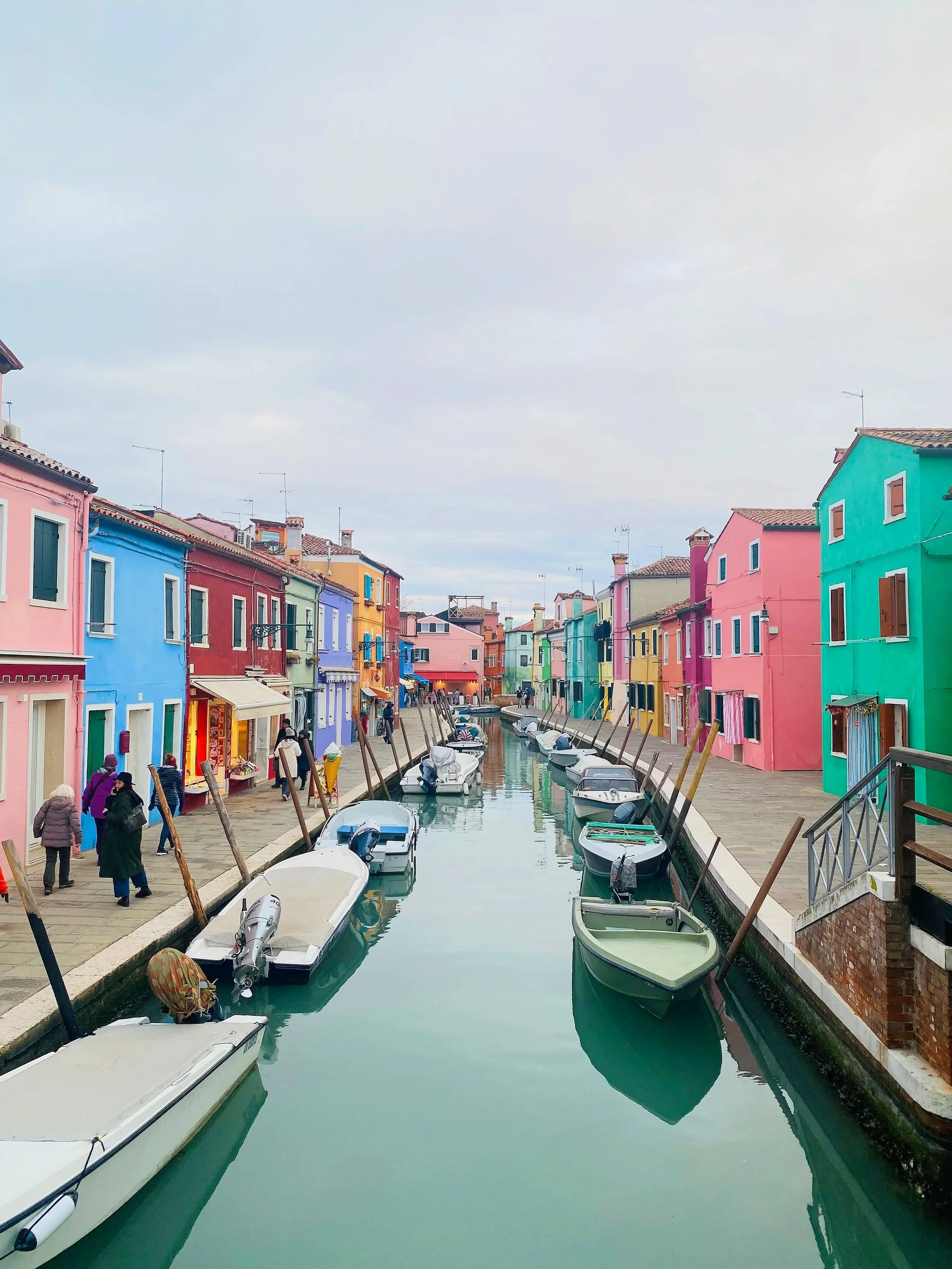
A boat out across the lagoon in the morning. Murano first, to a working glassblower's studio, not a showroom: a craftsman at the furnace, doing what he does every day, explaining what gives the glass its colour and which part of the job still defeats him. Venetian glassblowers were once forbidden to leave the city on pain of death, because the secret of making a mirror was worth that much. Then Burano, which is lace and painted houses, each one a different colour. You will watch women stitching the way their grandmothers did, slowly, on patterns that take months. Back in Venice in the afternoon, you decorate a carnival mask in a studio with the paints in front of you. It sounds like a small thing. It is the thing that ends up on the shelf at home.
Photo: Colorful houses line a canal in Burano, Venice, Italy
Photo©: Anna Fishman / Olegana Travel Boutique
Day 4
Florence, and a kitchen to arrive in
Out of Venice in the morning on the high-speed train, which covers Venice to Florence in a little over two hours and spends most of them at three hundred kilometres an hour. Florence is a shock in the best way: after three days of water and silence, a city with streets and traffic and the Duomo appearing at the end of them. Settle in, walk the centro storico, and get your bearings before dark.
The afternoon is hands-on. A gelato and pizza class, which sounds like the thing you do with children and turns out to be the thing everyone fights over, because making gelato properly is harder than it looks and the pizza comes out of a real oven. You eat what you made. If cooking is the actual reason you are going to Italy, tell me on our call, because I also run an Italian cooking retreat and it may be the better fit.
Photo: The ancient Roman ruins at Pompeii, Italy
Photo©: Henrique Ferreira / unsplash
Day 5
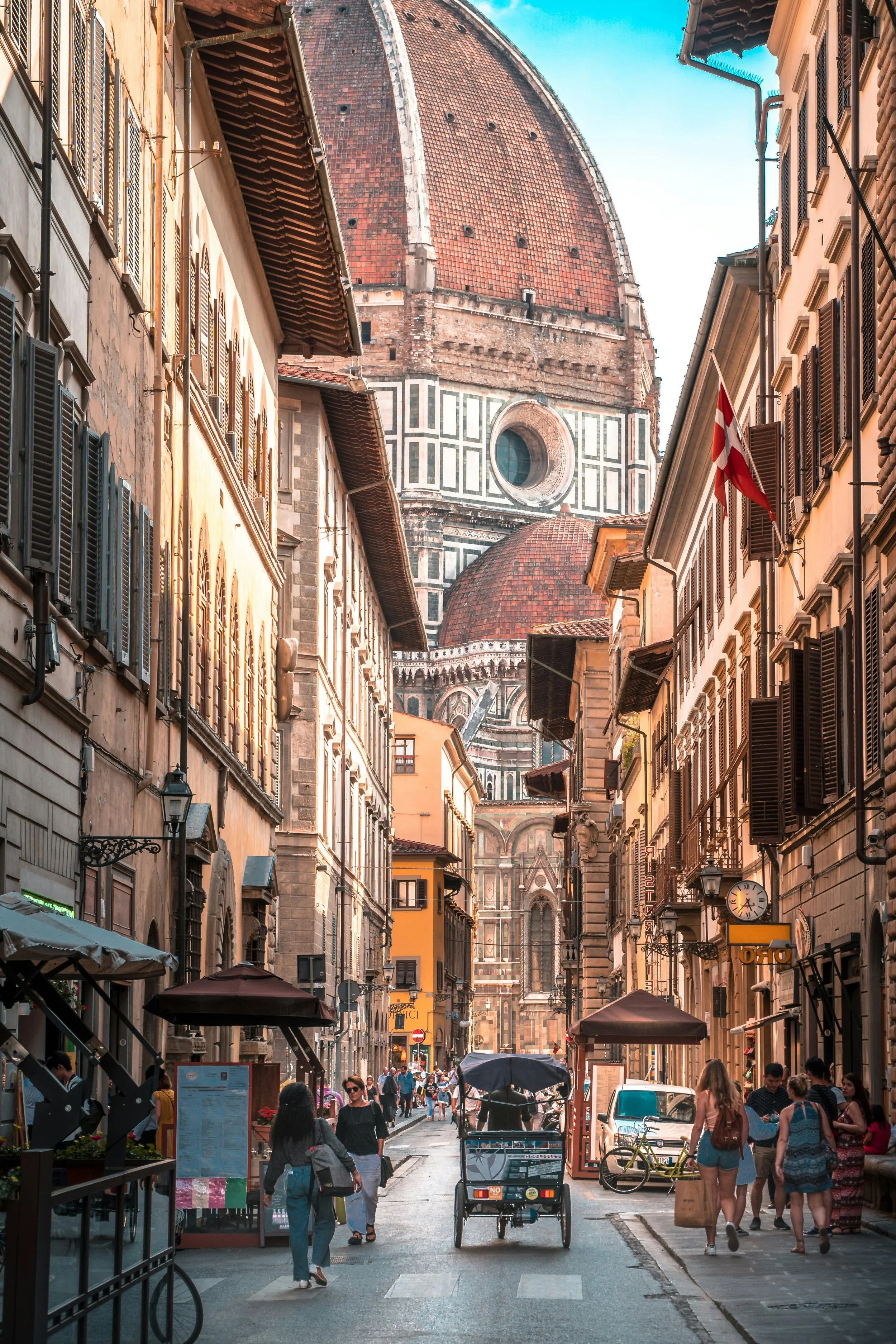
Florence in a day
The city with a guide, done properly and in the right order, which matters more in Florence than almost anywhere. The Duomo and the climb if you want it, the Baptistery doors, the Accademia for the David, and the Uffizi, timed so you are inside before the queue builds rather than standing in it. The afternoon loosens. Cross the Arno into the Oltrarno, where the workshops still are: gilders, leatherworkers, restorers, people doing by hand what the city has done by hand for six hundred years. Climb to a terrace for the view back over the rooftops at the end of the day. Dinner is somewhere I will have booked, and it will not be on the main square.
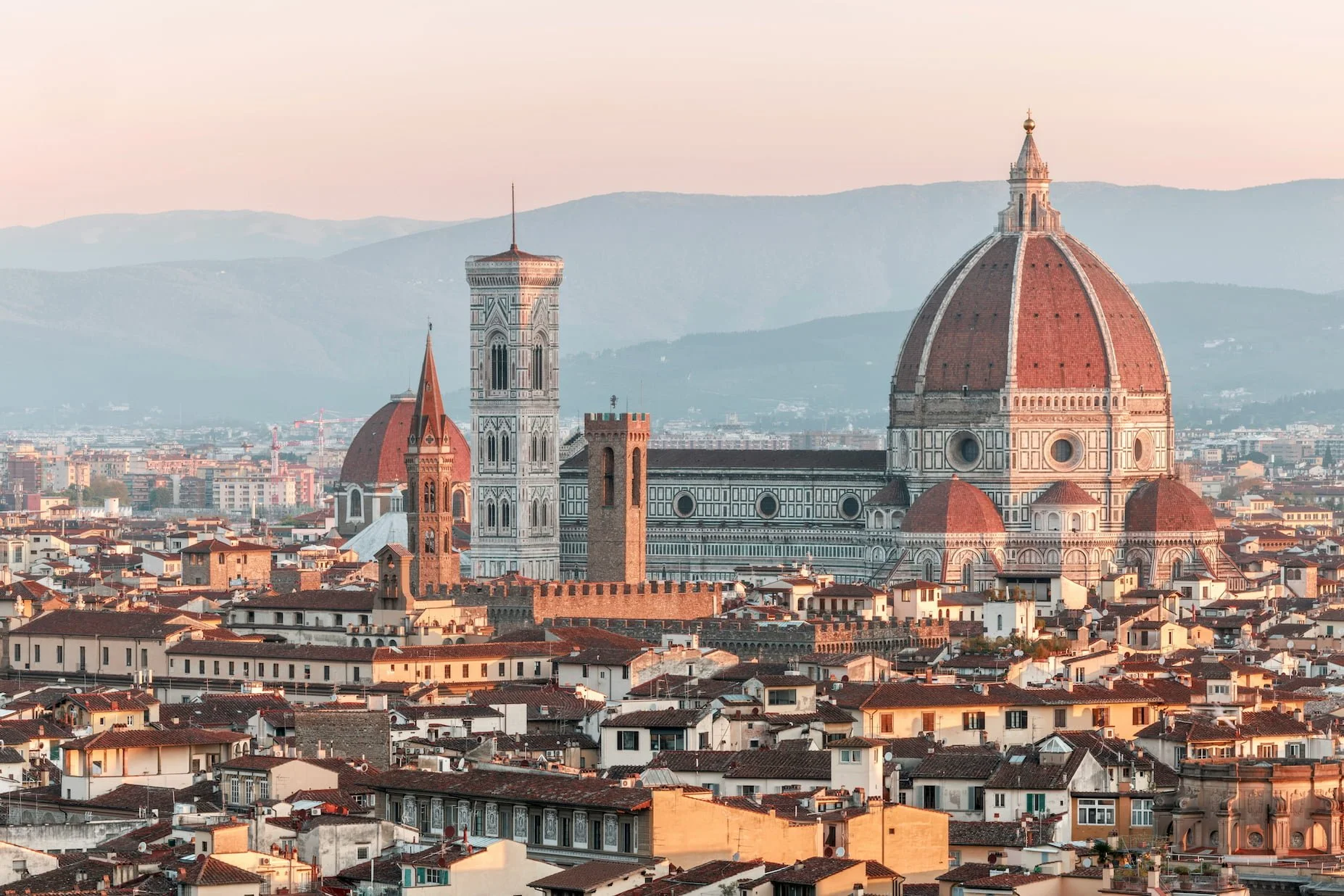
Photo: Florence Cathedral, also known as the Duomo, and the historic streets of Florence, Italy.
Photo©: Pretty Pink / unsplash
Day 6
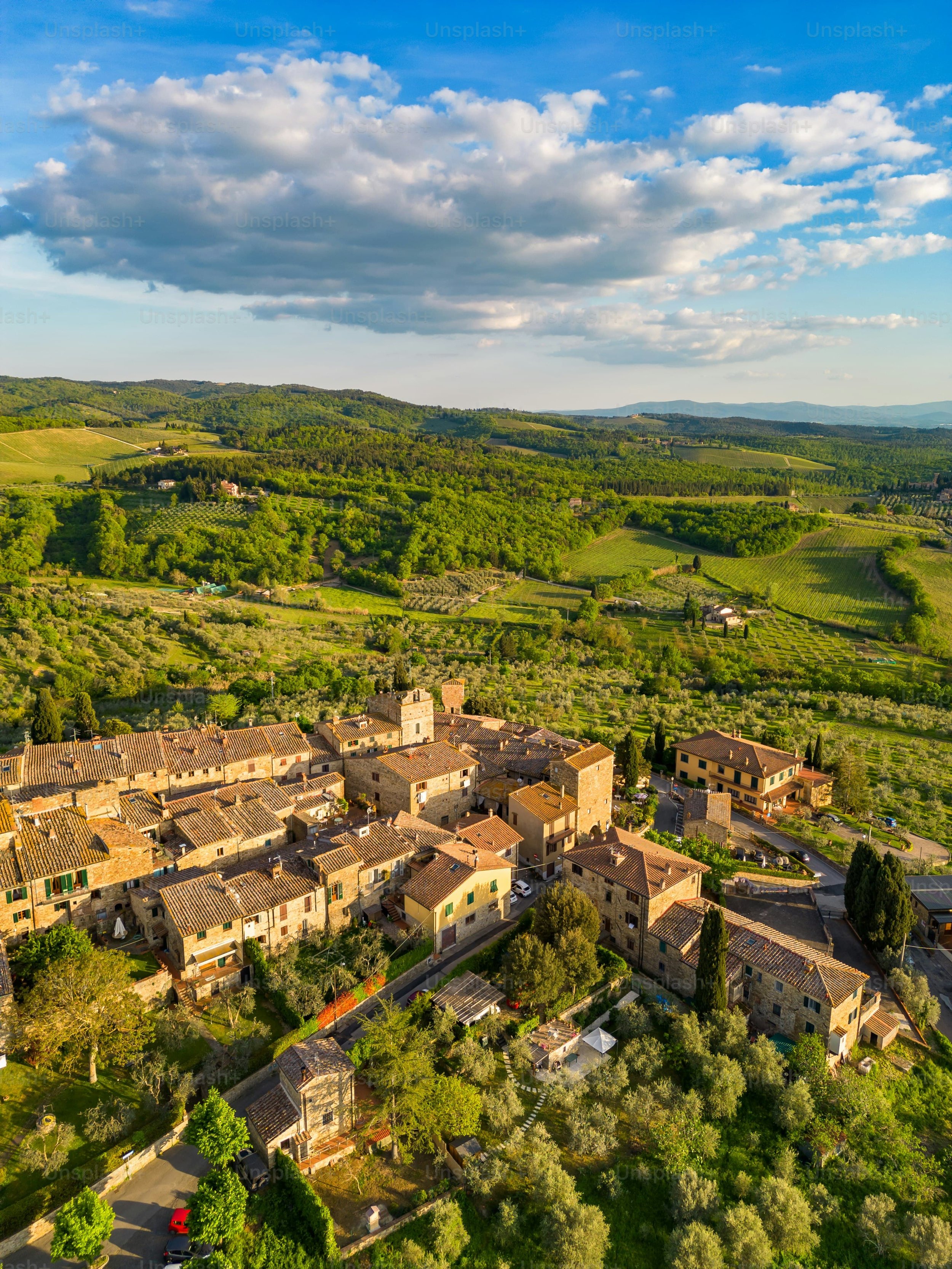
The Chianti hills in a vintage Fiat
The whole day in a 1960s Fiat 500, windows down, in convoy through the Chianti hills. It is not fast and that is the point. The road is narrow, the cypresses do the thing cypresses do, and you stop when something is worth stopping for. There is lunch at an estate along the way, and the car is yours to drive if you want it, or not if you would rather look out of the window. This is the day people are most sceptical about when they read the itinerary and most attached to when they get home. It is also where the best photographs of the trip come from, which I say as someone who has stopped pretending that does not matter.
Photo: San Donato in Poggio, a medieval hilltop village in Tuscany’s Chianti region, Italy
Photo©: Getty Images / unsplash
Day 7
Siena, San Gimignano and the Chianti road
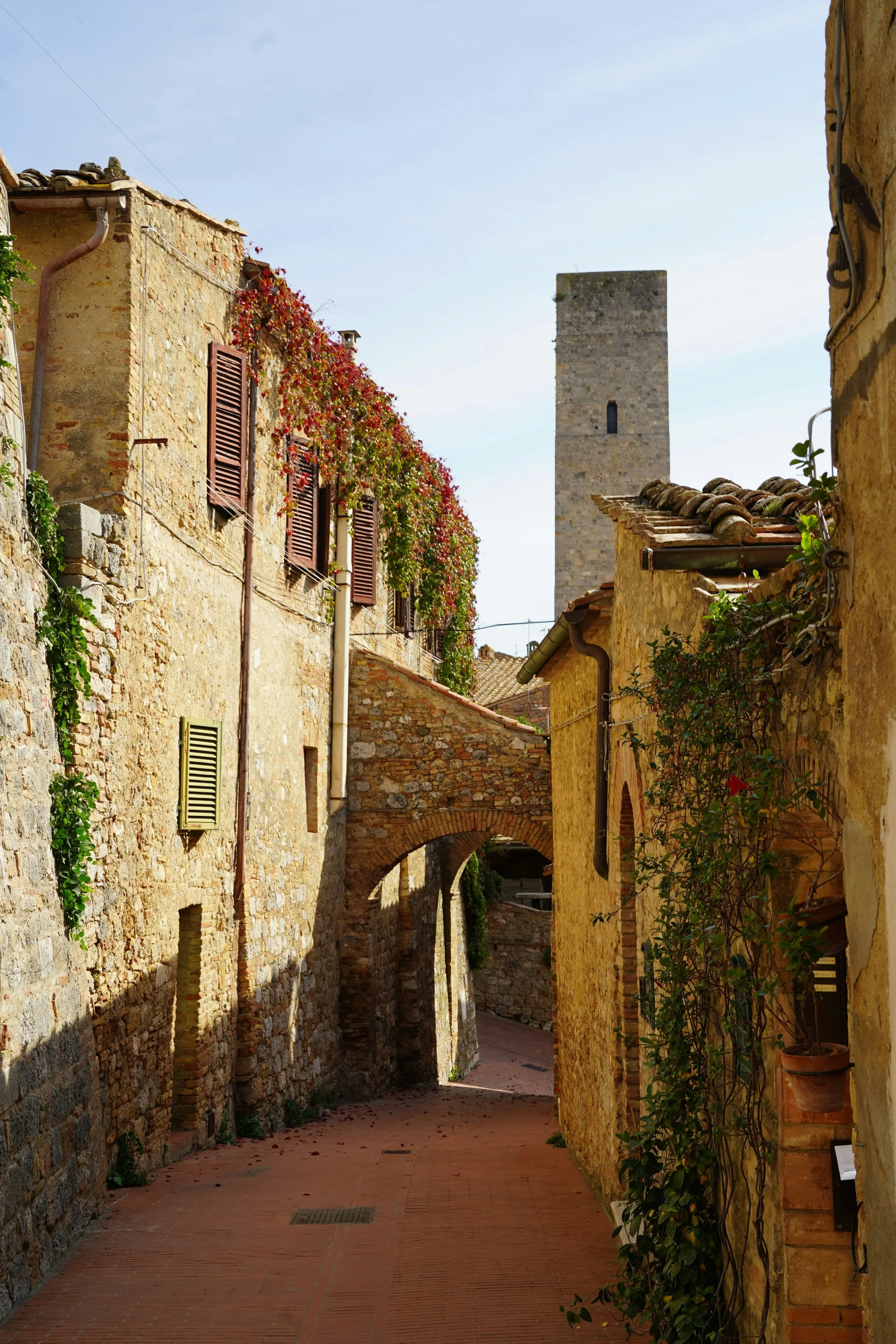
A full day out with a private driver and guide. Siena first, where the Campo is a shell-shaped slope that fills twice a year for the Palio and sits almost empty the rest of the time, and the cathedral has a floor of inlaid marble that most people walk across without looking down. Lunch somewhere in the hills. Then San Gimignano in the afternoon, with its towers, which were medieval status symbols built by families competing to be taller than each other and which look from a distance like a small Manhattan built in stone. Wine along the way, at an estate rather than a tasting room. You are back in Florence for dinner, late.
Photo: San Gimignano, a medieval hilltop town in Tuscany, Italy
Photo©: Shpëtim Ujkani / unsplash
Day 8
Brunello and Nobile, where they are made
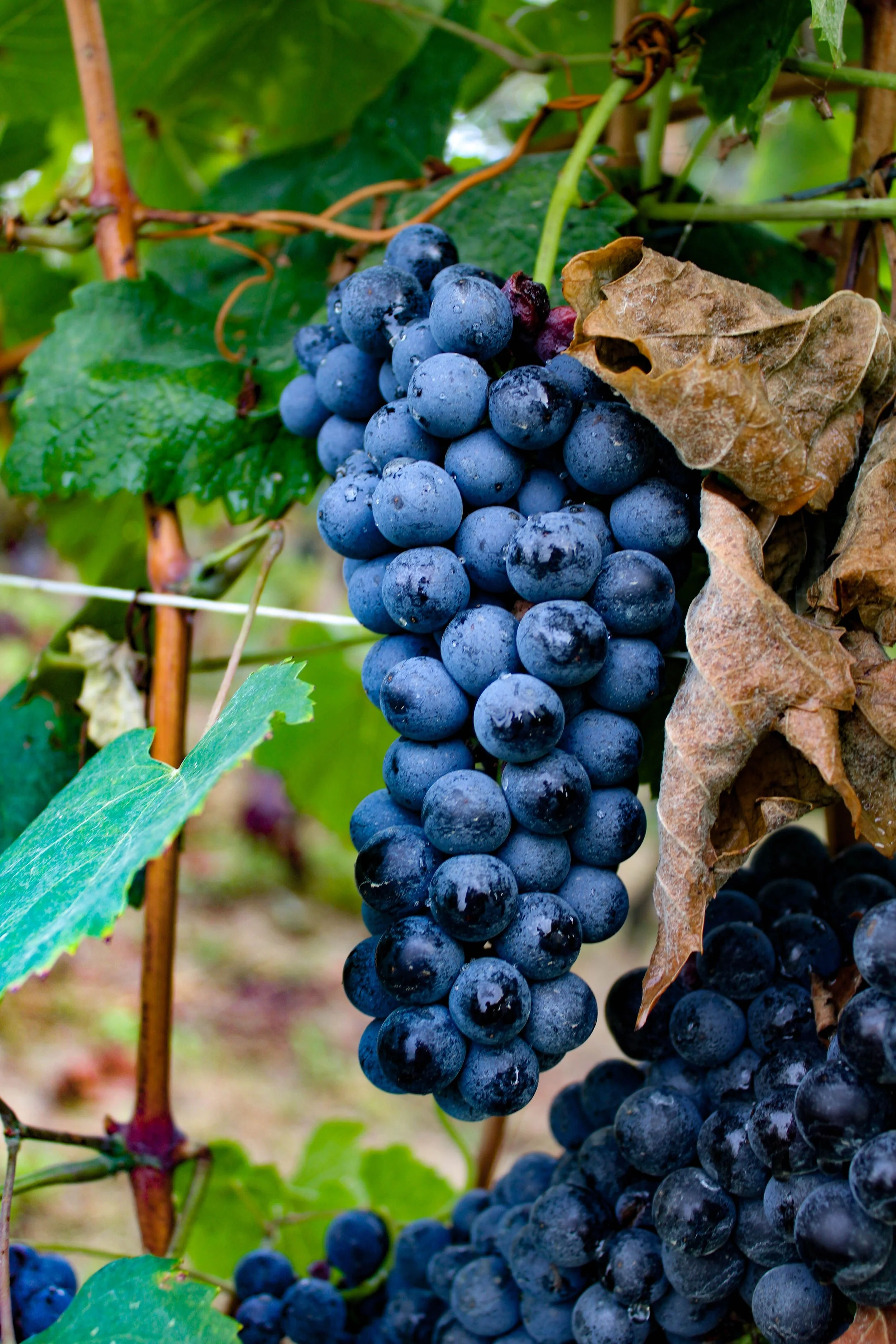
South into the Val d'Orcia, which is the Tuscany that sells calendars and happens to also be real. Montalcino for Brunello, which needs five years before it is released and rewards every one of them, tasted in the cellar where it ages rather than at a counter. Then Montepulciano, up on its ridge, for Nobile. These are two of the great wines of Italy and they are made ten miles apart by people who will tell you, at length and with feeling, why theirs is the better one. Lunch between the two, long, at a table with a view over the valley. If wine is the reason you came, this is the day the trip was built around.
Photo: Ripe grapes in Montepulciano, Tuscany, Italy
Photo©: Filippo Pinsoglio / pexels
Love what you're reading?
This is a sample. Tell me about your travel style and I'll build your Italy trip from scratch.
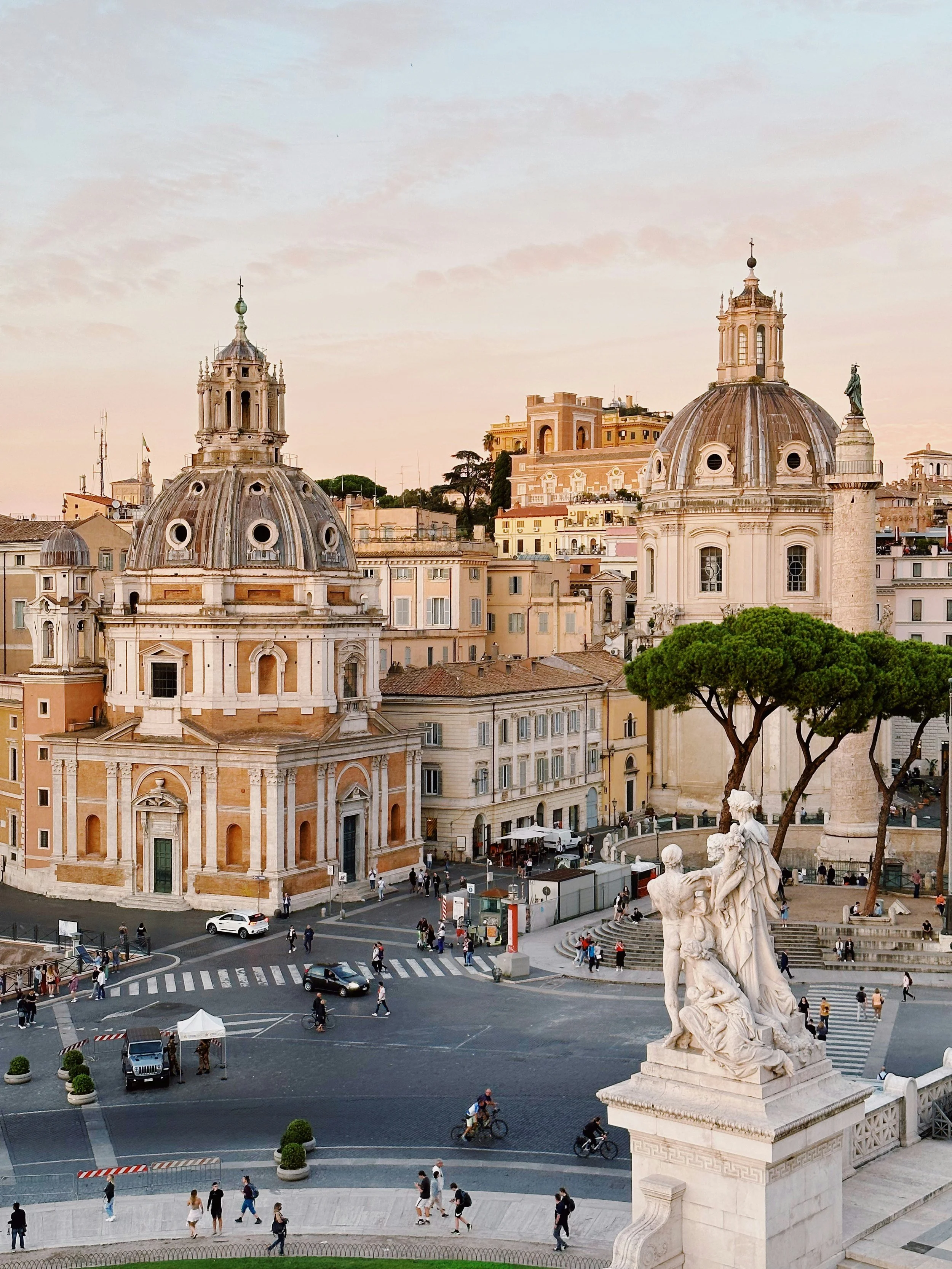
Day 9
Rome, and the city after dark
South out of Tuscany on the high-speed train, Florence to Rome in about ninety minutes, and into the city by early afternoon. Rome is loud after Florence and enormous after Venice, and the first few hours are best spent simply walking into it. In the evening you see it from an Ape Calessino, the little three-wheeled cart that fits exactly where a car cannot, which means the fountains and the piazzas and the lit-up ruins in an order that no walking tour could manage in one night. Rome after dark is a different city: the day crowds gone, the stone still warm, the Trevi lit and no longer unapproachable.
You will eat late, because everyone does.
Photo: Rome, Italy, featuring the twin Baroque churches of Santa Maria di Loreto and the Church of the Most Holy Name of Mary, with Trajan’s Column
Photo©: Yana Marudova / unsplash
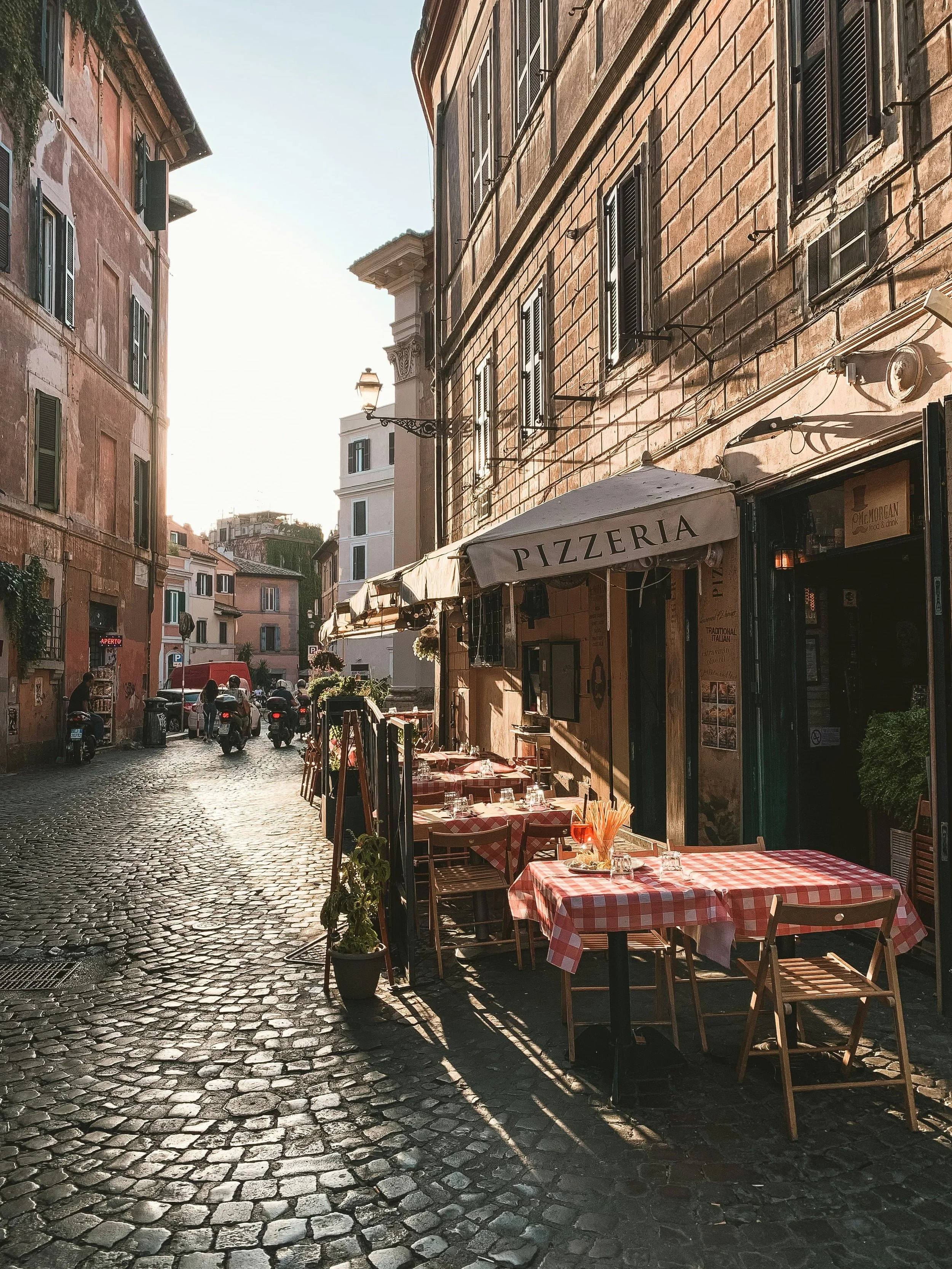
Day 10
Rome played out loud, and dinner through Trastevere
The morning is a theatrical walking tour, which means actors in costume turning up at the right moments in the right places to play out what happened there. It sounds like it could be dreadful and it is consistently the thing families and sceptics both end up loving, because Rome's history is genuinely theatrical and a guide with a script cannot compete. In the evening, Trastevere: the oldest part of the city on the other side of the river, cobbled and ivy-covered and still where Romans actually live. You eat your way across it, counter to counter, trattoria to trattoria, with someone who knows which of them have stayed good.
Photo: Cobblestone street in Trastevere, Rome, Italy
Photo©: Fineas Anton / unsplash
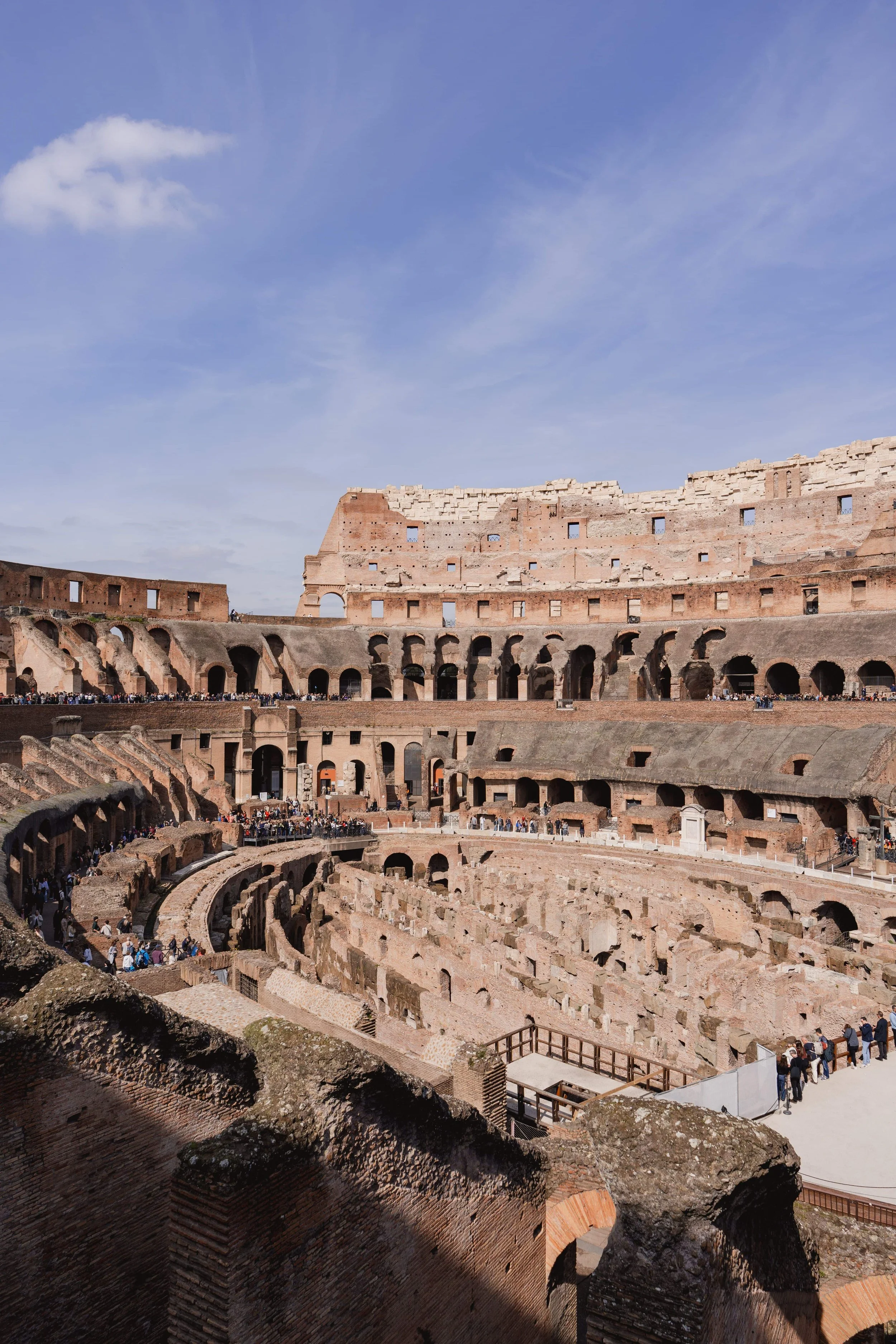
Day 11
Ancient Rome
The Colosseum with a private guide, early. Then the Forum and the Palatine, which is where the whole thing started and where most visitors run out of energy before they get to the interesting part. A good guide is the difference between a field of broken columns and a city you can see. You will stand where the Senate met and where Caesar was burned, and the guide will tell you which of the stories are true and which ones Rome has simply decided to keep. The afternoon is yours. Most people sleep, and then eat.
Photo: The historic Colosseum in Rome, Italy
Photo©: Joan Costa / pexels
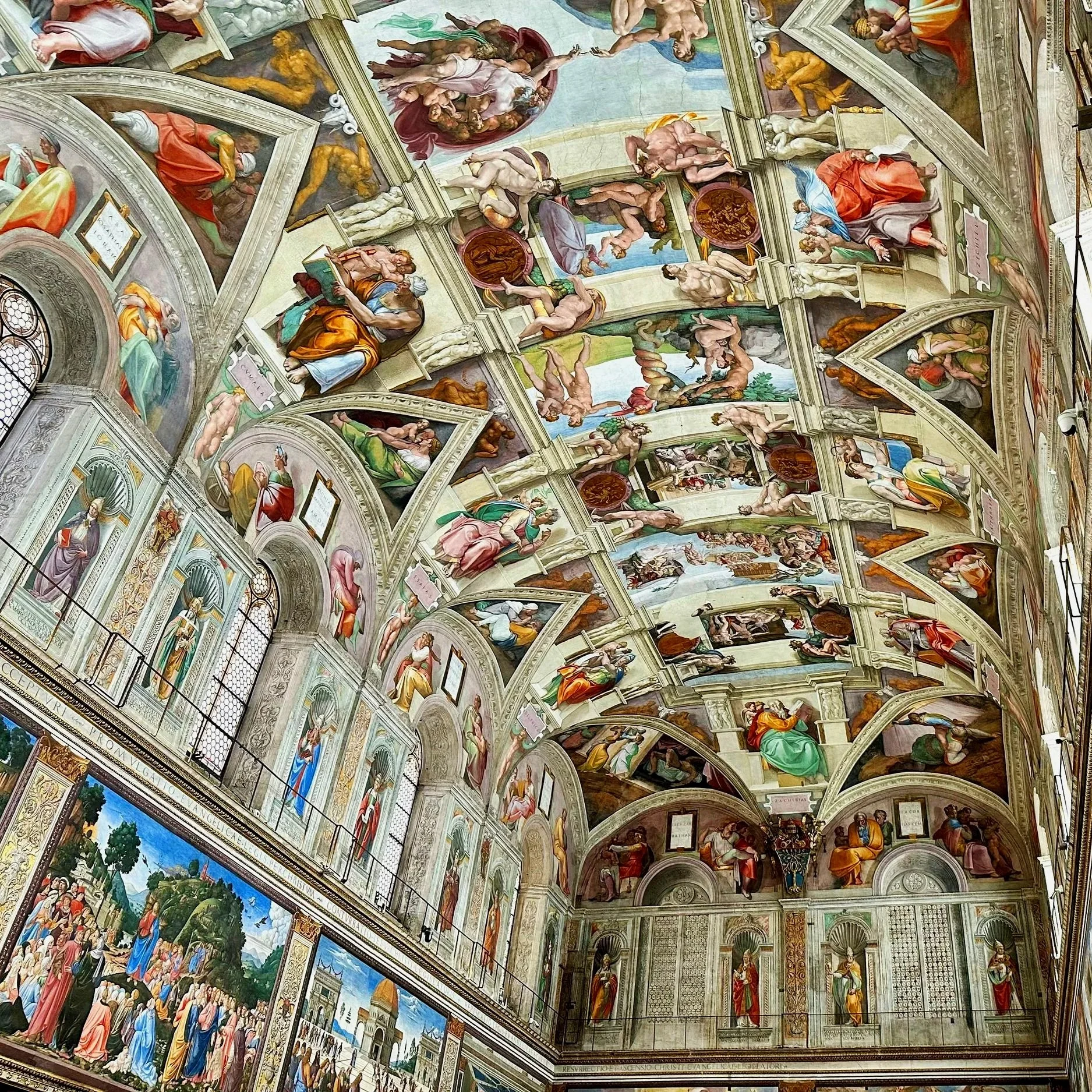
Day 12
The Sistine Chapel before it opens, and lunch on the papal estate
This is the day. You are inside the Vatican Museums ninety minutes before they open to the public, which means the Sistine Chapel with a handful of other people in it instead of two thousand. There is no way to describe the difference and no way to get it back once the doors open. St Peter's afterwards, while it is still quiet. Then out of the city to Castel Gandolfo, the papal summer residence above the lake: the private apartments, the Barberini Gardens, and a cooking class on the estate itself, with produce from the papal farm. Antipasti, pasta made by hand, lunch at a long table. You come back into Rome in the late afternoon having had the best day of the trip.
Photo: The Sistine Chapel ceiling in Vatican City, featuring Michelangelo’s renowned Renaissance frescoes
Photo©: Maximilian Brand / unsplash
Day 13
Home
Breakfast, then your transfer representative meets you in the lobby and takes it from there. Nothing to organise and nothing to work out, which on the last morning of a trip is worth more than it sounds.
Who this trip is perfect for

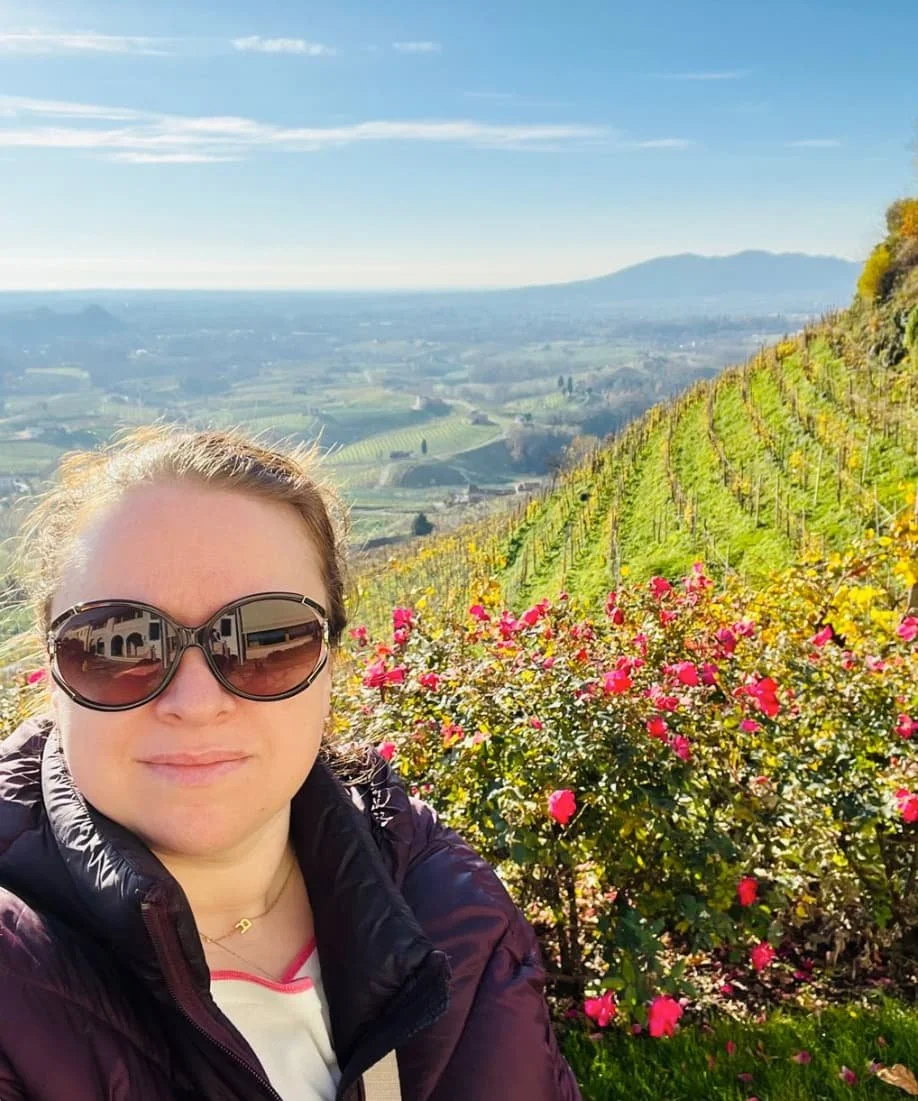
First-time visitors who want Italy done properly
If you are going once and want the three cities everyone means when they say Italy, this is the route. The difference is in the timing and the access, not the list.
Photo©: Anna Fishman / Olegana Travel Boutique
Couples who would rather eat than queue.
Four of the thirteen days are built around food and wine, and three of those are hands-on rather than observed.
Photo©: Anna Fishman / Brian and Leah, Olegana Clients
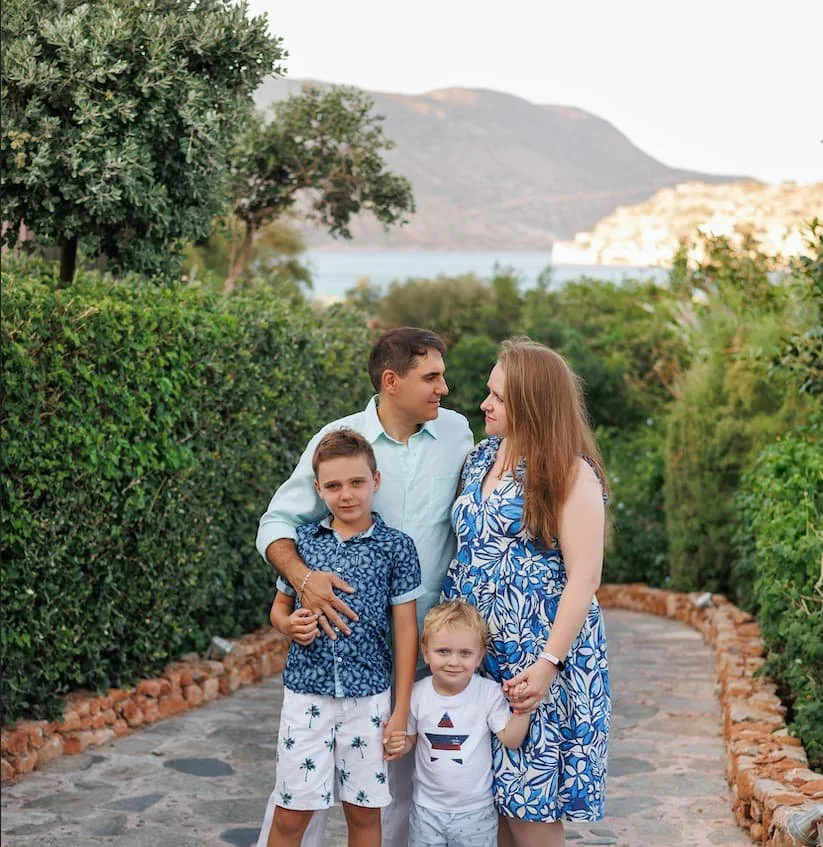
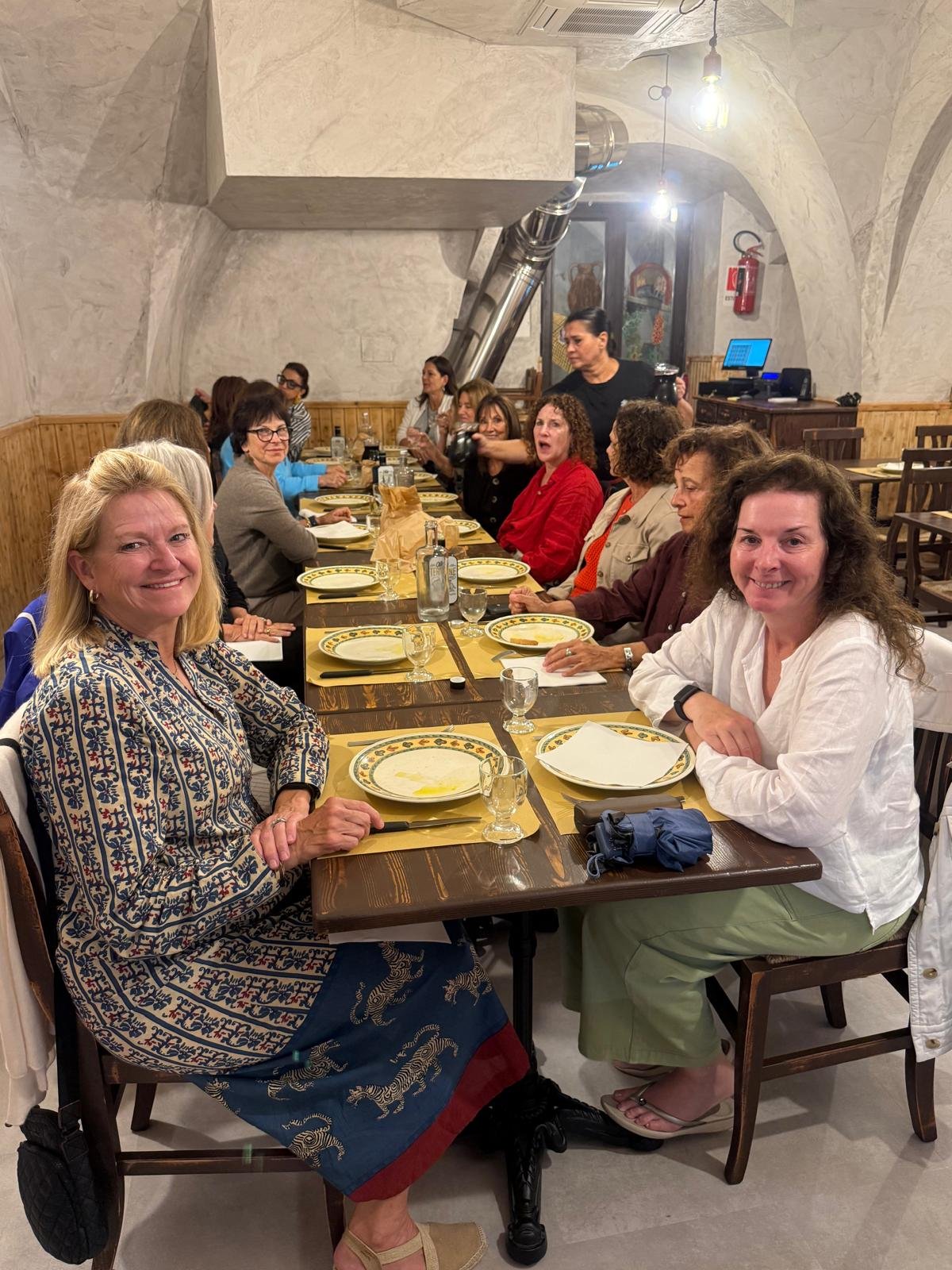
Travelers who have been to Italy and only ever seen the inside of a tour group.
Early Vatican access, a working glassblower rather than a showroom, and a private guide in every city change what the same sights feel like.
Photo©: Anna Fishman / Olegana Travel Boutique
Multigenerational families.
The vintage Fiat day, the mask workshop, the pizza class and the costumed tour of Rome all work across three generations at once, which is harder to achieve than it sounds.
Photo©: Anna Fishman / Olegana Travel Boutique
If you would rather travel with a group, I also host a women's small-group Puglia trip several times a year.
Where you’ll stay
In Venice, a boutique property in a quiet sestiere rather than on the San Marco tourist spine, close enough to walk to the vaporetto and far enough that the evenings are silent. Breakfast is included.
Ask for a canal-side room.
In Florence, a historic building inside the centro storico, within walking distance of the Duomo and the Arno, so that nothing on your Florence days requires transport. Breakfast is included, and there is a terrace worth taking a drink up to.
In Rome, a boutique hotel in the historic centre, walkable to the major sites and to dinner, which matters in a city where crossing town at night is slower than it looks. Breakfast is included.
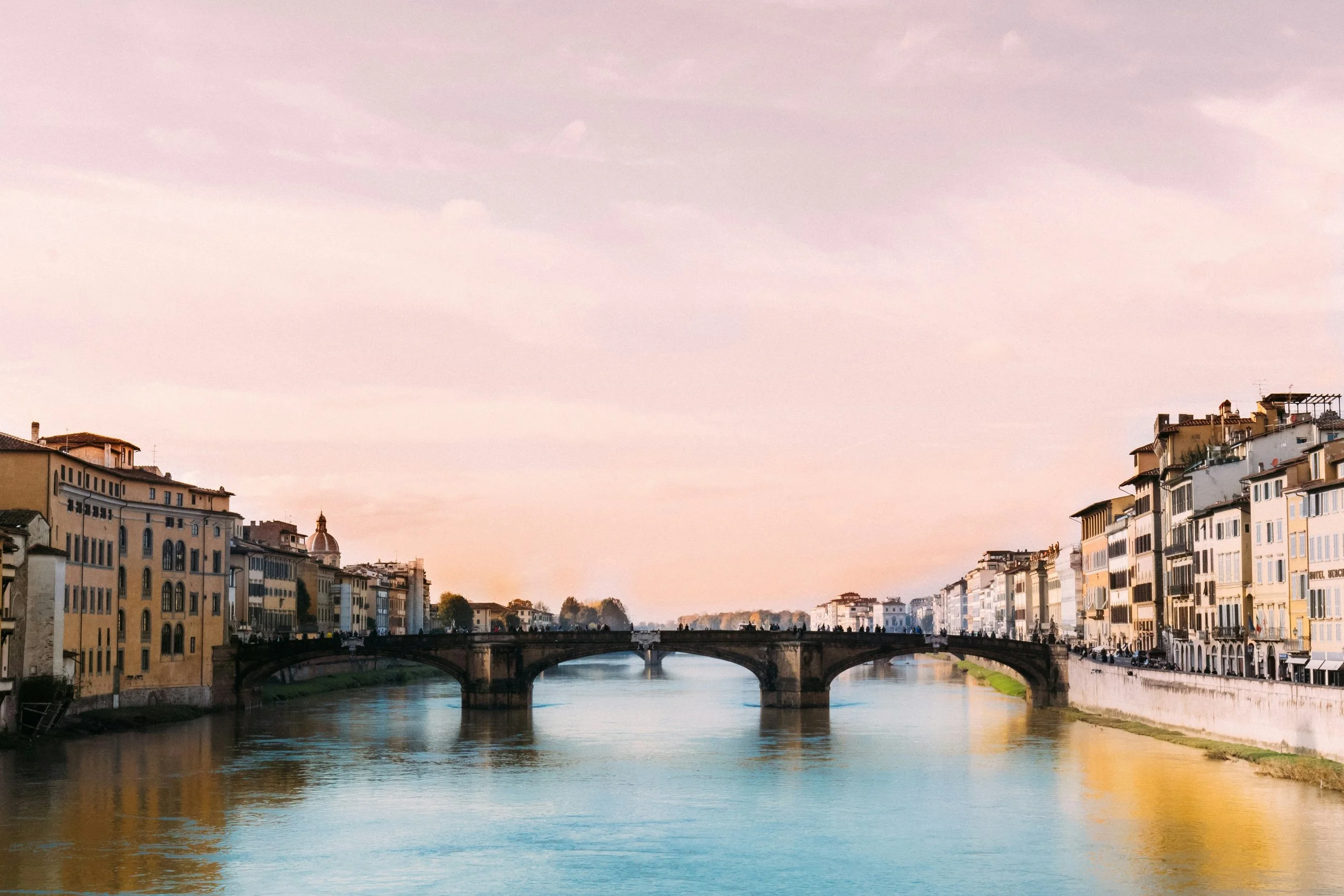
Photo: Ponte Santa Trinita, Arno River in Florence, Italy.
Photo©: Maximilian Brand / unsplash
Best time to visit Italy
April, May, September and October. These are the months I book most, and for good reason. Temperatures sit in the high teens to mid twenties Celsius, the light is long without being punishing, and the Tuscan countryside is either green or in harvest. Venice in May is the version of Venice people imagine. Rome in October is still warm enough to eat outside. The trade is that these months book early, particularly for the Vatican early-access mornings, so this is the window to commit to furthest ahead.
July and August. Hot, and in Rome genuinely hot, regularly above 35 Celsius with stone that holds the heat overnight. The cities empty of Italians and fill with everyone else, and much of Florence's best eating closes for August. Venice is the one that suffers most. If summer is the only time you can travel, I shift the structure: more Tuscany, earlier starts, longer afternoons indoors, and the coast built in.
November through March. The quiet version, and underrated. Venice in winter fog is extraordinary and very nearly empty. Florence's museums are walkable without a timed ticket battle. Rome is mild. The cost of it is shorter days, some rural restaurants and estates closed, and a real chance of acqua alta in Venice. For a second visit, or for anyone who dislikes crowds more than they dislike a coat, this is the season I would argue for.

I'm Anna Fishman, and I have been building trips through these three cities since 2015. Every itinerary I build starts with a conversation. Tell me what excites you and I'll take it from there.
Let's design your Italy trip
What past Olegana guests have said…

“We liked Rome a lot more than in the past which was most likely influenced by your awesome planning."
– Christine B., Rome
Frequently asked questions
-
Every itinerary I build is priced individually, because no two are the same. Once we have talked through your dates, your pace and the kind of hotels you want, a detailed quote follows the first call.
-
Yes, and it is close to ideal. Three days in Venice, five in Florence and Tuscany, four in Rome. That gives each city a rest day's worth of slack, which is what stops a trip like this turning into a march.
-
No, and I would argue against it. The three cities are linked by high-speed rail, which is faster than driving and puts you in the centre of each one rather than in a car park outside it. Everything else is covered by private transfers and guided days. Florence in particular is a restricted traffic zone, and the fines arrive months later by post.
-
Completely. This is a sample, not a package. A custom Italy trip is what I actually do, and most clients keep three or four days from a sample and rebuild the rest around what they care about.
-
There are nonstop options into Venice and Rome from several US east coast airports, and the usual approach is to fly into Venice and home out of Rome so you never backtrack. I do not book flights, but I will tell you which routing makes the itinerary work.
-
I quote it separately through Travel Guard, and I recommend it on every trip of this length and value.
-
Six to nine months for April, May, September and October. The binding constraint is not hotels, it is the early-access Vatican mornings and the better guides, both of which go first.
-
It is not something you can arrange yourself, which is most of why it is on this itinerary. The access is limited and dated, and it is the first thing I lock in once your dates are set.
-
Yes, and it is the extension I am asked for most. Three or four nights after Rome works well, and the train south is straightforward. Tell me on our call and I will build it in.