
Luxury Italy vacation: Puglia and the Valle d’Itria, 10 days
Part of our luxury Italy trips.
There is a road that climbs out of the coast into the Valle d'Itria, and about fifteen minutes in the scrub gives way to dry stone walls and olive trees so old and so twisted they look less planted than grown out of the rock. Some of them were producing before Columbus sailed. Conical stone roofs start appearing in the fields, one or two at first, then whole clusters of them. This is the trip I love designing most.
Ten days gives you all of it. The whitewashed hill towns of the valley, Alberobello at seven in the morning before anyone else is awake, a Primitivo cellar in Manduria and the potters' ravine at Grottaglie, the fish market on the Bari quay at first light, Lecce and the far south, and a last day across the Murgia to a cathedral standing in the sea at Trani. In between there is a day with almost nothing in it, which is the one people thank me for afterwards. This is what designing a custom Italy trip is for: not more, but better placed. It is built for two people, or a family, on your own dates, with the far south and the high plateau that a shorter week has to leave out.
Every detail is handled: the transfers, the guides, the hotels, the reservations, the route. You just show up and live it. Picture yourself here. Tell me what you love, and I'll design the rest. Start with the planning form below.
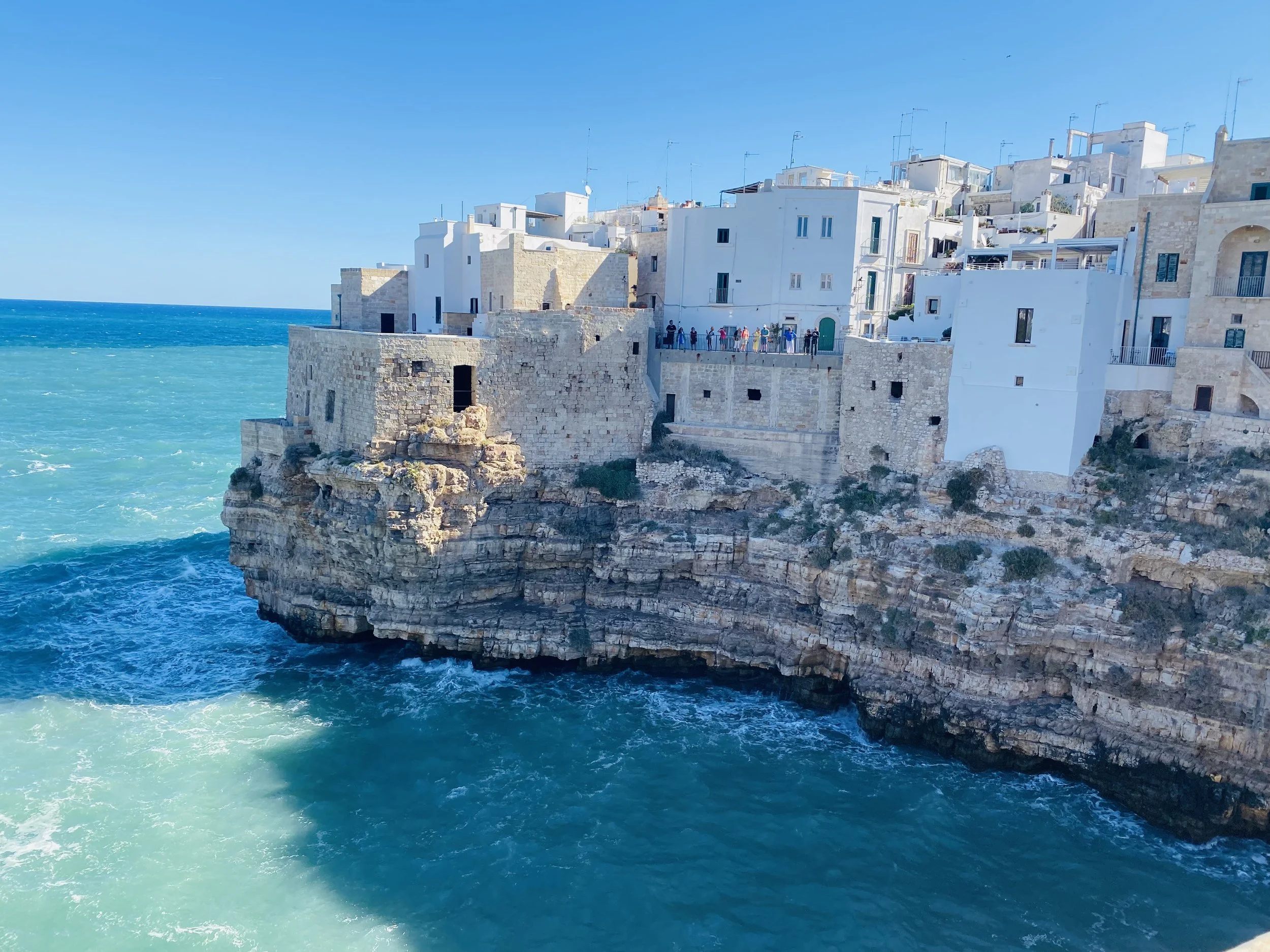
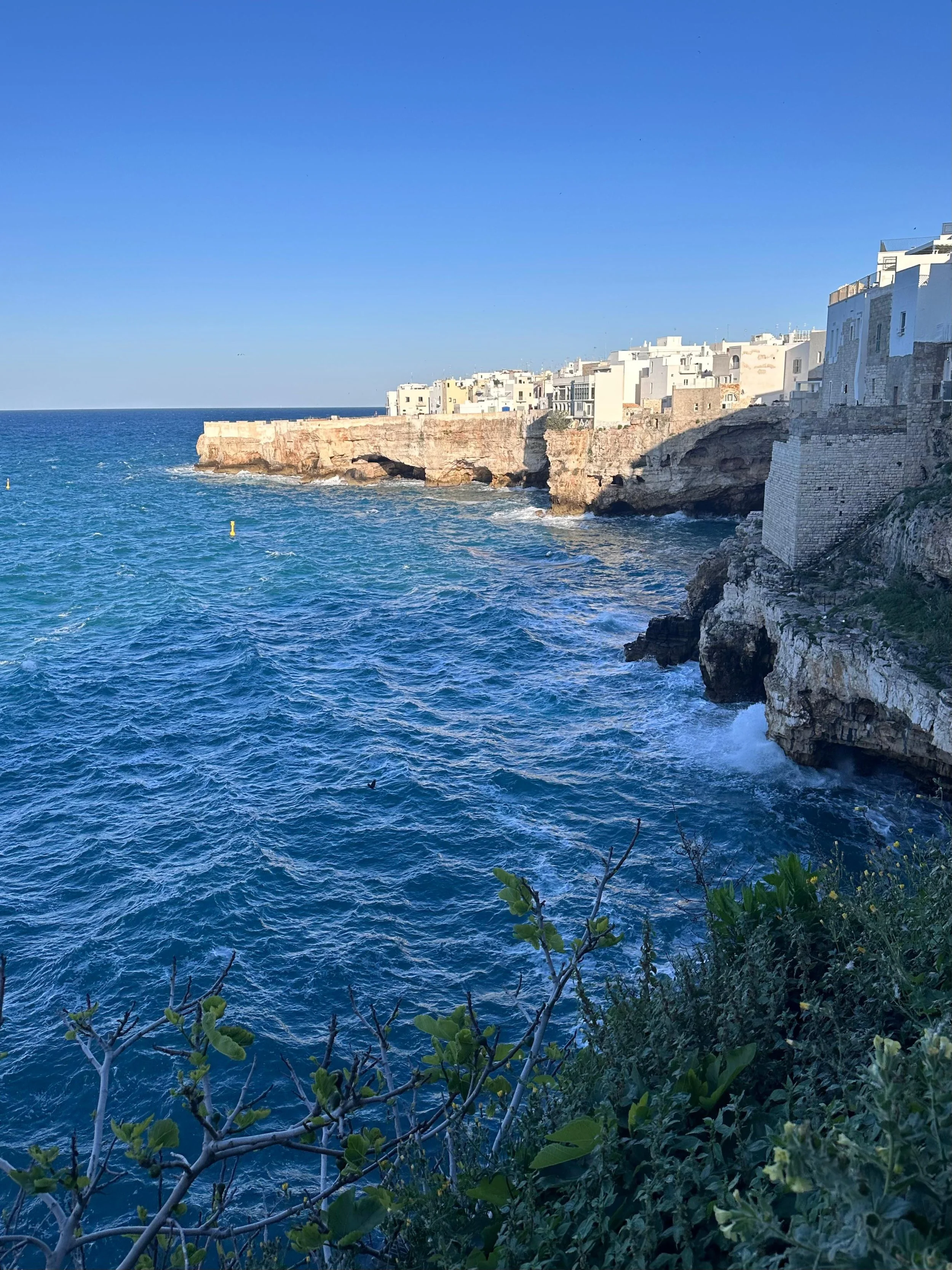
Photo: Polignano a Mare in Puglia, Italy
Photo©: Anna Fishman / Olegana Travel Boutique
What’s included?
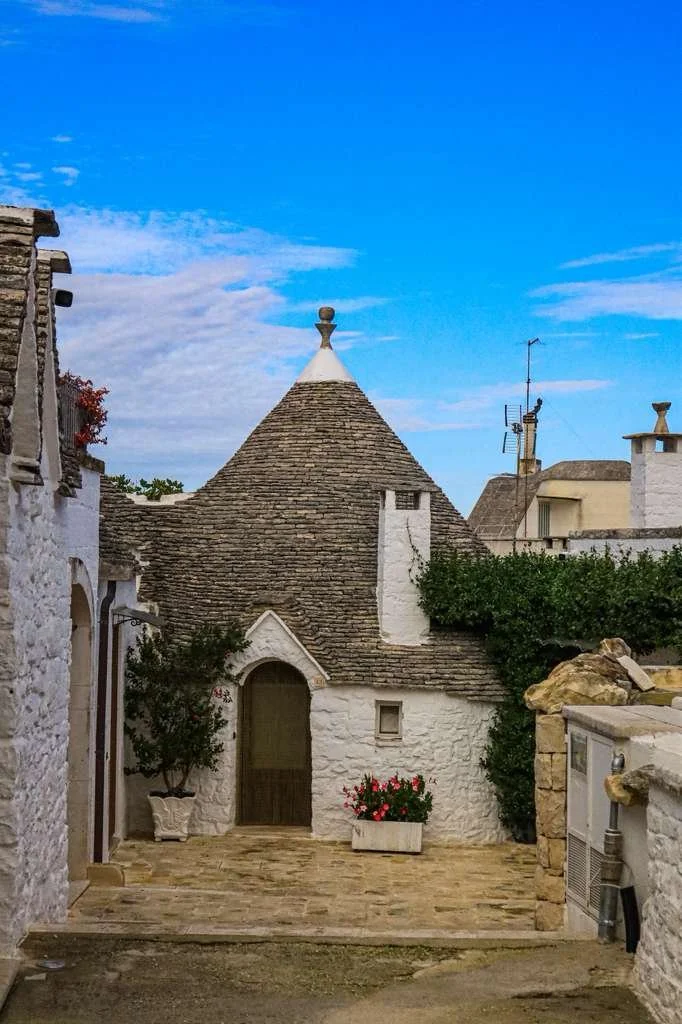
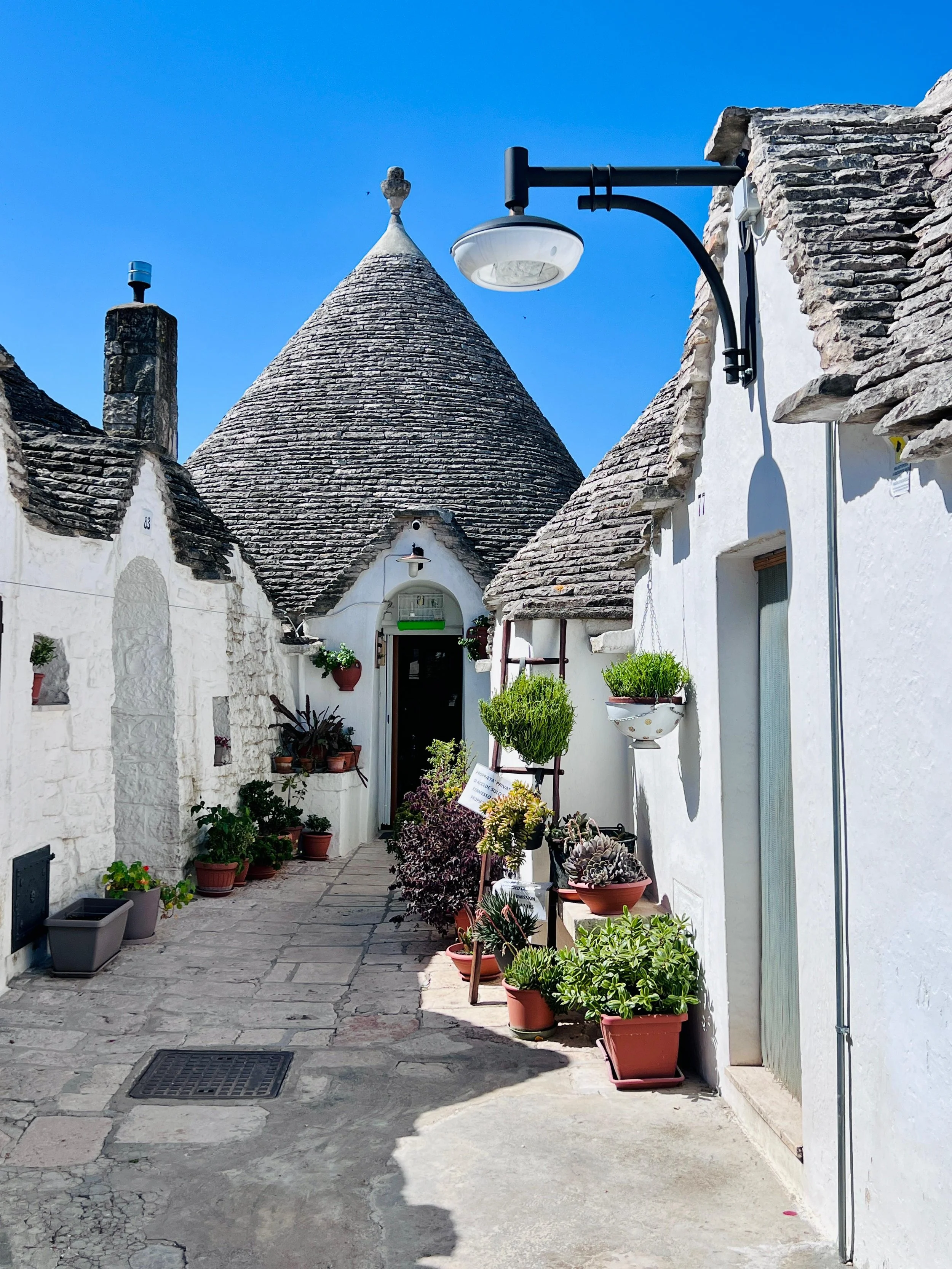
Photo: A traditional trullo house in Alberobello, Puglia, Italy.
Photo©: Anna Fishman / Olegana Travel Boutique
Included
Private airport transfers in a luxury sedan, Mercedes E-Class or similar
Nine nights of boutique accommodation with breakfast throughout, eight in a restored masseria in the Valle d’Itria and one on the Adriatic coast
Private guided walking tours in Alberobello, Ostuni, Lecce and Bari with a dedicated local guide
A private cooking session in a home kitchen, if you want one in the week
Full-day private tours of the Salento, the Murgia and the Ionian wine country
Cellar visits, producer visits and tastings arranged and confirmed before you leave
Curated restaurant recommendations and reservations throughout, including the kitchens that do not take online bookings
24/7 concierge support and an emergency contact for the whole trip
Not included
International airfare, travel insurance (quoted separately through Travel Guard), meals at leisure, personal expenses, tips and gratuities, city tourist taxes payable directly at the hotels.
Ready to start planning? Tell me about your travelers and what matters most. I'll build from there.
How many days do you need in Puglia?
Ten days, meaning nine nights on the ground, is the right length for a food and wine trip to Puglia. Eight will work if you cut either the Murgia or the Salento, and seven starts to feel rushed. Ten covers the Valle d’Itria hill towns, the Adriatic coast, the Murgia plateau and the far south from a single base, with no travel day sitting between stops. With two weeks, add Matera and the Gargano.
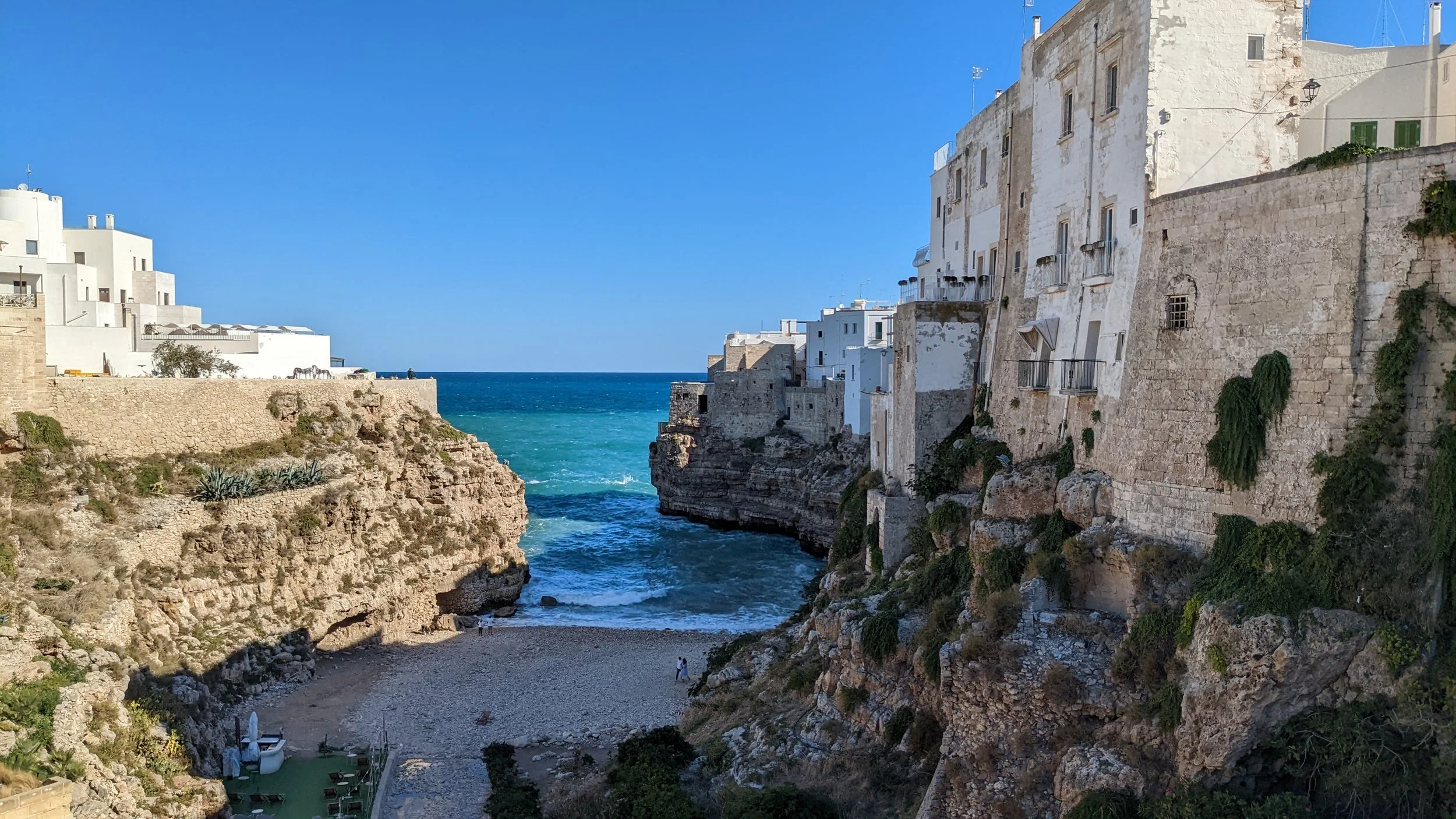
Photo: Lama Monachile in Polignano a Mare, Puglia, Italy.
Photo©: Anna Fishman / Olegana Travel Boutique
Your day-by-day itinerary
This sample itinerary was designed around Puglia’s producers, cellars and market mornings. It’s here to inspire, not to lock you in. You might pick a few pieces and let me build something different around them. Your trip is yours, and we’ll customize every detail until it fits.
Photo©: Anna Fishman / Olegana Travel Boutique
Day 1
Landing in the heel of Italy
Bari is an easy airport to arrive into, and there is now seasonal nonstop service from the United States, which did not exist a few years ago. You land, and a driver is waiting inside the terminal, which means you are in the car before you have finished checking your phone. The road inland takes under an hour and the landscape changes fast, coastal scrub giving way to dry stone walls and olive canopy.
The gate opens onto a gravel courtyard, and the temperature drops the moment you step into the vaulted hall, because these walls are a meter thick and were built against an August that has not changed in four hundred years. Someone brings a glass of chilled Locorotondo white and a plate of taralli while your bags go up.
Sleep for an hour if you need it. At seven the light turns the color of apricot skin and the courtyard is the best place in Puglia to be standing. Dinner is here tonight, at a table under the arches, because nobody should be in a car twice on arrival day. Tomorrow starts early and you will be glad you did not fight it.
Photo: Polignano a Mare in Puglia, Italy.
Photo©: Anna Fishman / Olegana Travel Boutique
Day 2
Alberobello before the coaches
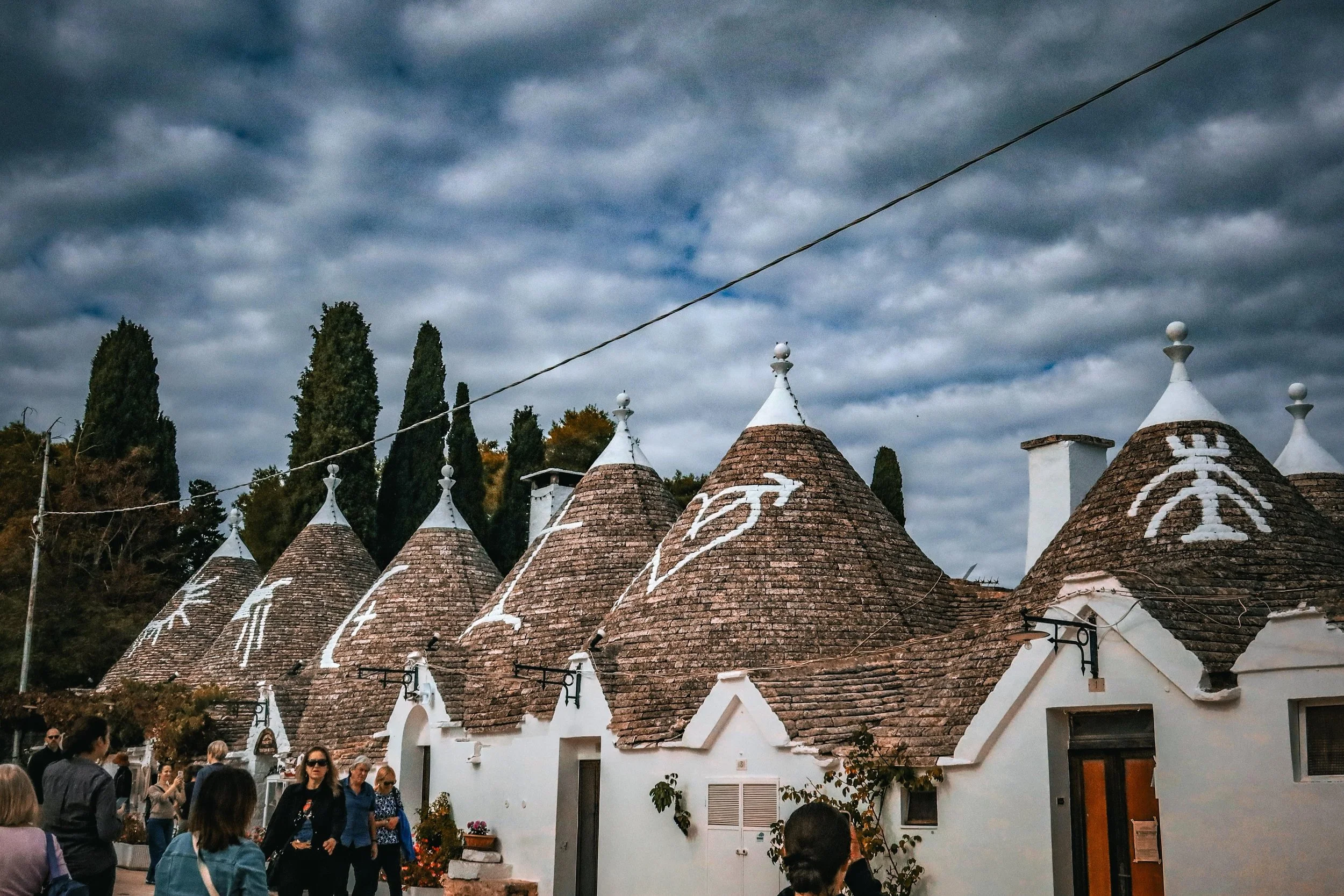
You leave at seven, and I know how that sounds on the first full morning. Do it anyway. Alberobello holds around fifteen hundred trulli and roughly the same number of day trippers by eleven, and the gap between those two versions of the town is the entire argument for travelling privately.
At first light the shutters are still closed. A woman is sweeping her step. You can hear your own footsteps on the stone and the conical roofs are still holding the cold. You walk Rione Aia Piccola, the quarter where people actually live, rather than Rione Monti where the ground floors have all become shops selling the same ceramic whistle. Then inside a trullo, and half an hour with a trullaro, one of the men who still lays dry stone without a drop of mortar. UNESCO lists the craft separately from the town, and watching him work you understand why.
Breakfast once Alberobello wakes up, then ten minutes down the road to Locorotondo, built in concentric rings on a low hill, one of the few places in Italy where the whitewash runs right down to the doorsteps. A cellar in the afternoon for the verdeca and bianco d’Alessano that give the town its name, and the evening free in the old quarter.
Photo: Alberobello, Puglia, Italy.
Photo©: Anna Fishman / Olegana Travel Boutique
Day 3
Under Ostuni, and lunch in Martina Franca
Martina Franca first, while it is cool. The balconies along Via Cavour are extravagant even by southern baroque standards, all curled stone and carved fruit, and the town is grander than people expect who came for whitewashed simplicity. You go to a norcineria for capocollo, the cured pork neck that is a Slow Food presidium here, smoked lightly over fragno oak and macerated in cooked wine. It does not travel, which is why you have never had it properly.
Then Ostuni, and the part almost nobody sees. Under the old town there is a second town. From the fifteenth century the hill was hollowed out into frantoi ipogei, olive mills cut down into the soft rock, where the presses ran below ground because the temperature stayed steady and the oil kept. You go down into one. It is cold, low and slightly unnerving, and it explains more about how this region got rich than any museum will.
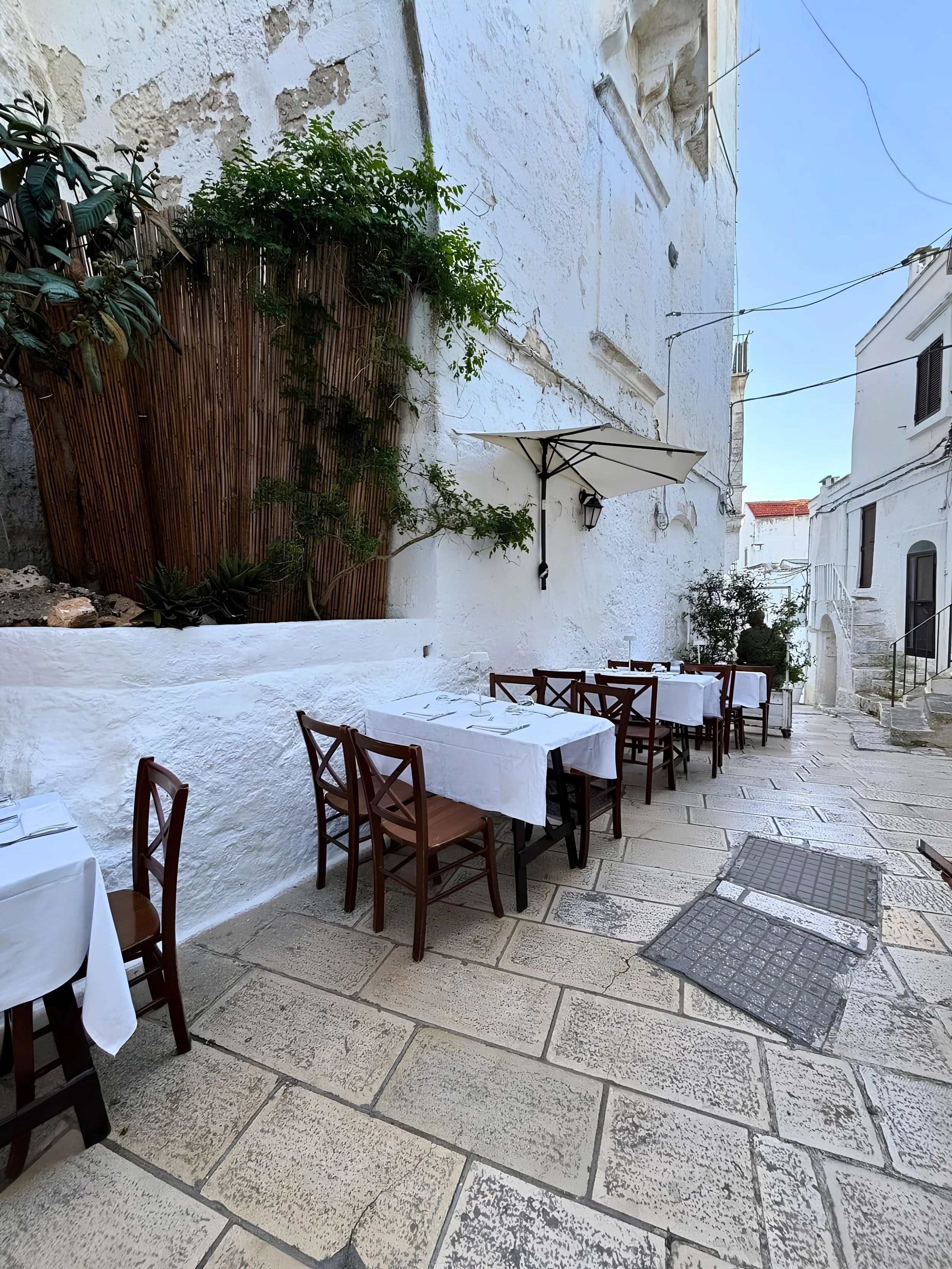
You stay for the evening rather than leaving at four, which is when the coaches go and when Ostuni becomes worth being in. Dinner at a table on a stepped lane with the town lit above you.
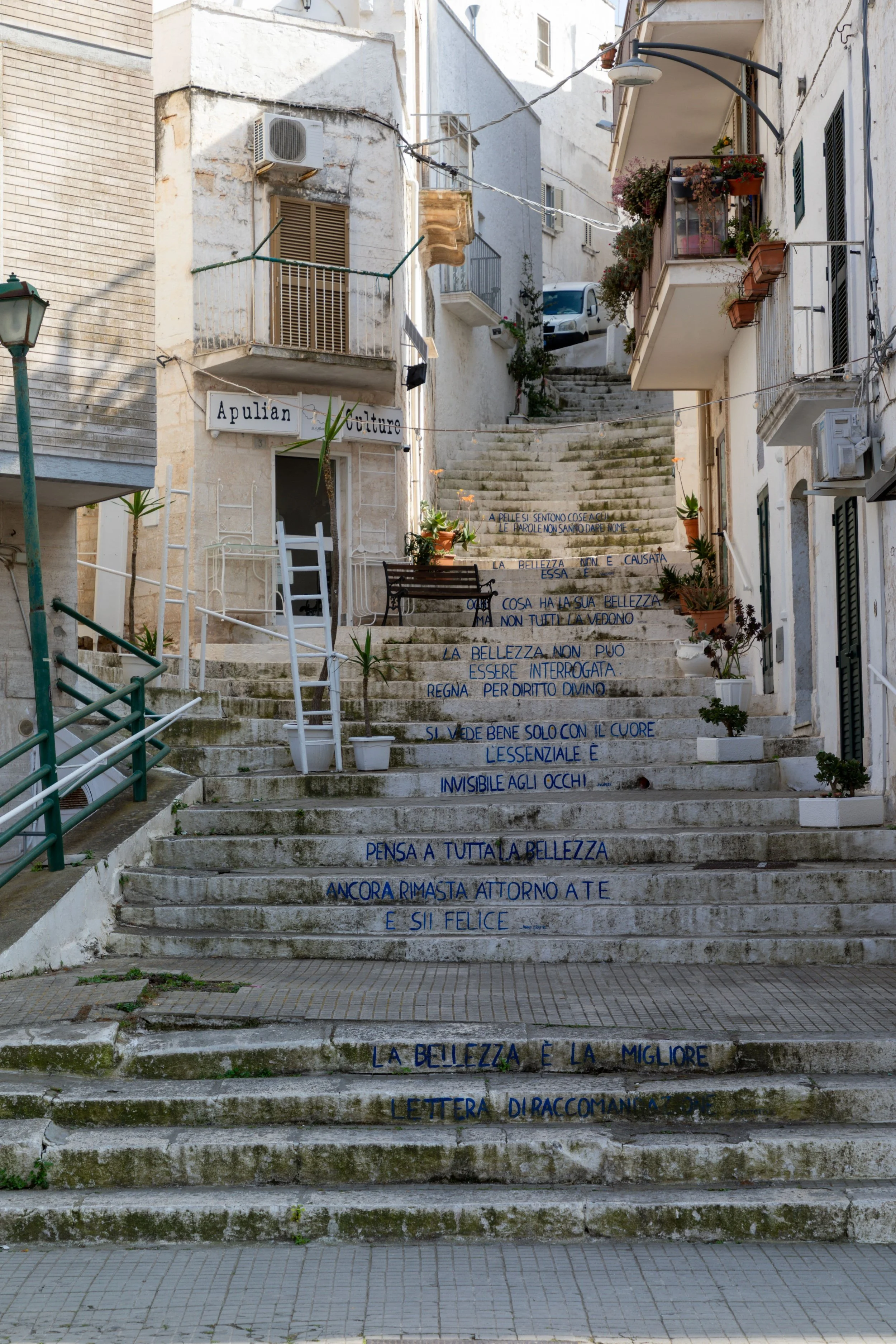
Photo: Whitewashed alley in Ostuni, Puglia, Italy and Italian poetry in the historic “White City.”
Photo©: Mauro Bufi / pexels
Day 4
The potters’ ravine and a Primitivo cellar
The ceramics quarter of Grottaglie is a ravine, and the workshops are cut into the rock face on either side of it, which is not what anyone expects from a pottery town. They have been throwing here since the Middle Ages. You spend the morning with a master potter watching a pumo take shape, the bud shaped ornament that sits on balconies all over Puglia and is meant to bring the household luck. You leave with one, and the packing is his problem rather than yours.
South after that into flatter country, to Manduria. Primitivo grows here on old bush vines, low to the ground and unstaked, in red soil sitting on limestone. The cellars are deep and properly cold, and the wine that comes out of them is enormous, dark and warm at the edges in a way that surprises people who thought they knew Italian reds. Lunch is at the winery, seated and long, and there is no reason to hurry it.
If the weather is with you the afternoon ends on the Ionian side, which is calmer and warmer than the Adriatic, and you are back at the masseria for a quiet dinner
Photo: Whitewashed alley in Ostuni, Puglia, Italy
Photo©: Anna Fishman / Olegana Travel Boutique
Day 5
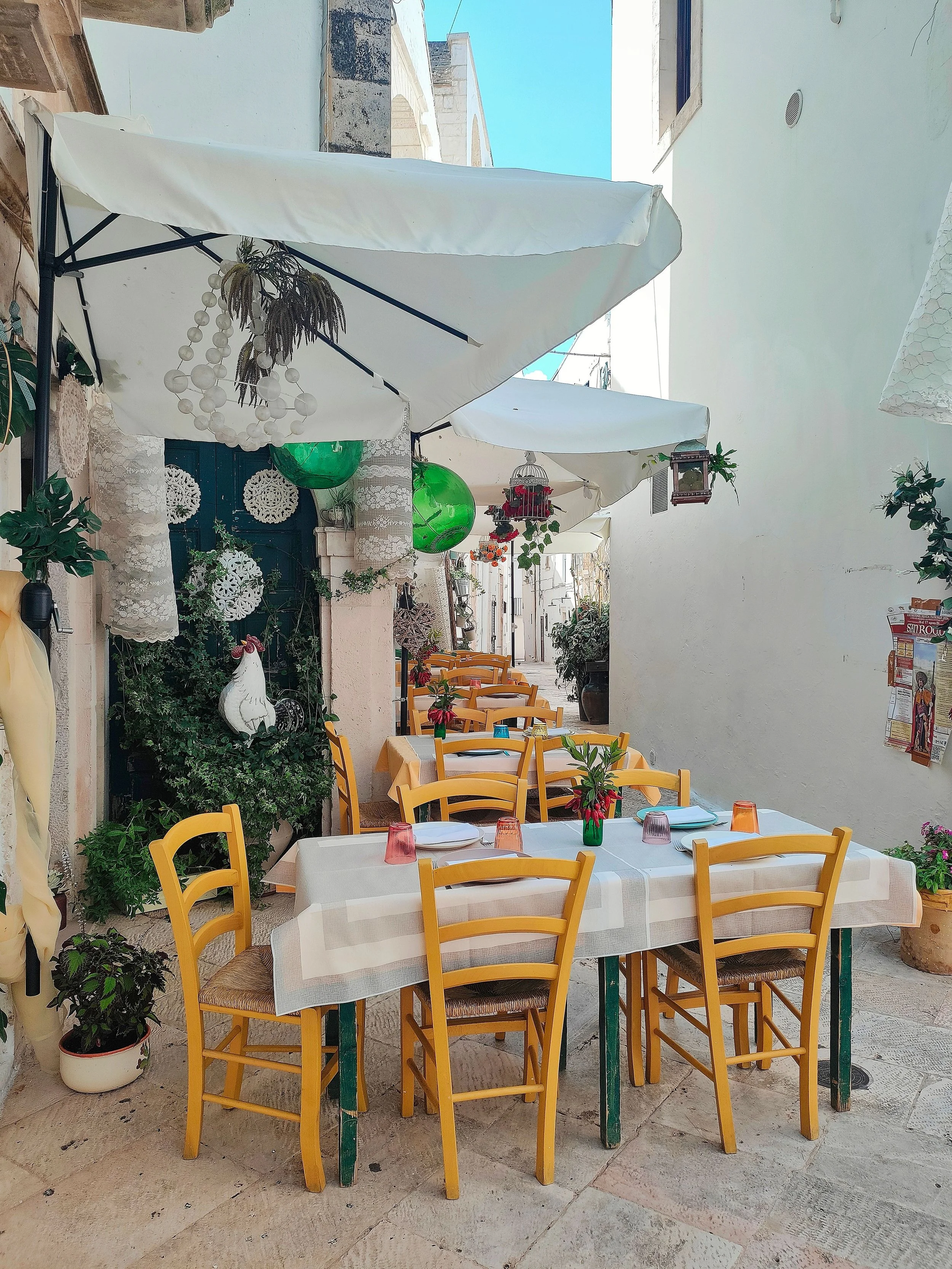
Ceglie Messapica and the grills of Cisternino
Ceglie Messapica is where Puglians go to eat, which is a different claim from where visitors go to eat. It is a small hill town with a reputation out of all proportion to its size and a density of serious kitchens that makes no sense until you have eaten in two of them. You walk the old town in the morning with a guide who can tell you which doorway leads to which family’s dining room. Lunch is booked well in advance, because it has to be. Buy biscotti cegliesi before you leave, almond paste and cherry jam, and hide them from each other on the drive home.
The evening is Cisternino and the fornello pronto, the least refined meal of the week and possibly the best. You go into a butcher’s shop, choose your meat from the counter, and he cooks it over wood while you sit at a paper-covered table on the street outside. Bombette, sausage, lamb. A carafe of something local and red. No menu, no wine list, no ceremony. It is nine o’clock, the whole town is out, and you are exactly where you should be
Photo: Alley in Cisternino, Puglia, Italy
Photo©: Paolo Lo Cascio / pexels
Love what you're reading? This is a sample. Tell me about your travel style and I'll build your Italy trip from scratch.
Day 6
Egnazia, and a day that goes nowhere
This is the day with almost nothing in it, and on a ten day trip it is the one people thank me for afterwards. Five days in, nobody needs another hill town before nine.
Egnazia takes the morning. It is a Messapian city the Romans took over, sitting directly on the sea, with the paving of the Via Traiana still running through the middle of it and cart ruts worn into the stone. Ninety minutes with a guide, a small museum that puts the pottery in context, and it is almost never busy, even in June.
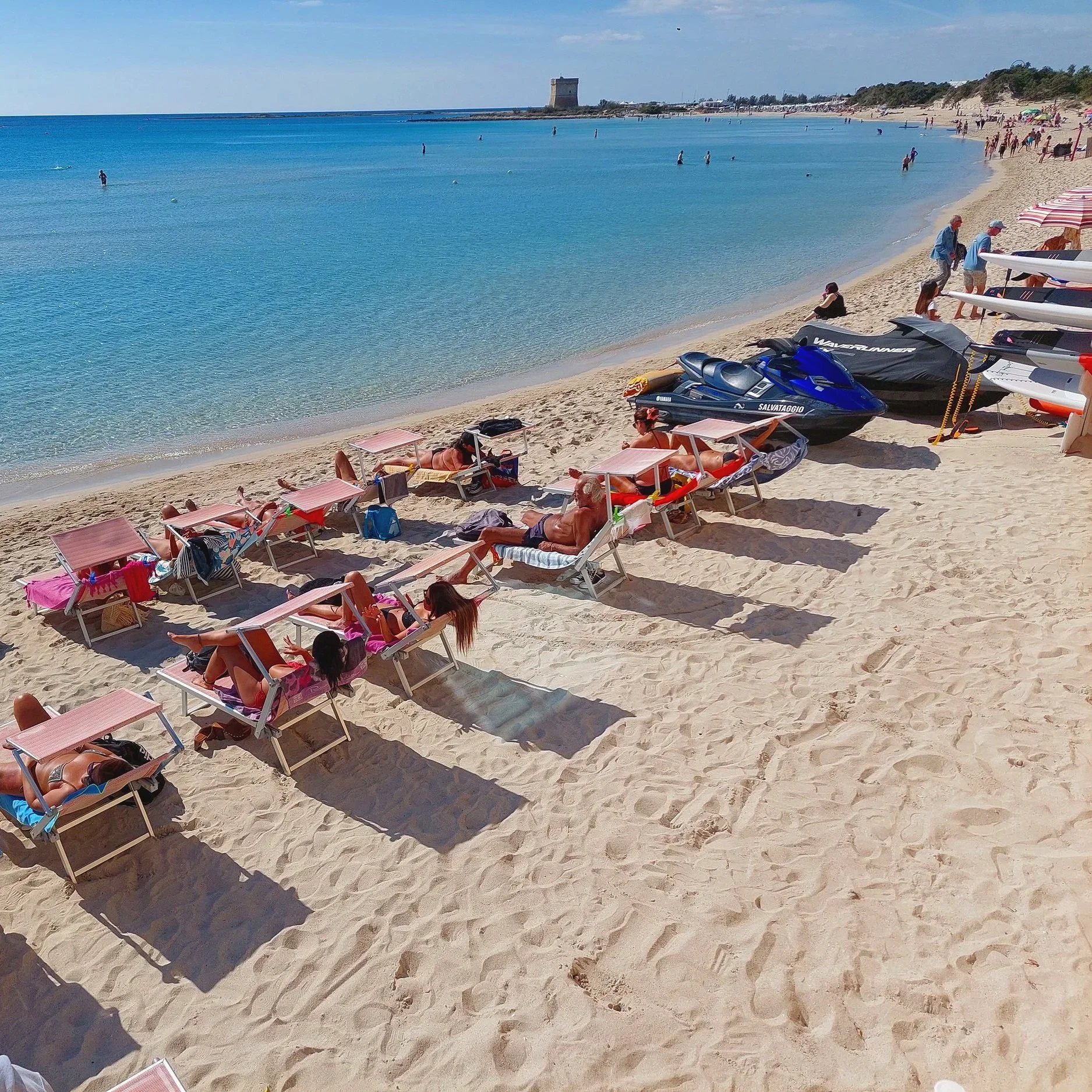
After that, nothing. A beach club at Savelletri or Torre Canne with a lounger and a lunch that runs until three, or the masseria pool if you would rather not move at all. This is the afternoon for the nap you have been putting off. If there is one hands-on session you want in the week, this is the evening I would put it, and it works the way the cooking classes I build into Italy trips always do: a home kitchen, orecchiette pressed with a thumb against a wooden board, and dinner at the table where you made it.
Photo: Porto Cesareo, Puglia, Italy
Photo©: Aldo Ricci / Vogue
Day 7
The Bari fish market before seven
The market on the Molo San Nicola works at first light and is finished by nine, so this is another early one. Boats come alongside and the catch goes straight onto the stone. Men sell polpo and ricci off the quay to people who have been buying from them for thirty years, and there is a particular theatre to the way an octopus is tenderised against the rocks that you will either love or find slightly alarming. You go at six thirty with someone who knows which stall to stand at.
Then the Basilica di San Nicola and the crypt underneath it, low and forested with columns. It draws Orthodox pilgrims as well as Catholic ones, and it is one of the few churches in Italy where you might walk in on a service in Russian. Focaccia barese on the way out, potato worked into the dough, tomatoes pressed into the top, eaten from paper while it is still too hot.
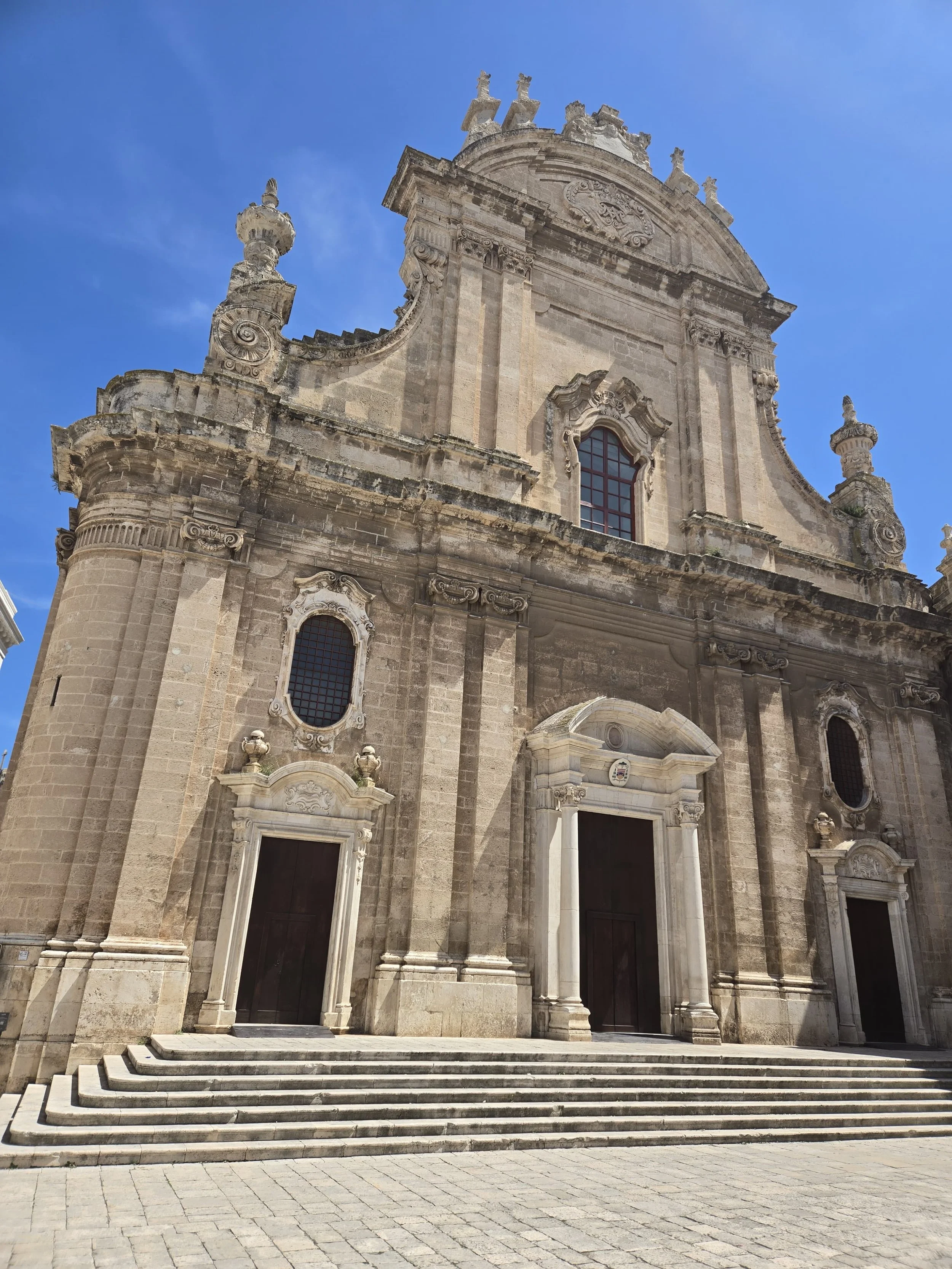
Monopoli for the afternoon. A working port, a cathedral far grander than the town needs, and a swimming cove tucked under the old walls. Lunch off the boats, then nothing scheduled.
Photo: Monopoli Cathedral in Monopoli, Puglia, Italy.
Photo©: Anna Fishman / Olegana Travel Boutique
Day 8
Lecce, and the far south
Lecce is worked limestone and everyone tells you that. What almost nobody sends you to is the cartapesta. Papier mâché became a serious craft here because the churches wanted statuary and the city could not afford marble, and there are still workshops where a figure is built up over a straw and wire armature by hand. Watching a saint’s face emerge out of paper is stranger and better than another façade.
There is also a Roman amphitheatre sitting in the middle of Piazza Sant’Oronzo with two thirds of it still under the square, which tells you how much of this city is stacked on older versions of itself. Mid morning you eat rustico leccese standing at a bar, puff pastry with béchamel, mozzarella and tomato, then a pasticciotto if the tray has just come out.
Otranto in the late afternoon, the easternmost town in Italy. Its Norman cathedral has a twelfth century mosaic tree of life running the full length of the nave floor, and almost no first-time visitor expects it. A Negroamaro cellar on the way back, and dinner in the Salento before the drive home.
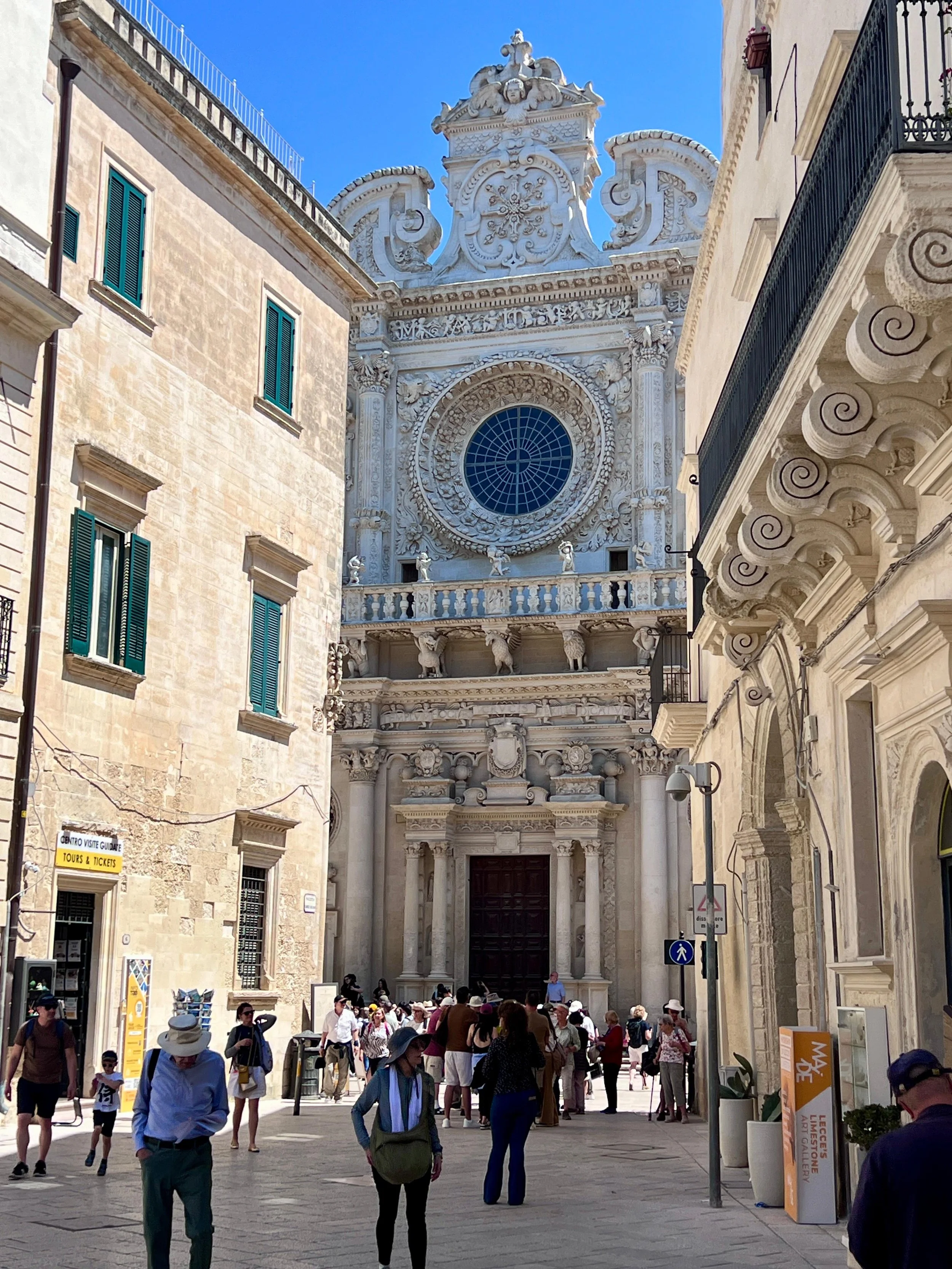
Photo: Basilica di Santa Croce in Lecce, Puglia, Italy.
Photo©: Anna Fishman / Olegana Travel Boutique
Day 9
The Murgia, and a last night on the water
North today, across the Murgia, which is a different Puglia altogether: high, bare, walled in stone, sheep instead of olives. Altamura first, where bread has been baked the same way since Roman times and carries DOP status. The loaves are enormous, the crust nearly black, the ovens wood fired. You go in while a bake is coming out and the smell stays in the car for an hour.
Castel del Monte an hour further on, alone on its hill, octagonal, thirteenth century, with no obvious military purpose whatsoever. People have argued about what Frederick II built it for since the day it went up and nobody has settled it.
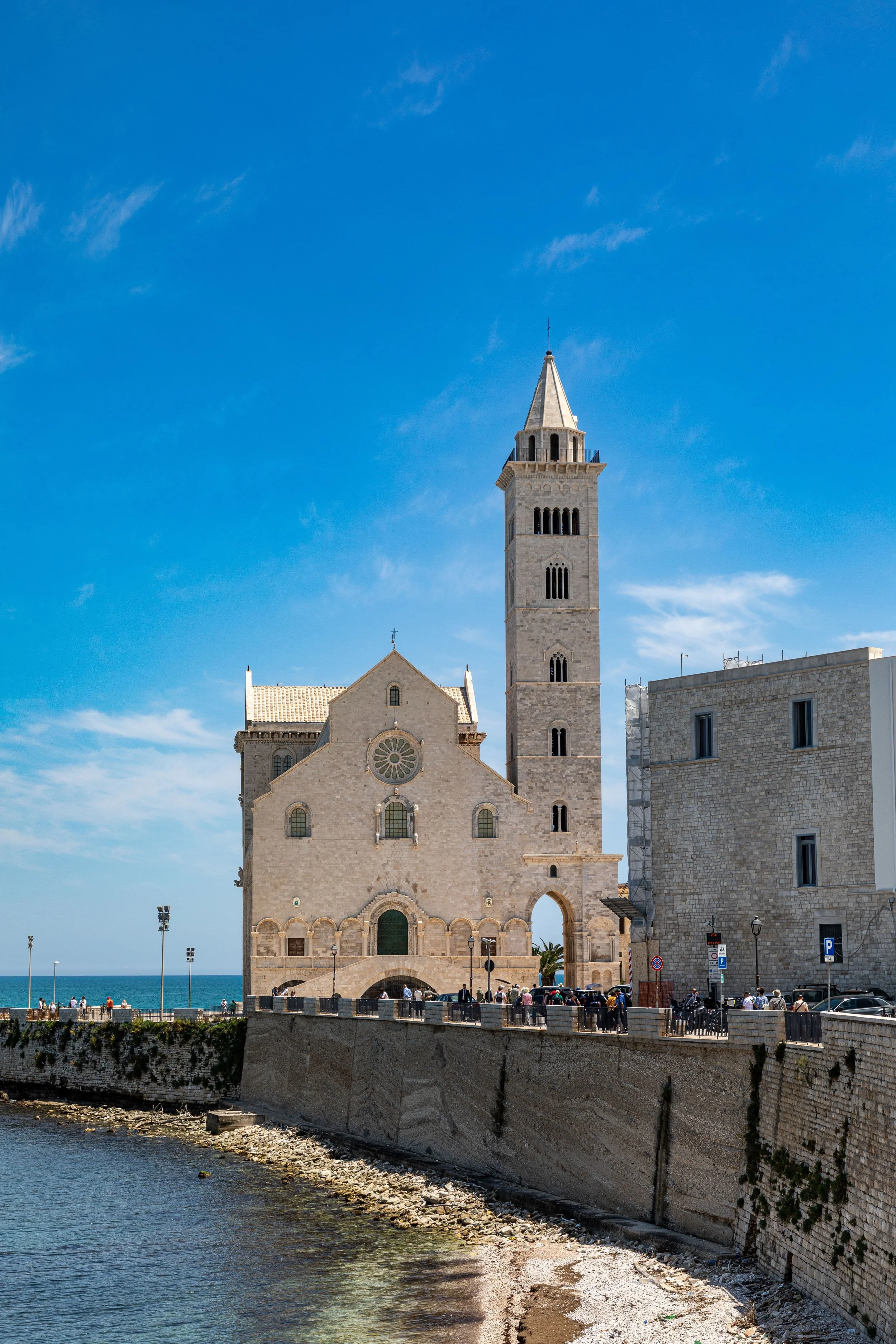
Trani closes the trip. The cathedral stands in pale local stone right at the water’s edge, and about an hour before sunset it turns pink and everyone stops talking. Farewell dinner on the harbour, and you sleep on the coast tonight so that tomorrow morning is forty minutes to the airport rather than ninety.
Photo: Trani Cathedral in Trani, Puglia, Italy
Photo©: Mauro Bufi / pexels
Day 10
Departure
Breakfast without a schedule, then a short private transfer to Bari. If you are carrying on to Rome, Florence or the Amalfi Coast, the connection is already built in and the tickets have been in your hands since before you left home.
A word on what goes in the suitcase. Oil from the Ostuni frantoio and a vacuum-packed capocollo will both travel, and so will taralli, biscotti cegliesi and a bottle or two of Primitivo if you have checked luggage. Fresh burrata will not, whatever anyone at the airport tells you. The pumo from Grottaglie is already wrapped and boxed, because I asked the potter to do it on Day 4.
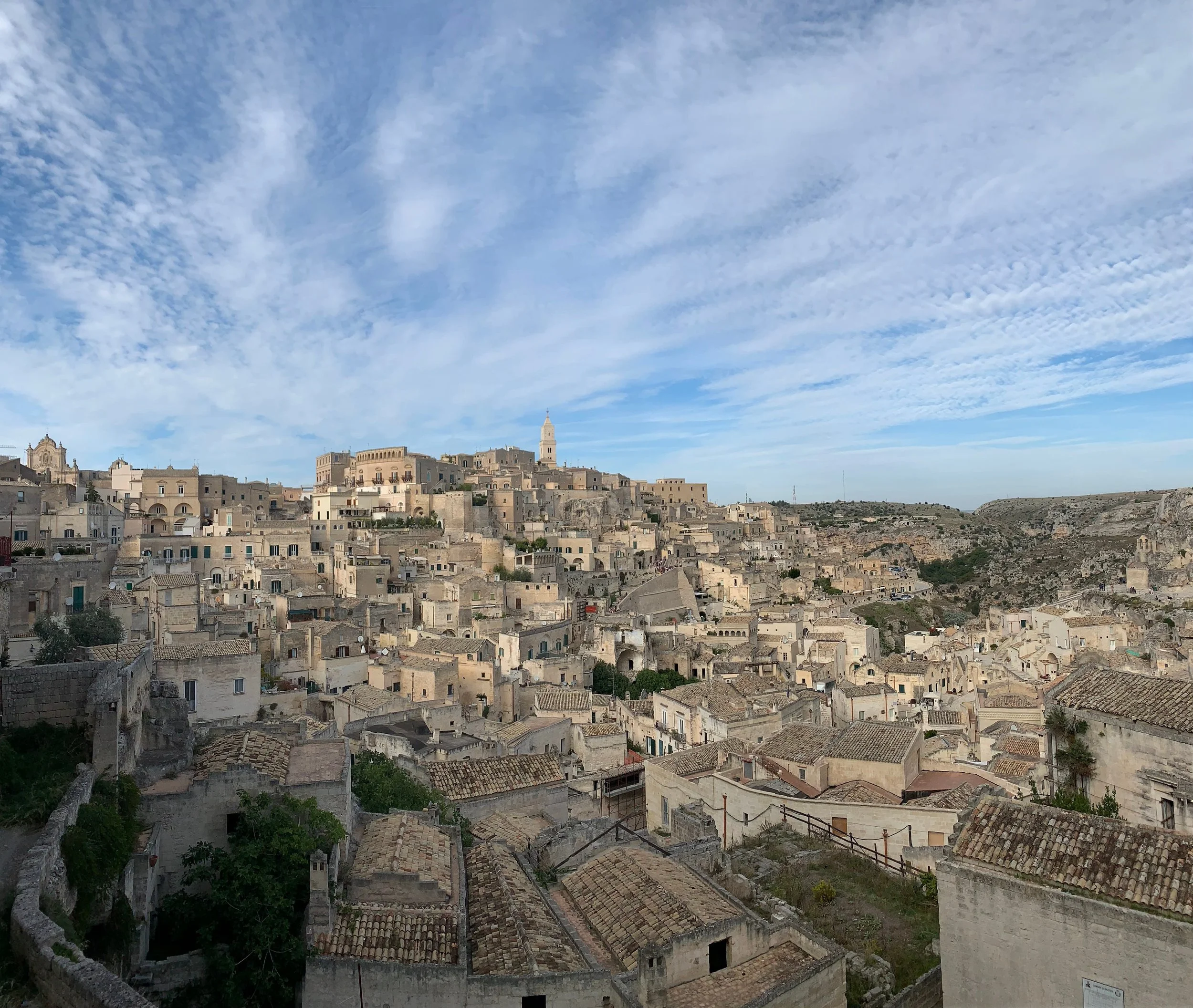
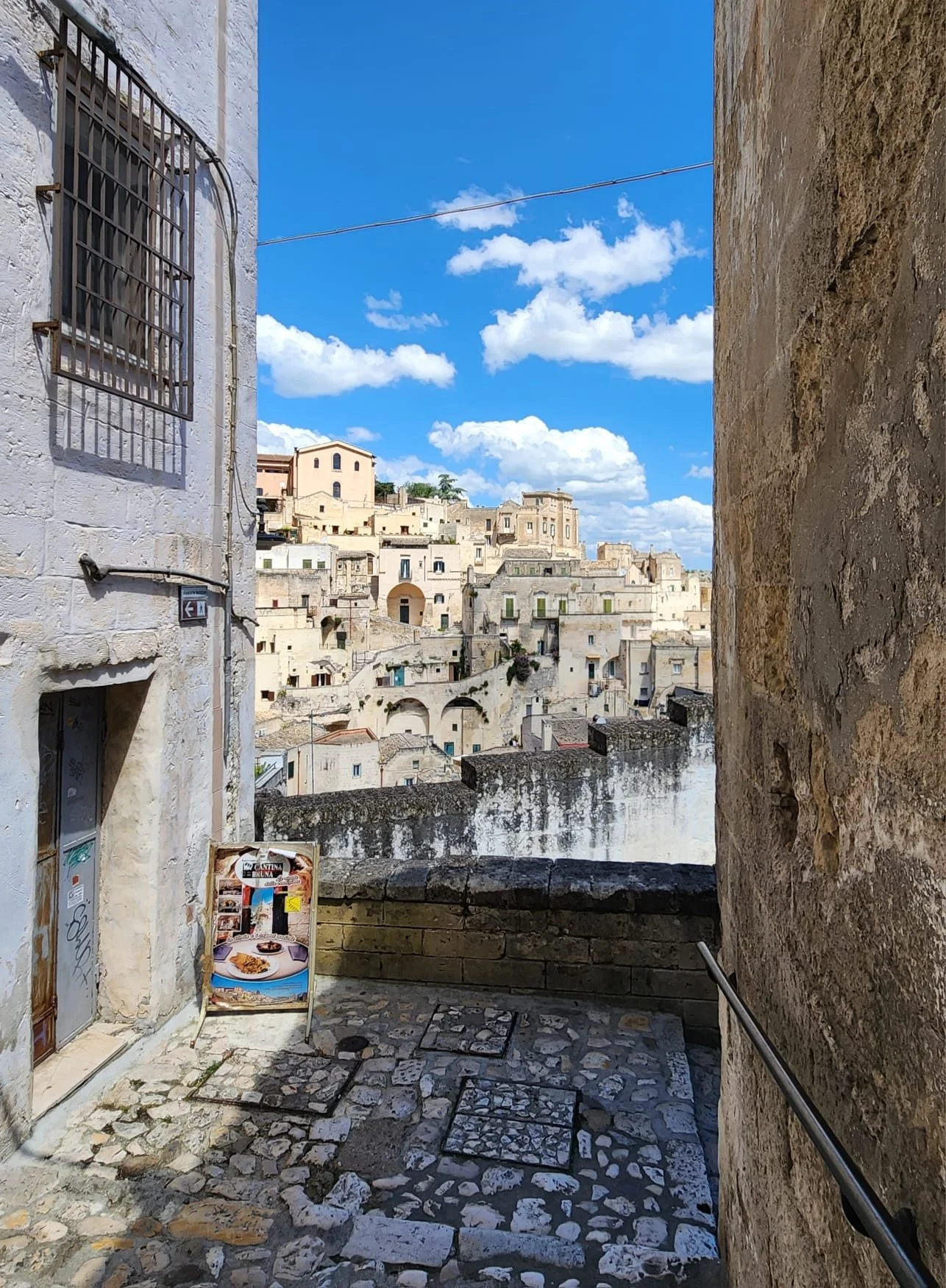
Photo: Sassi di Matera in Matera, Italy
Photo©: Anna Fishman / Olegana Travel Boutique
Who this trip is perfect for
Couples marking something:
An anniversary, a birthday, a retirement. The pacing suits two people who want a long lunch and nothing on the schedule after four. Day 6 exists for exactly this traveller, and so does the second glass at the cellar in Manduria.
Photo©: Anna Fishman / Olegana Travel Boutique

Families with older children and teenagers:
A potter’s wheel, a wood-fired bread oven, a fish market at dawn and a castle nobody can explain will carry a fourteen year old through a food trip without anyone pretending. Younger children work too, with the right property and a shorter touring day.
Photo©: Anna Fishman / Olegana Travel Boutique
Anyone who takes wine seriously:
Primitivo di Manduria, Negroamaro, Susumaniello and the whites of Locorotondo, tasted in the cellars where they are made rather than in a tasting room built for coaches. Most of these bottles never leave the region.
Photo©: Anna Fishman / Olegana Travel Boutique
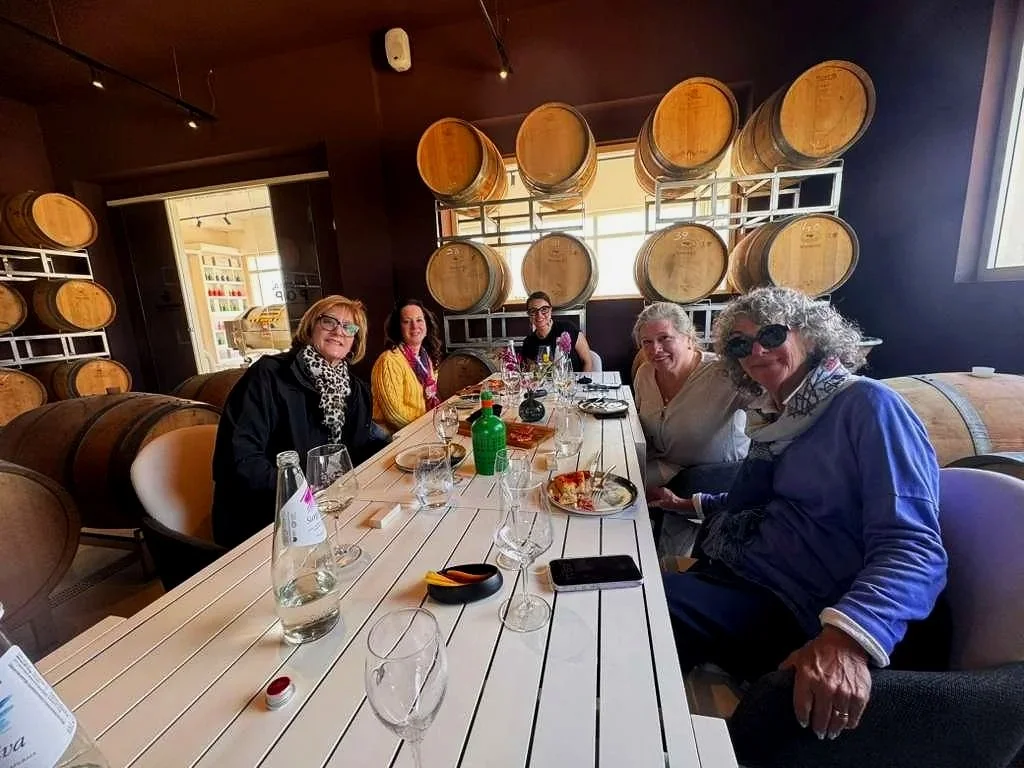
If you would rather travel with a group, I also host a women's small-group Puglia trip several times a year.
Travelers already going elsewhere in Italy:
Puglia is the week that makes the rest of the trip look different. It pairs well with a classic Italy itinerary through Rome, Florence and Venice, and the train and flight connections north are straightforward. Tell me where else you are going and I will decide which end of the trip Puglia belongs at.
Photo©: Anna Fishman / Olegana Travel Boutique
Where you’ll stay
Valle d’Itria, eight nights. A restored masseria, which is the fortified farmhouse that ran the olive economy here for centuries. The good restorations kept the stone, the vaulted ceilings and the courtyard and added a pool and a kitchen worth eating in. You are in open country between the hill towns, so the walkability is nil and the quiet is total, which is the trade most clients want. Breakfast is included and served outside from May. The standout is usually the pool, set among the olives with nobody else in it.
Adriatic coast, one night. A small property in a historic centre near the water, chosen so the final morning is a short run to the airport. Here you can walk to dinner, which after eight nights of driving to it is a pleasure. Breakfast is included. The standout is the location: you are minutes from the cathedral and the harbour on foot.
Alternatives if a masseria is not right: a restored trullo complex with a private pool for a family or a group of friends, a palazzo in a historic town centre if you would rather be able to walk everywhere, or a coastal property with direct sea access. Age policies vary a great deal in this region and several of the best masserie are adults only or set a minimum of twelve or sixteen, so tell me the ages of your children early and I will filter for it
Best time to visit Puglia
April, May, September and October are the months I recommend first. Daytime highs run from the low sixties in April up to the high seventies in September, the towns are busy without being full, and the countryside is at its best. April is the month for walking rather than swimming, with wildflowers through the olive groves and Easter processions in the hill towns. The sea warms enough to swim from late May. September brings the grape harvest and late October the olive harvest, when the frantoi run day and night and you can taste oil an hour after it was pressed. This is also the window I write about in where I send clients in the fall. If you have any flexibility at all, book one of these four months.
June, July and August run hot, regularly into the mid nineties, and it is Italian holiday season, so the coast fills with domestic visitors and the good kitchens are booked out weeks ahead. The compensation is that the sea is at its warmest and every festival in the calendar is running. If school terms leave you no choice, come anyway, and let me plan around it with six thirty starts, long afternoons at the water and nine o’clock dinners.
November through March is quiet and green, with highs in the fifties and low sixties and real rain in December and January. Many rural masserie close for the season, the beach clubs are shut, and the point of Puglia is largely being outside. The exception is the run up to Christmas, when the towns light up and the food turns to cime di rapa and citrus. If you are coming in winter, base yourself in a town rather than the countryside.

Let's design your Italy trip.
I'm Anna Fishman, and every itinerary I build starts with a conversation. Tell me what excites you and I'll take it from there.
“First of all I wanted to thank you for a great job you did organizing the trip for us. It was amazing!”
- Yevgeniy L., Puglia and Venice
Frequently asked questions
-
Every itinerary is priced individually, because the property, the season and the number of touring days move the figure more than anything else. A detailed quote follows our first call, once I know what you actually want.
-
Yes, comfortably. Ten days covers the Valle d'Itria, the coast, the Murgia and the Salento from one base. Eight works if you cut the Murgia or the far south. Fewer than seven and the driving starts to outweigh the days.
-
Not on this itinerary. You have a private guide and driver on touring days and transfers at either end, so nobody is navigating a hill town on market day or driving back from a cellar. The roads here are easy. The parking in the old centres is not.
-
Entirely. This is a sample, not a departure. Clients regularly swap in Gallipoli and the Ionian side, Galatina for pasticciotto and its fresco cycle, or a whole day given over to one producer.
-
There is seasonal nonstop service from the United States into Bari, and outside that window you connect through Rome, Milan or a European hub into Bari or Brindisi. Routes and seasons change from year to year, so check with your airline for current nonstops when you are ready to book. If you are combining Puglia with Rome or Florence, the fast train north from Bari often beats flying.
-
Yes, quoted separately through Travel Guard. I recommend it on every trip, and particularly on one with this many pre-booked private experiences.
-
Six to nine months for April, May, June, September and October. The properties are small, the good ones fill early, and the producers and kitchens I use take a limited number of private visits each week.
-
Yes, with the right property. Age policies vary more here than most regions, and several of the best masserie are adults only or set a minimum of twelve or sixteen. Tell me the ages early and I will filter for it before you fall in love with somewhere that will not take you.
-
Yes, and it is the extension I am asked for most. The Sassi sit an hour and a half from the Valle d'Itria, so it works either as a long day from the masseria or, better, as two nights at the end before you fly from Bari. With two weeks I would add the Gargano as well. Tell me on our call and I will build it in.