
Luxury Ireland vacation: Belfast, the Causeway coast and Donegal, 9 days
There is a ferry that takes forty minutes to cross from Ballycastle to Rathlin Island, and at the far end of the island is a lighthouse built upside down with the light at the bottom, and below it a stack of rock where tens of thousands of guillemots, razorbills and puffins nest so densely that the noise arrives before the smell does, and the smell arrives well before you do. Nobody is ready for it. This is the trip I love designing most.
This is the half of Ireland most American travelers never see. You start in Belfast, which has become one of the most interesting cities in these islands: the Titanic museum built on the slipway where she was actually launched, and a black taxi tour through the peace walls with a driver who lived it. Then the Causeway Coast, which is forty miles of basalt cliffs, rope bridges and ruined castles on headlands, and Rathlin offshore with its seabird colony. West across the border into Donegal for the cliffs at Slieve League, three times the height of the Cliffs of Moher and with almost nobody on them, and Glenveagh, where golden eagles were brought back and a red deer herd runs in a glen with a castle at the end of it. Then south through Yeats country to Mayo, and a boat out into a bay with three hundred and sixty five islands in it.
I'm Anna Fishman, and I send people here when they tell me they have done Ireland and want to know what they missed. Every detail is handled: the transfers, the guides, the hotels, the reservations, the border. You just show up and live it. Picture yourself here. Tell me what you love, and I'll design the rest. Start with the planning form below.
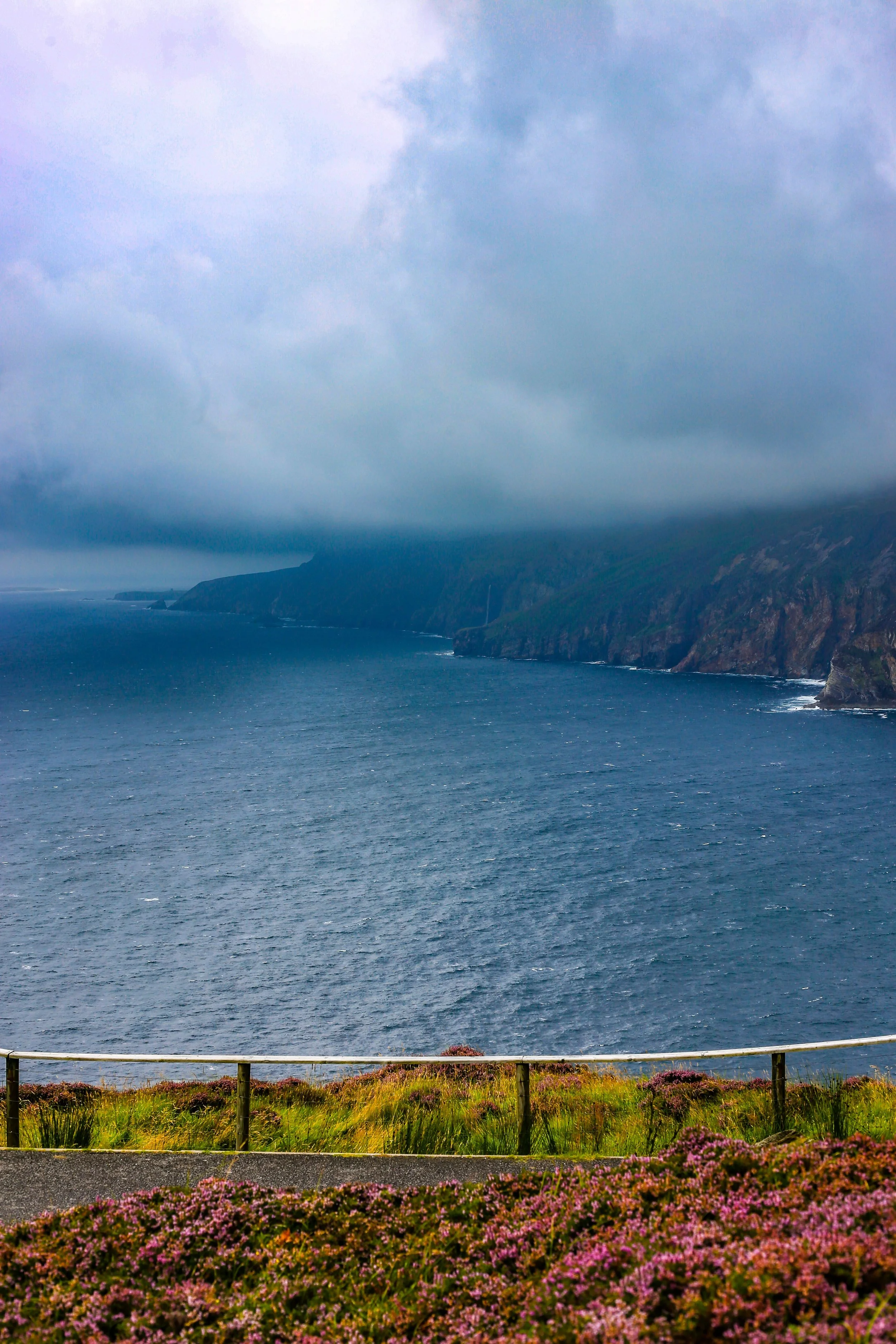
Photo: Stunning coastal view of dramatic cliffs overlooking the Atlantic Ocean in County Donegal, Ireland, beneath a cloudy sky.
Photo©: Vincent Rivaud / pexels
What’s included?
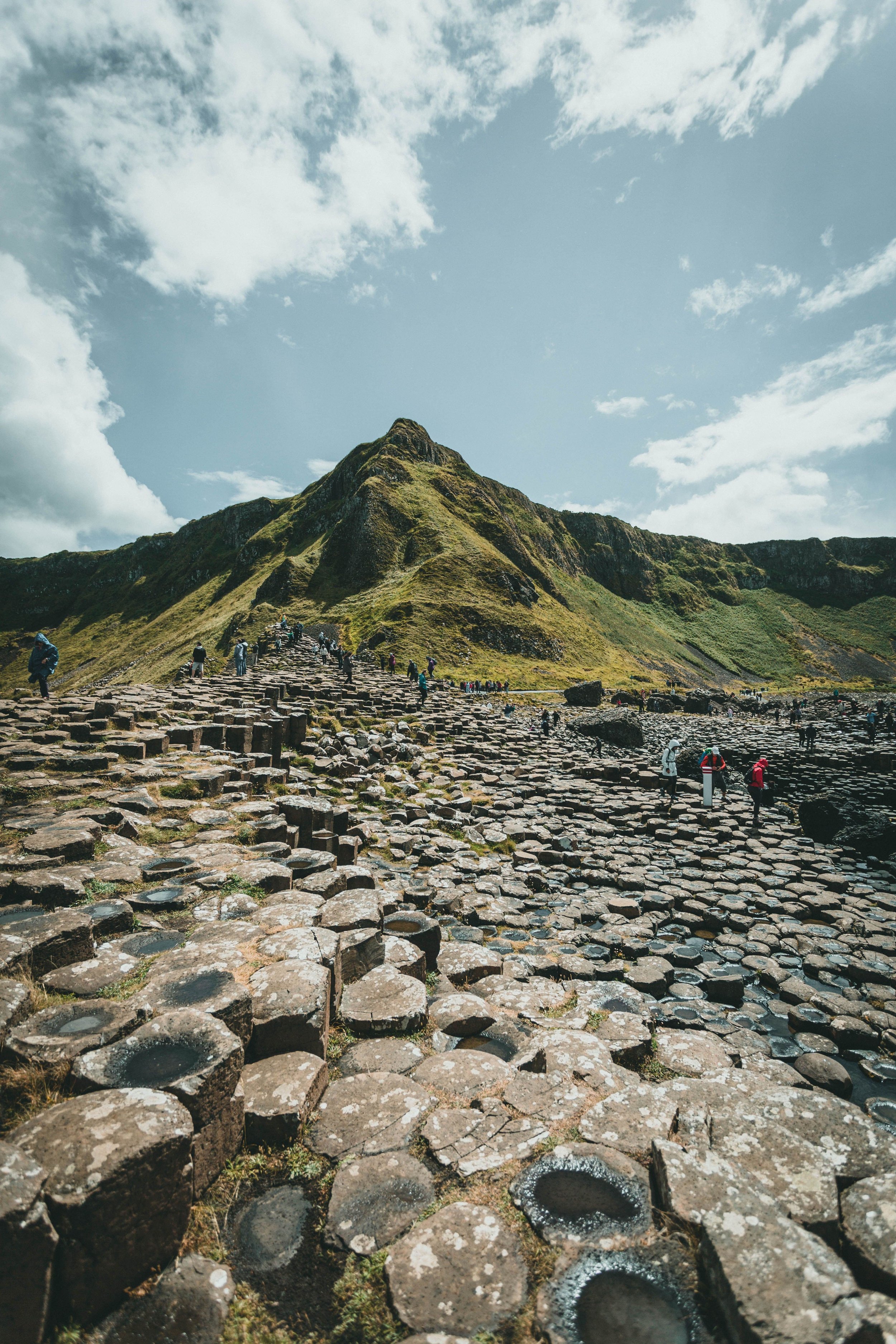
Photo: Giant’s Causeway in County Antrim, Northern Ireland, features distinctive basalt columns along the rugged Atlantic coast.
Photo©: Jonathan Cooper / pexels
Included
Private vehicle with a dedicated driver-guide throughout, including all airport transfers and both border crossings
8 nights of boutique hotel, country house and castle accommodations with breakfast throughout
Admission to Titanic Belfast, with entry timed to avoid the cruise groups
Private black taxi political tour of Belfast with a local driver
Guided boat trip on Strangford Lough with a marine naturalist, looking for common and grey seals and overwintering birds
Admission to the Giant's Causeway and the Carrick-a-Rede rope bridge
Tour and tasting at the Old Bushmills Distillery, the oldest licensed distillery in the world
Return ferry to Rathlin Island, with guided access to the West Light seabird centre in season
Private walking tour of the Derry walls with a local guide, and admission to the Tower Museum
Guided walk at Slieve League, with the cliff road access permit
Full day in Glenveagh National Park with a park guide, including the castle and gardens
Admission to Carrowmore Megalithic Cemetery in County Sligo
Private boat cruise on Clew Bay in County Mayo
Curated restaurant recommendations and reservations throughout
24/7 concierge support and emergency contact throughout the trip
Not included
International airfare, travel insurance (quoted separately through Travel Guard), meals at leisure, personal expenses, tips and gratuities, city tourist taxes payable directly at hotels.
Ready to start planning?
Tell me about your travelers and what matters most. I'll build from there.
Is Northern Ireland worth visiting on an Ireland trip?
Yes, and it is the part most visitors skip. The Giant's Causeway, Titanic Belfast, the Carrick-a-Rede rope bridge and the Derry walls are all within ninety minutes of each other, and the seabird colony on Rathlin Island is among the largest in these islands. Nine days lets you pair Northern Ireland with Donegal and Mayo, which is where Ireland gets genuinely empty. Five days covers the Causeway Coast alone.
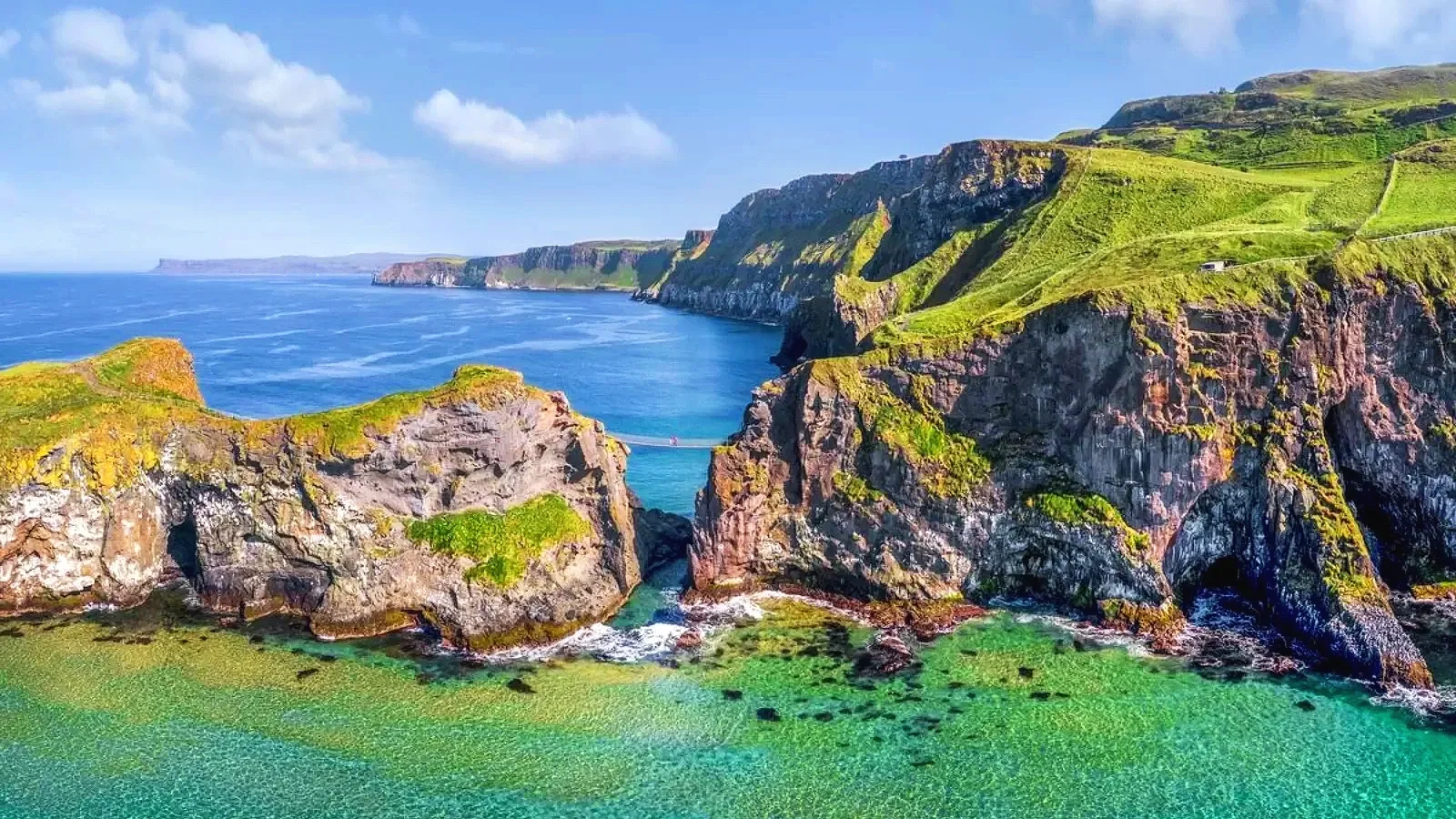
Photo: Carrick-a-Rede Rope Bridge in County Antrim, Northern Ireland, is a historic suspension bridge spanning a dramatic coastal gorge above the Atlantic Ocean.
Photo©: Tourism Ireland
Your day-by-day itinerary
This sample itinerary was designed around the north and northwest, the emptiest and least-travelled coast in Ireland. It's here to inspire, not to lock you in. You might pick a few pieces and let me build something different around them. Your trip is yours, and we'll customize every detail until it fits.
Photo©: A Frined / unsplash
Day 1
Belfast
You fly into Belfast or into Dublin, in which case the transfer north takes about two hours on a good road. Either way your driver-guide meets you and the first afternoon is deliberately light.
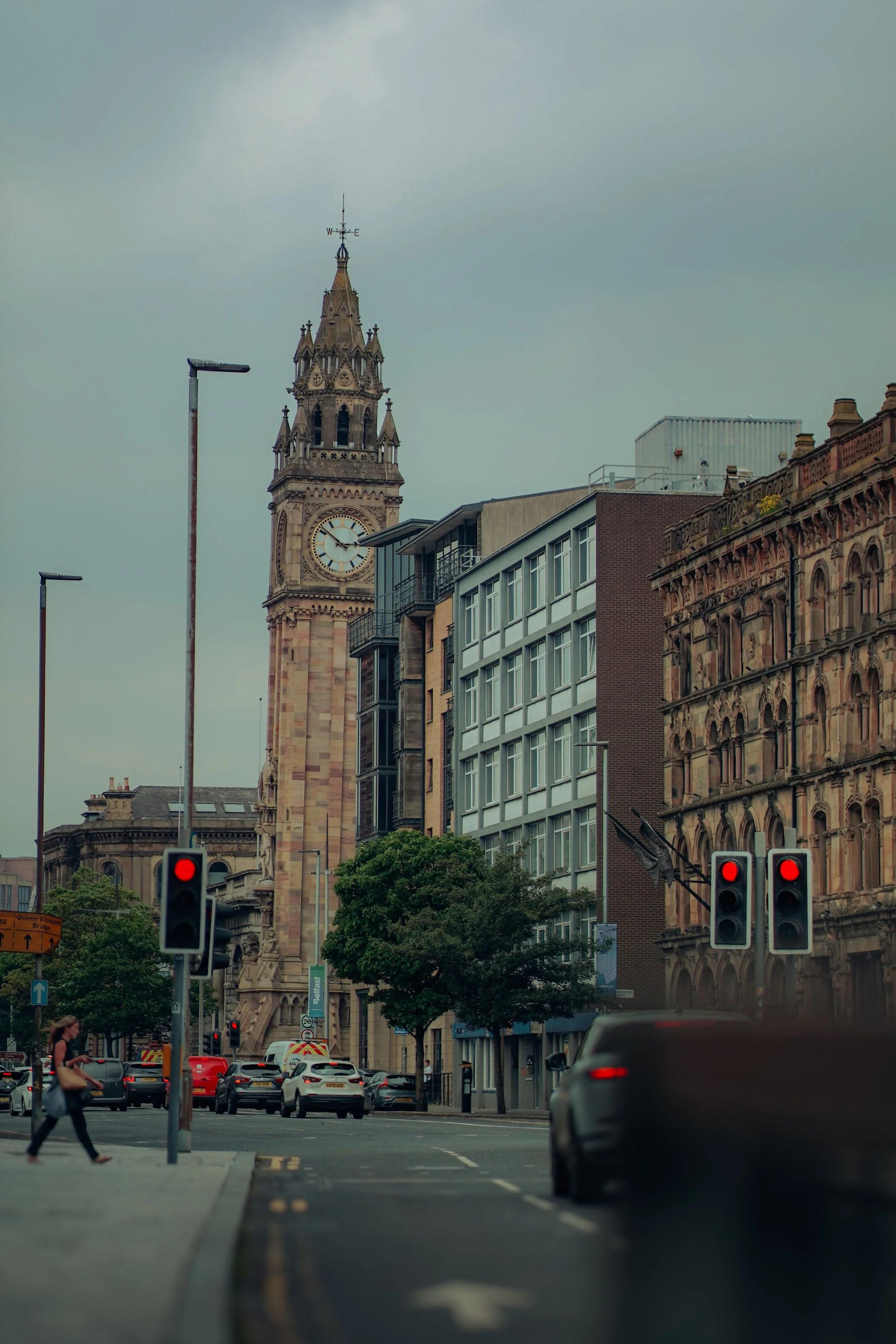
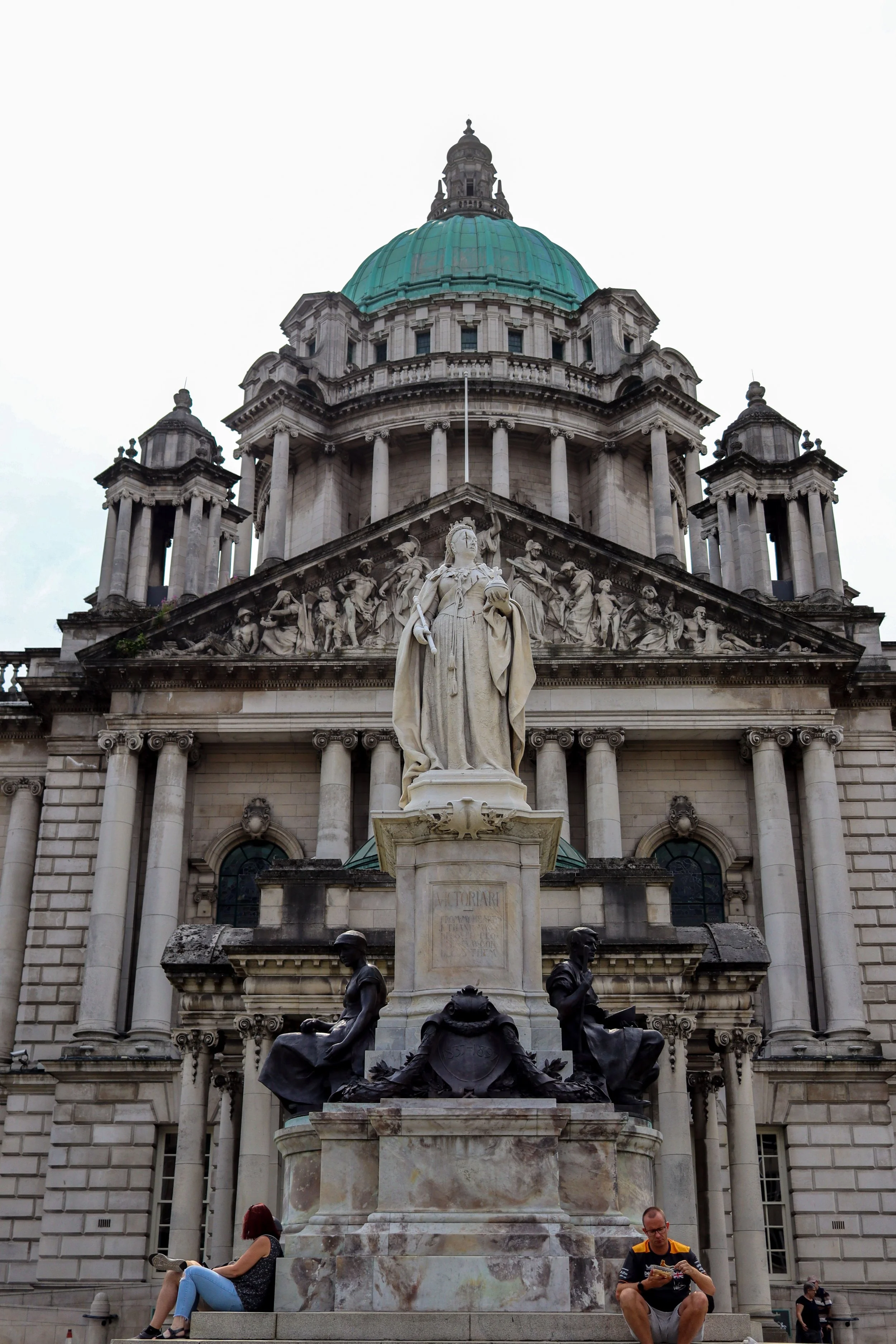
Belfast is a small, dense, walkable city that has changed more in twenty years than anywhere else in these islands. The Victorian centre is grand out of all proportion to the population, because linen and shipbuilding made a great deal of money here very quickly. City Hall sits in the middle of it with a green copper dome, and the Cathedral Quarter behind it is where the bars and the music are.
The afternoon is yours: the botanic gardens and the Palm House, the Ulster Museum, or a walk up to the Crown Liquor Saloon, a gin palace from 1885 with snugs, gas lamps and tiled walls, now owned by the National Trust.
Dinner in the Cathedral Quarter. Belfast's food is better than its reputation and considerably better value than Dublin's.
Photo: Albert Memorial Clock Tower in Belfast, Northern Ireland, is a distinctive Gothic Revival landmark standing prominently against the city skyline beneath a cloudy sky.
Photo©: Eldho Jacob / pexels
Day 2
The Titanic, and the walls
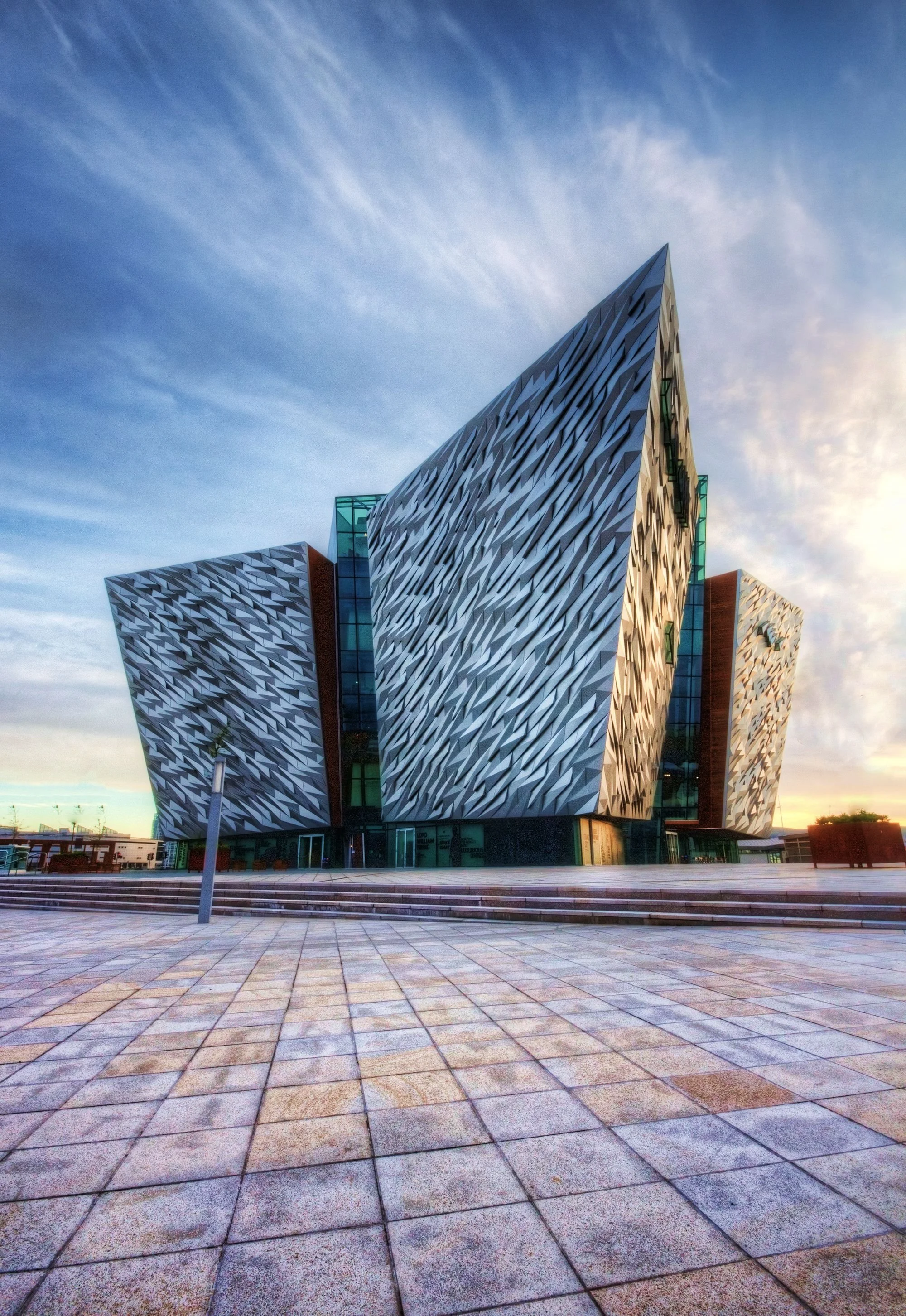
Titanic Belfast in the morning, and the thing that makes it work is where it is: built on the slipways where the ship was designed, built and launched, with the outline of the hull marked out on the ground outside. Nine galleries take you through the shipyard, the fit-out, the launch and the sinking, and the building itself is the same height as the hull. Give it three hours.
In the afternoon, the black taxi tour, which is the most important thing you will do in Belfast. A local driver takes you through the Falls and the Shankill, along the peace walls, past the murals, and explains the last fifty years from the inside. Drivers come from both communities and most will tell you plainly which one is theirs. You can ask anything. People do.
It is not a comfortable ninety minutes and it is not meant to be. Everybody comes back quieter and better informed.
In the evening, a walk down to the Cathedral Quarter, where the traditional music sessions are as good as anything in Galway and far less performed.
Photo: Titanic Belfast in Belfast, Northern Ireland, is an iconic maritime museum known for its striking modern architecture inspired by the shape of a ship’s hull.
Photo©: Steven Hylands / pexels
Day 3
Strangford Lough, and north to the Causeway Coast
East out of the city to Strangford Lough, a huge sea inlet dropped by a glacier and one of the most important marine sites in Europe. A boat takes you out with a naturalist: common and grey seals hauled out on the rocks in numbers, terns in summer, and in winter the whole lough fills with pale-bellied brent geese that have flown in from arctic Canada.
Lunch by the water, then north through County Down and County Antrim, with the Irish Sea on your right and Scotland visible on a clear day, which is closer than most people realise. At the narrowest point it is twelve miles.
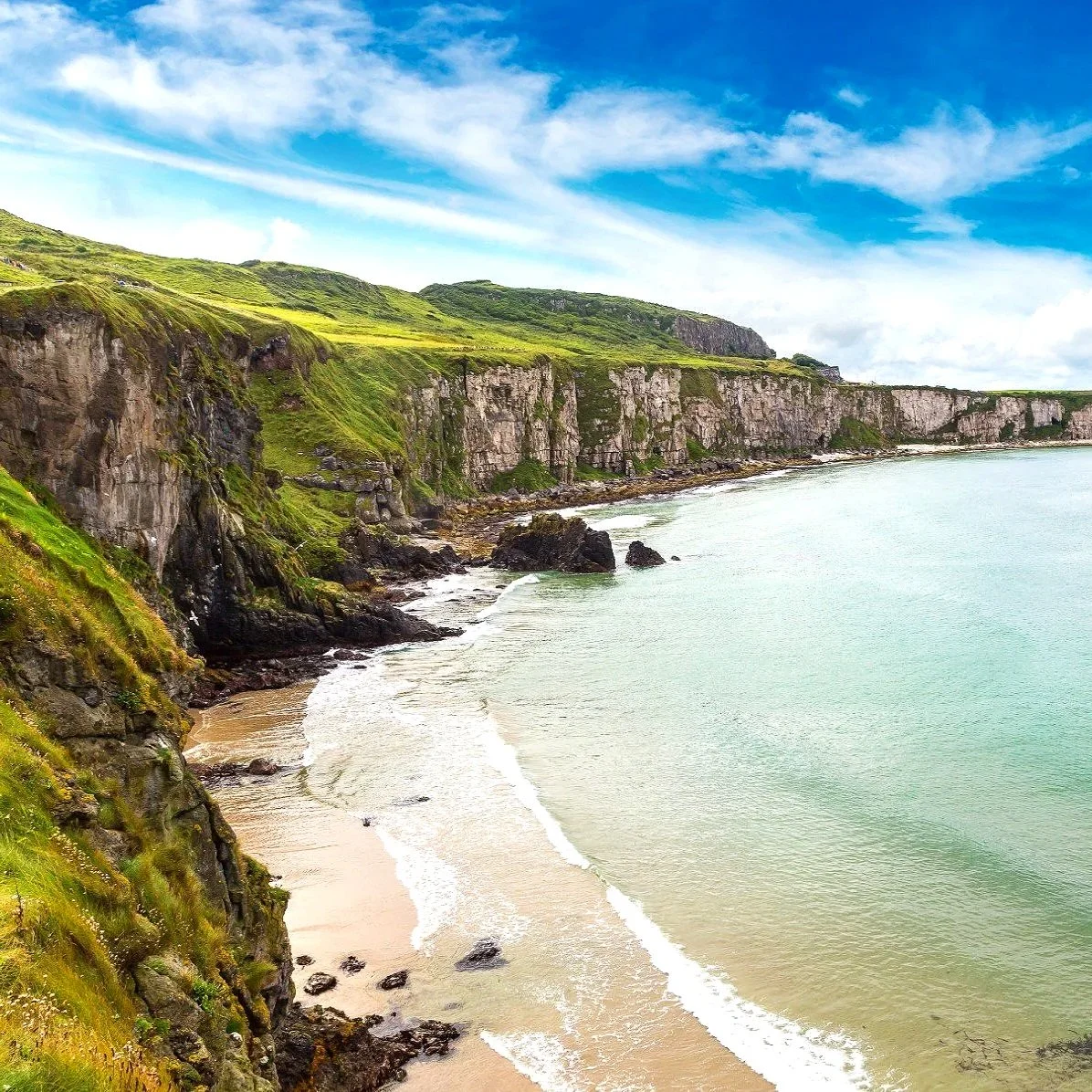
You arrive on the Causeway Coast in the late afternoon, into a landscape of basalt headlands, white limestone and small harbours.
Two nights here, and the first evening is a walk and an early dinner, because tomorrow is a long and very good day.
Photo: The Causeway Coast in County Antrim, Northern Ireland, is renowned for its dramatic coastal scenery and iconic landmarks, including the Giant’s Causeway and Carrick-a-Rede Rope Bridge.
Photo©: Tourism Ireland
Day 4
Rathlin Island and the seabirds
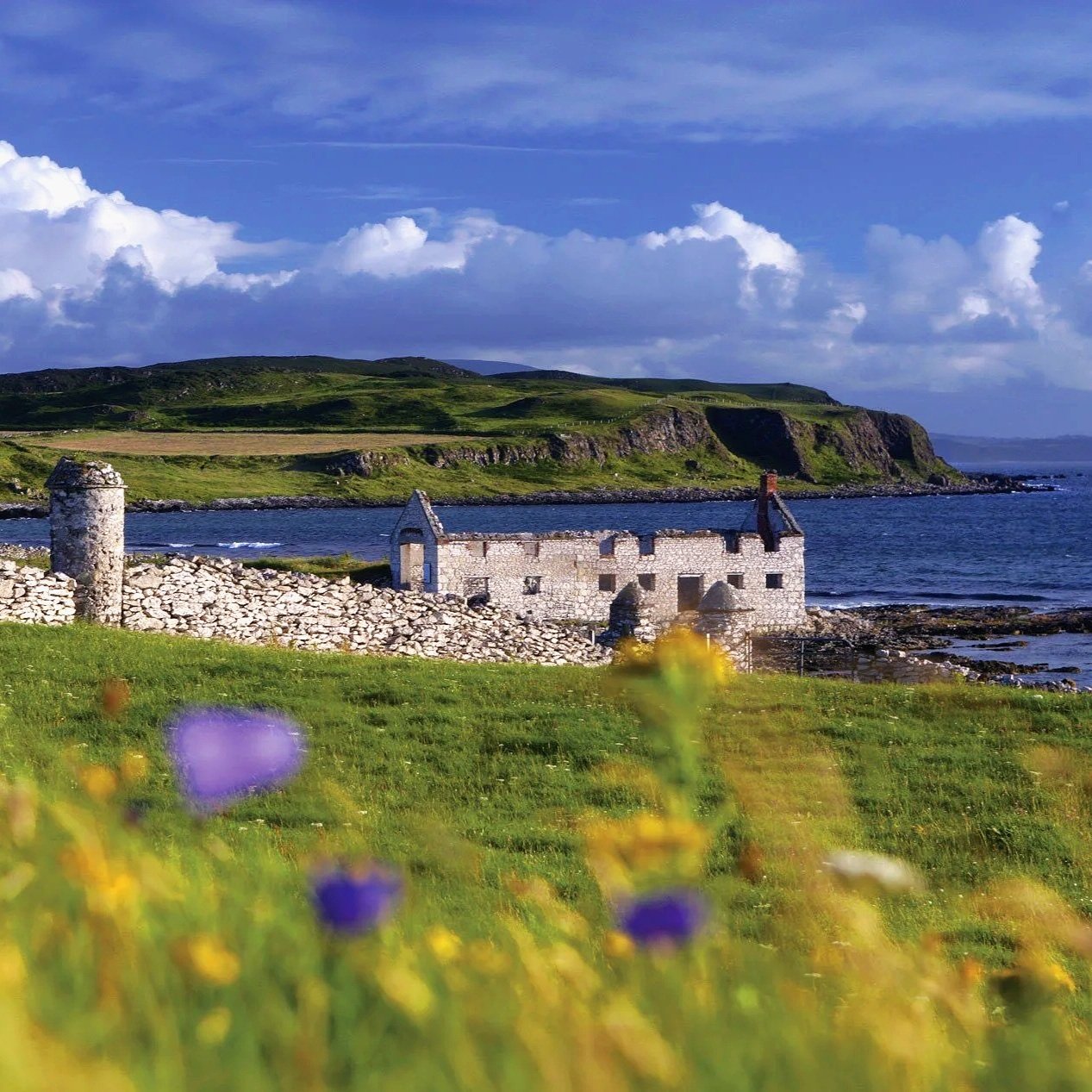
The ferry from Ballycastle takes about forty minutes and Rathlin is the only inhabited island off Northern Ireland, an L-shaped piece of rock with around 150 people on it.
At the western end is the West Light, a lighthouse built upside down with the lamp at the base of the cliff rather than the top, and beneath it a viewing platform looking straight at a sea stack packed with nesting seabirds. From April into July it holds tens of thousands of guillemots and razorbills and several hundred puffins, and it is the largest seabird colony in Northern Ireland. The noise is extraordinary.
Outside the breeding season the stacks are empty, which is worth knowing before you book: come between late April and mid July if the birds are the reason you are here.
There are seals around the harbour year round, and the island has a good pub and a beach at Church Bay. The afternoon ferry brings you back, and dinner is at the hotel with the light going down over the water.
Photo: Rathlin Island off the coast of County Antrim, Northern Ireland, is a picturesque island known for its rugged coastline, rich history, and diverse birdlife.
Photo©: Tourism Ireland
Day 5
The Causeway Coast
Forty miles of the best coastline in Ireland, and you do it slowly.
The Giant's Causeway first, early, before the coaches: forty thousand hexagonal basalt columns stepping down into the sea, formed by a lava flow cooling sixty million years ago, or alternatively by a giant called Finn McCool building a road to Scotland, depending on who is telling you. Both versions are worth hearing.
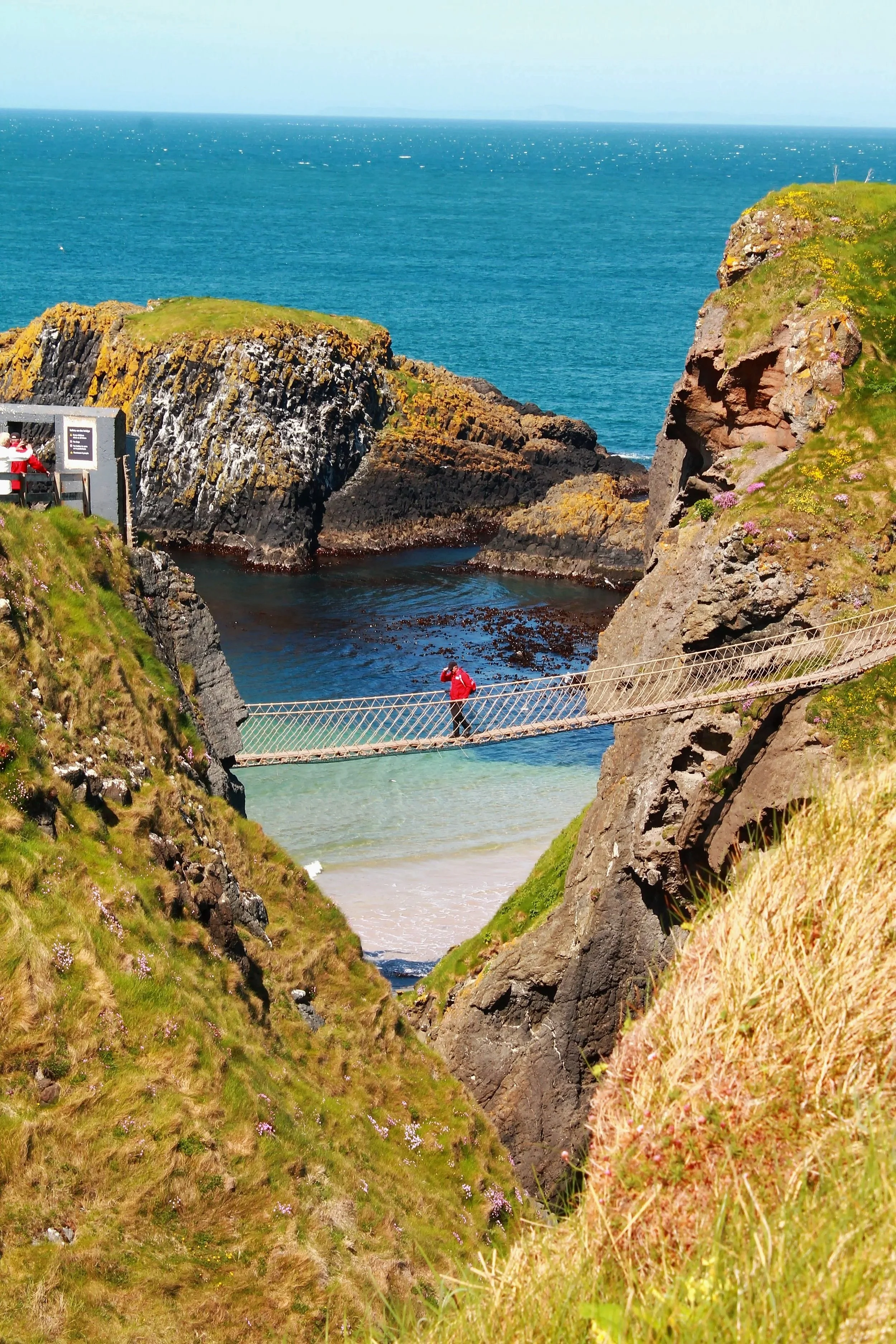
Then Carrick-a-Rede, a rope bridge slung thirty metres above the water between the mainland and a fishing rock. Salmon fishermen put the first one up in 1755 and there were only two ropes and a single handrail. It is safer now and still nobody crosses it without thinking about it.
Ballintoy Harbour is a few miles round the coast, down a road so steep and narrow that the drive is half the point, and there are sea stacks and rock pools at the bottom of it.
Dunluce Castle sits on a headland with a cave underneath and part of the kitchen fell into the sea in 1639. Then Bushmills, licensed in 1608, for a tour and a tasting.
Photo: Carrick-a-Rede Rope Bridge near Ballintoy, County Antrim, Northern Ireland, is an iconic suspension bridge spanning a dramatic coastal gorge above the Atlantic Ocean.
Photo©: Tolunay Küp / pexels
Love what you're reading?
This is a sample. Tell me about your travel style and I'll build your Ireland trip from scratch.
Day 6
Derry, and across into Donegal
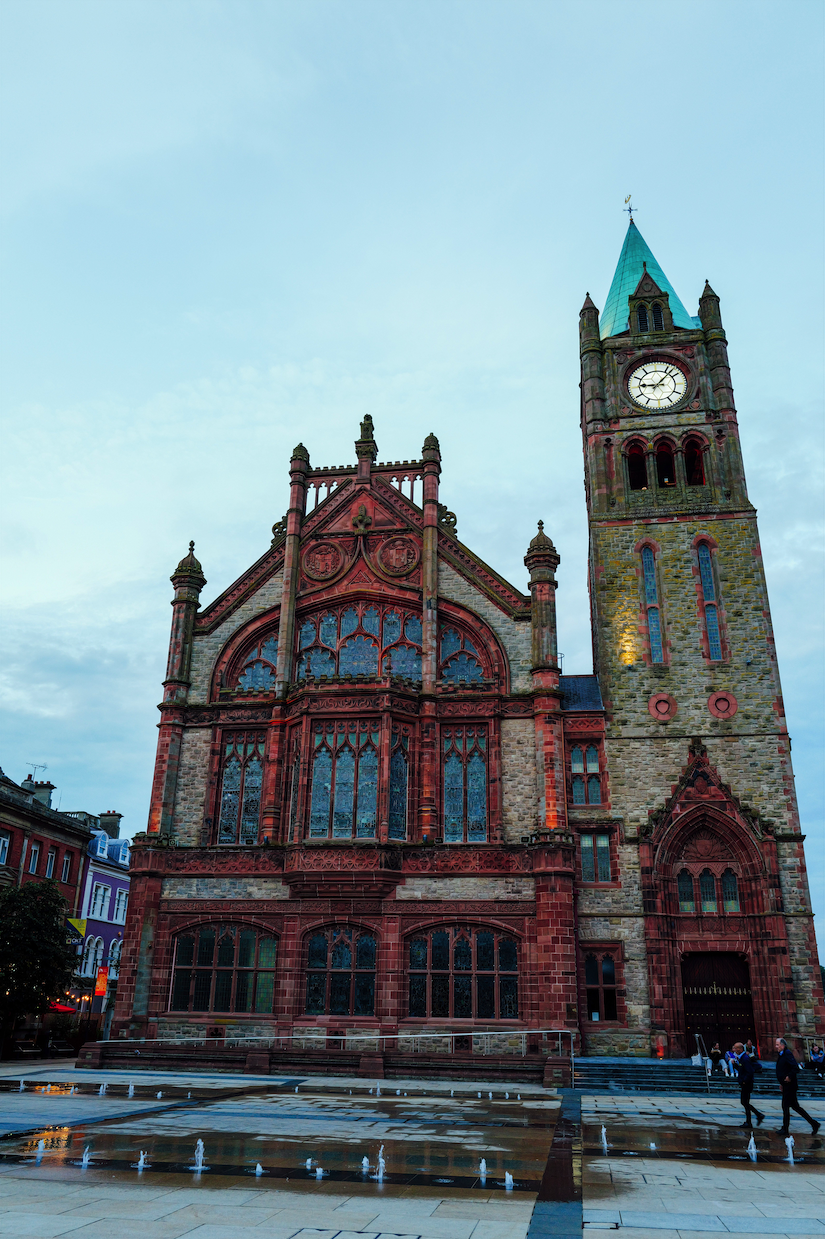
West to Derry, the only completely walled city left in Ireland, and you walk the walls with a local guide. They were built between 1613 and 1619, they have never been breached, and from the top you look down into the Bogside on one side and the old city on the other. A good guide will take you through the siege, partition, the civil rights march and Bloody Sunday in ninety minutes, and it is the clearest explanation of Irish history you will get anywhere.
The Tower Museum is inside the walls and covers the city's story and the Spanish Armada wreck found in the lough.
In the afternoon you cross into County Donegal, and the border is a sign at the side of the road and nothing else. The currency changes, the speed limits change from miles to kilometres, and your phone will probably hop networks.
Donegal is the emptiest county in Ireland and it feels it immediately. You arrive at a castle hotel by a lake in the late afternoon.
Photo: The Guildhall in Derry, Northern Ireland, is a striking historic building known for its red brick facade, Gothic architecture, and distinctive clock tower.
Photo©: Adrien Olichon / pexels
Day 7
Slieve League and Glenveagh
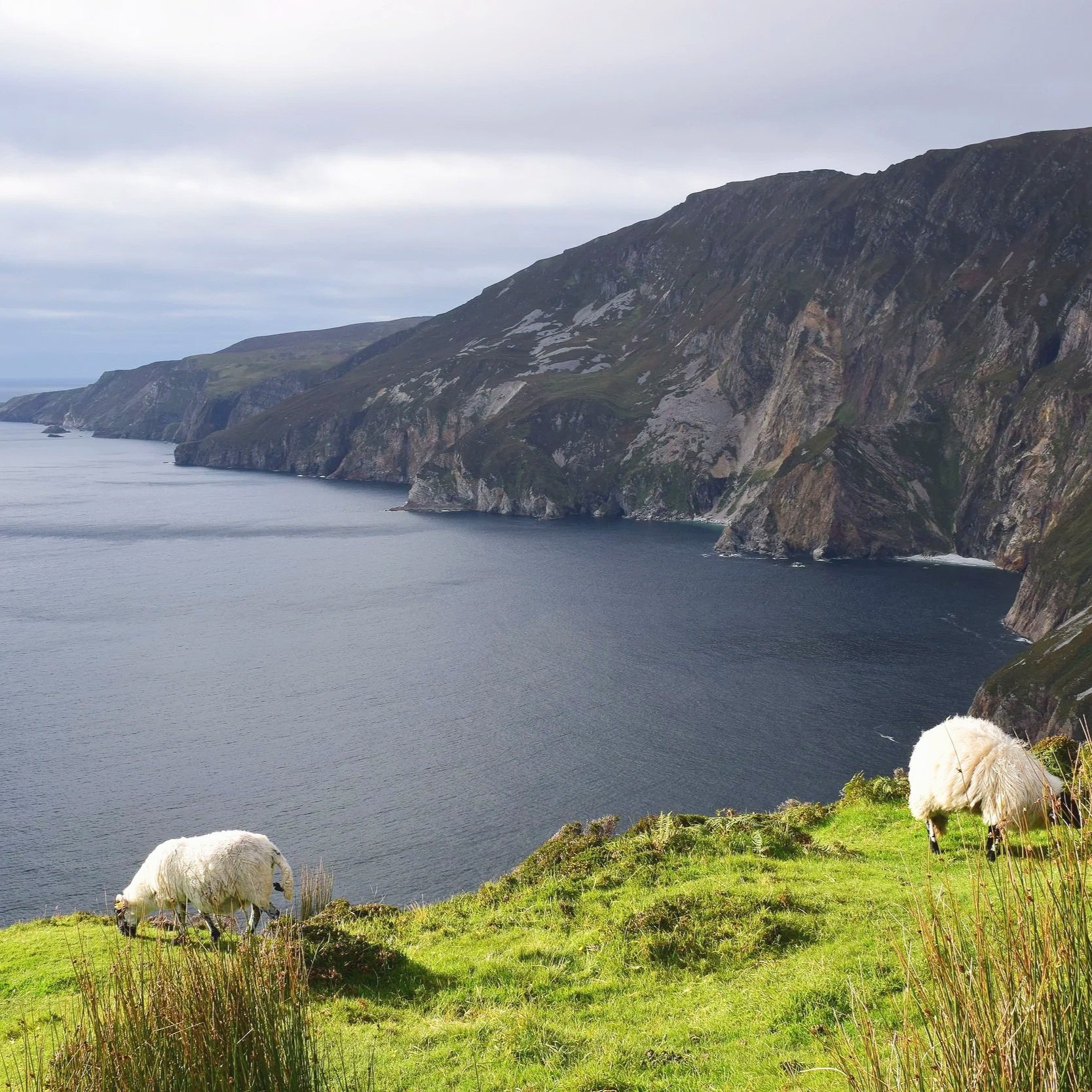
Slieve League in the morning, and these are among the highest sea cliffs in Europe: about 600 metres, roughly three times the Cliffs of Moher, and with a fraction of the people. There is a permit road that takes you most of the way up, and from the viewing point the cliffs fall away in bands of ochre and green straight into the Atlantic. On a clear day you can see Sligo and Mayo down the coast.
In the afternoon, Glenveagh National Park, which is 40,000 acres of mountain, lake and bog. There is a red deer herd here, one of the largest in the country, and golden eagles were reintroduced into these glens after being extinct in Ireland for a century. Whether you see one is entirely up to the eagle.
At the end of the lough is Glenveagh Castle, a Victorian folly built by a landlord who cleared the tenants off the estate to do it, with gardens that are far more beautiful than that history deserves.
Back to the lake for dinner.
Photo: Slieve League Cliffs in County Donegal, Ireland, are dramatic sea cliffs rising high above the Atlantic Ocean, surrounded by lush green landscapes.
Photo©: Dirk De Vlaminck / pexels
Day 8
Yeats country, and into Mayo
South through Sligo, which is Yeats country and says so at every opportunity, with reason.
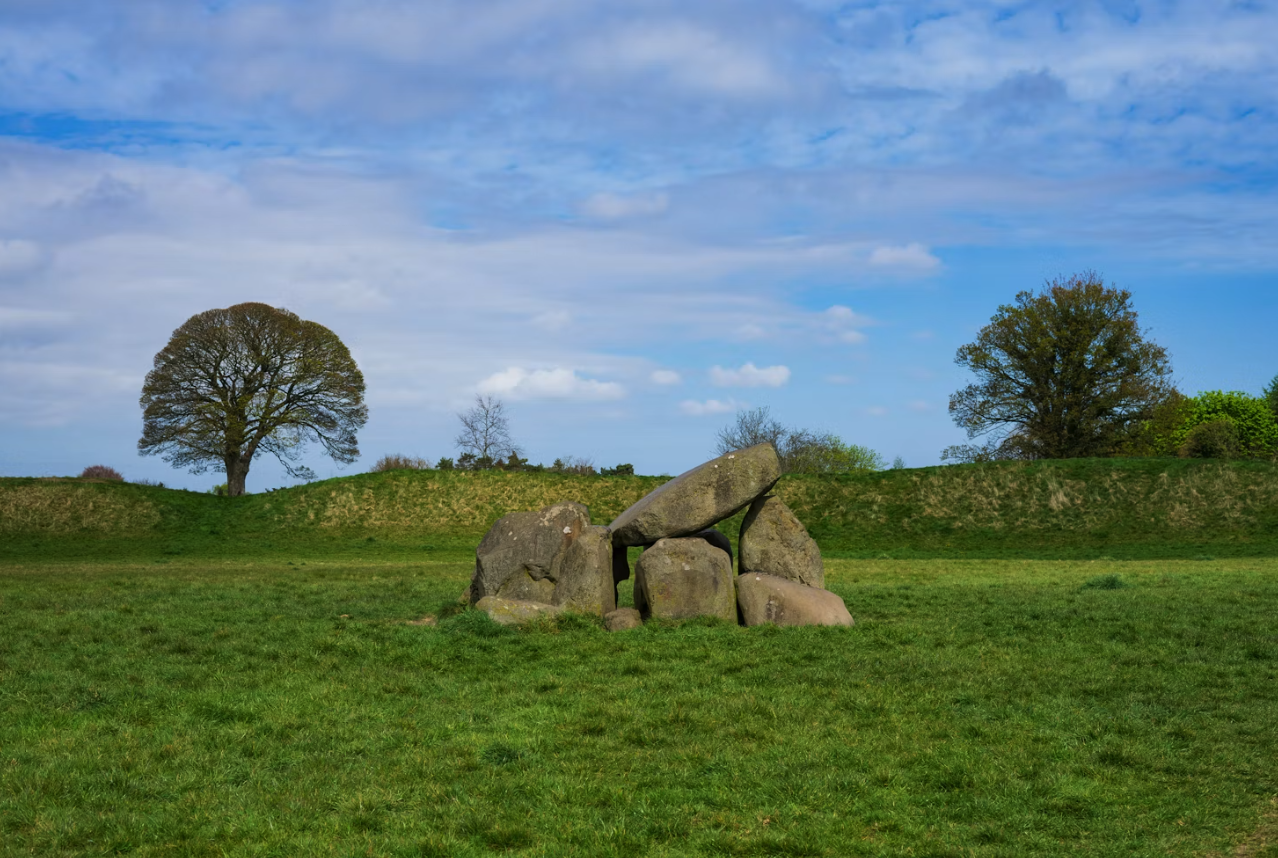
Carrowmore is one of the largest megalithic cemeteries in Europe, thirty surviving tombs in a field under Knocknarea, where the cairn on the summit is supposed to hold Queen Maeve standing upright in her armour. Then Drumcliff, where Yeats is buried under Ben Bulben with the epitaph he wrote himself, and Glencar Waterfall in the glen behind it, which is the one from the poem about the stolen child.
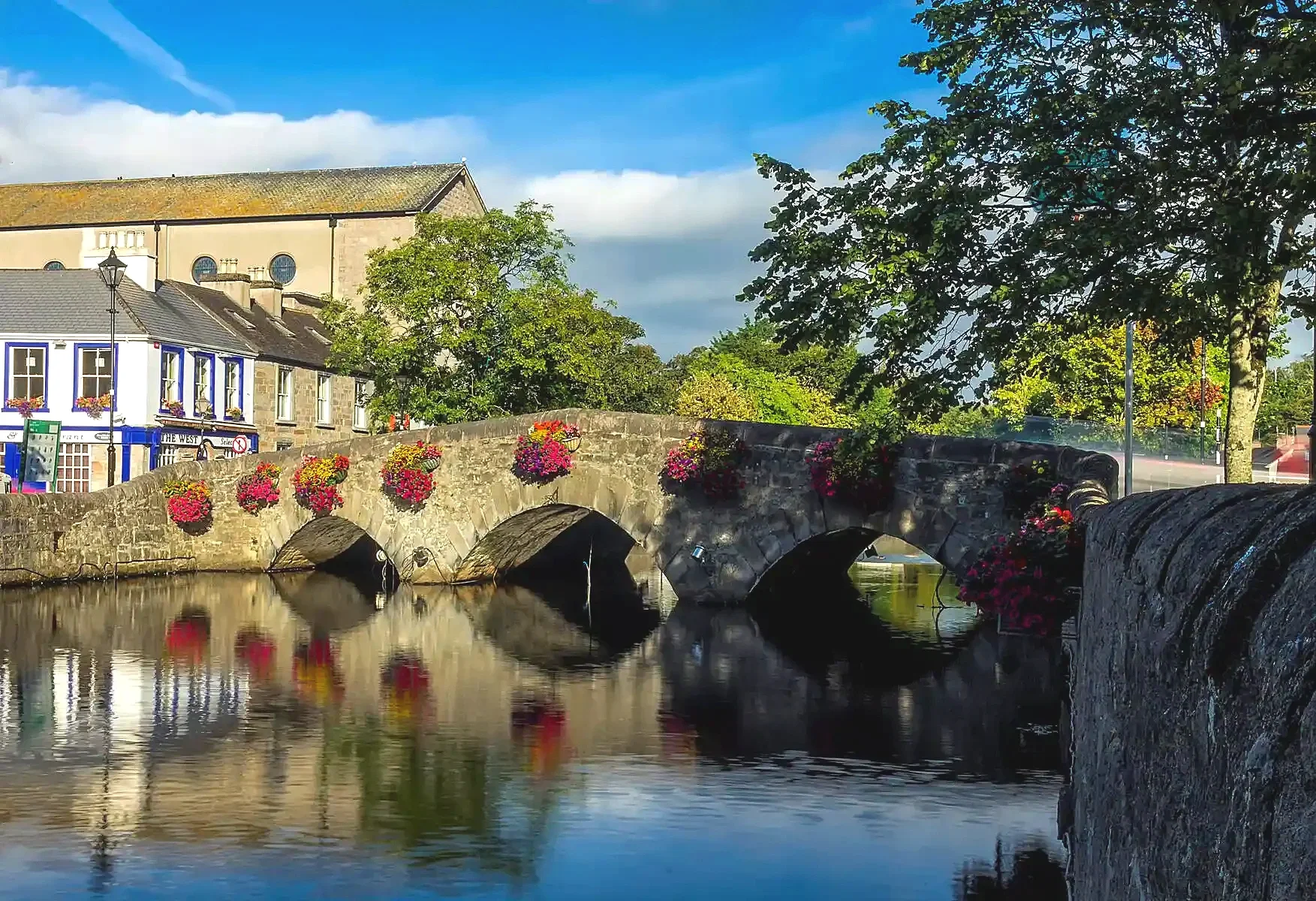
On into Mayo and down to Westport, a planned Georgian town on Clew Bay with a tree-lined mall along the river and pubs where the music is entirely for the locals.
In the late afternoon, a private boat out into Clew Bay, which is full of drumlins, small drowned hills left by the glacier, and there are said to be 365 islands in it. Seals throughout, dolphins often, and from May into July basking sharks, which are the second largest fish in the world and feed on plankton at the surface with their mouths open.
Dinner in Westport, and music afterwards.
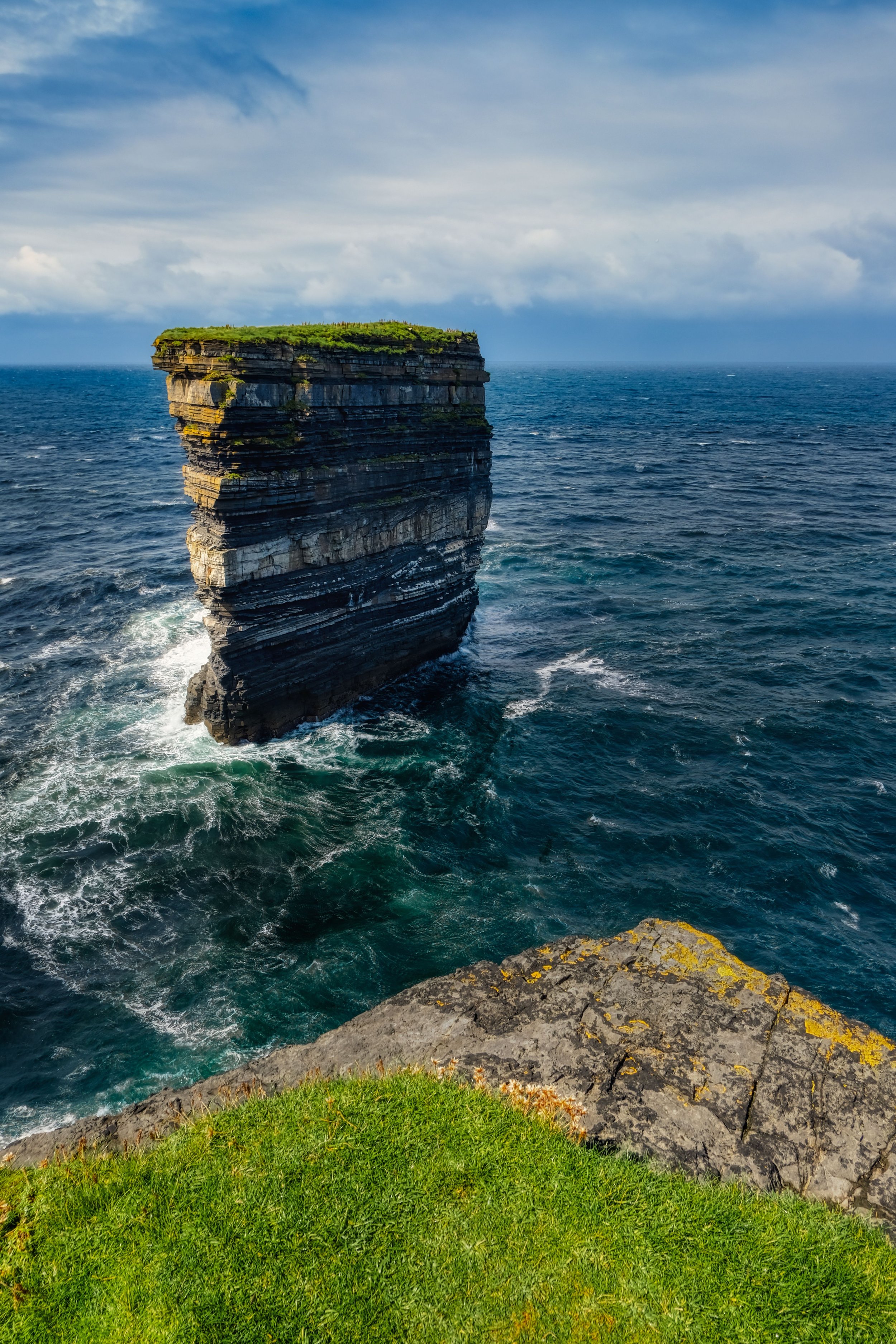
Photo: Dún Briste at Downpatrick Head in County Mayo, Ireland, is a dramatic sea stack rising from the Atlantic Ocean, known for its striking layered rock formations.
Photo©: Steven Hylands / pexels
Day 9
Home, or keep going
A private transfer to Knock, which is forty-five minutes away and flies to the UK and Europe, or back to Dublin, which is about three hours and has the nonstop service to the US and preclearance.
Or keep going. Connemara and Galway are ninety minutes south and connect straight into the west coast. Or cross to Scotland, which from this coast is a short hop and the natural other half of the trip: on a clear day at Ballintoy you have already seen it.
Photo: Belfast City Hall in Belfast, Northern Ireland, is a grand Baroque Revival landmark known for its distinctive architecture and prominent statue.
Photo©: Davide Sora / pexels
Who this trip is perfect for
Travelers who have already done Ireland once:
There is no Blarney, no Killarney and no Cliffs of Moher on this itinerary. If you did the famous circuit on a first trip and want to know what you missed, this is the answer, and most of what is on it is better than what you saw.
Photo©: Anna Fishman / Olegana Travel Boutique
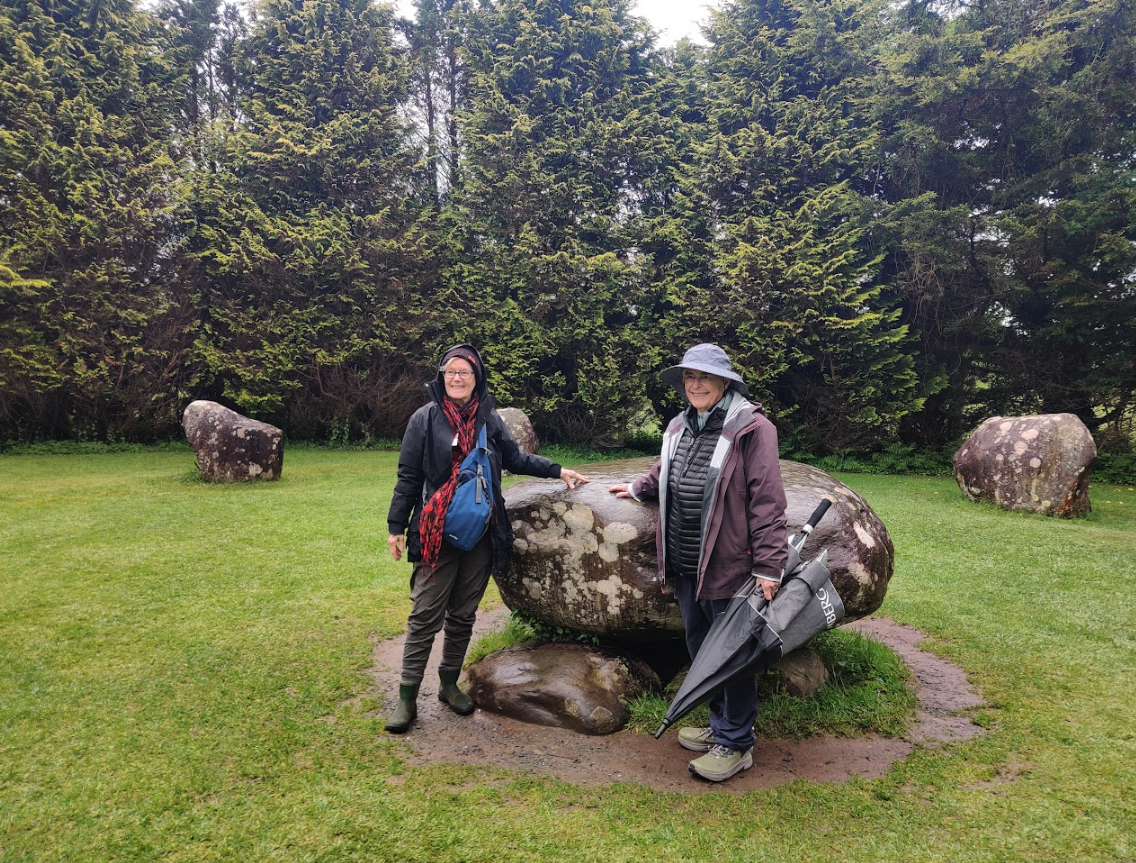
Birdwatchers and wildlife travelers:
Rathlin in the breeding season, Strangford Lough for seals and overwintering geese, golden eagles and red deer in Glenveagh, and basking sharks in Clew Bay in early summer. It is the strongest wildlife itinerary in Ireland and the timing genuinely matters, which is most of what I will want to talk about on the call.
Photo©: Tonti Family / Olegana Travel Boutique
Anyone drawn to the history:
Titanic, the peace walls, the Derry walls and Bloody Sunday, partition, the Famine, and five thousand years of megalithic tombs on top of all of it. The guiding on this route is the best in Ireland because in Belfast and Derry the guides lived through what they are describing. It is custom trip design, so the balance between history and landscape is yours to set.
Photo©: Tonti Family / Olegana Travel Boutique

Photographers:
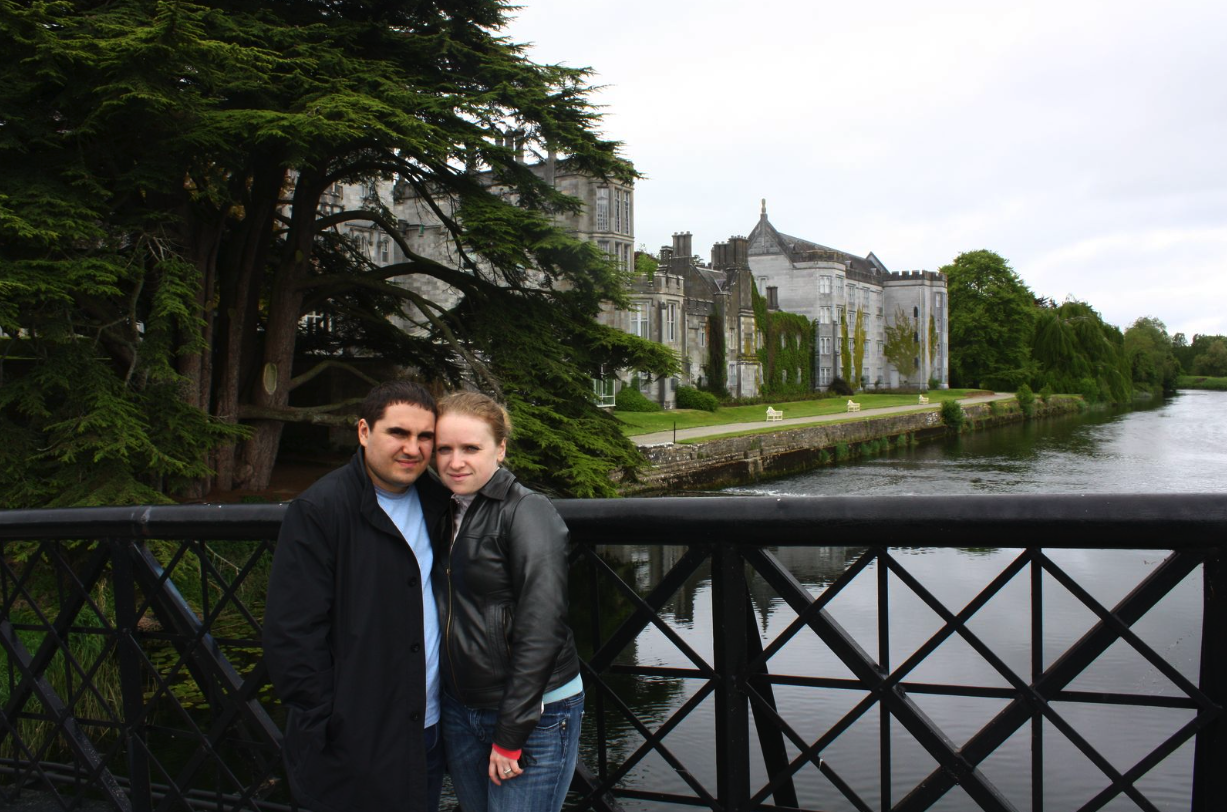
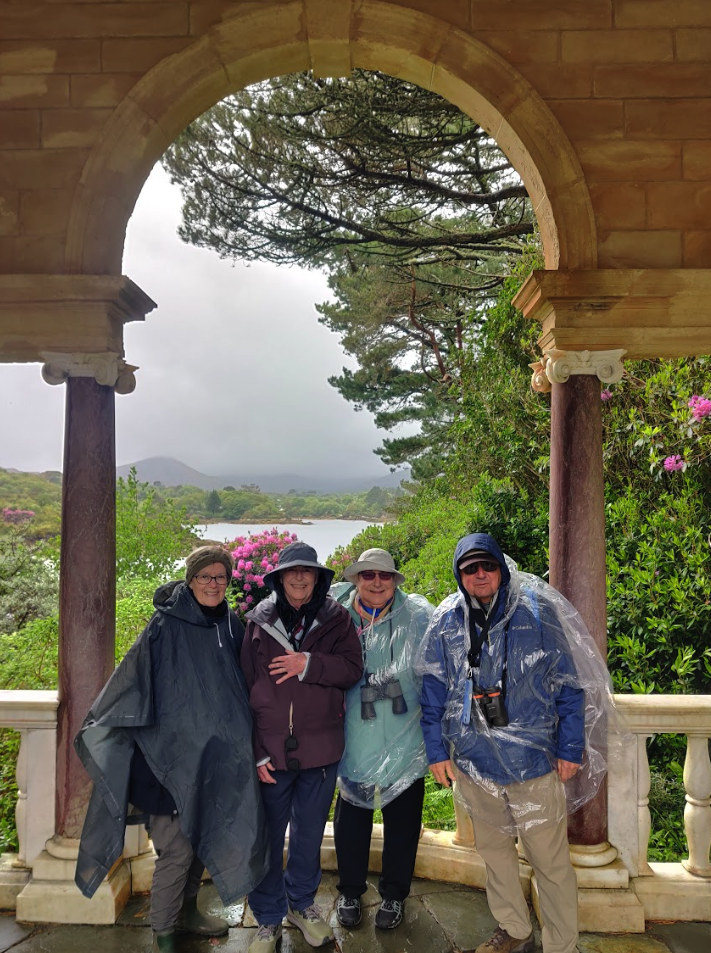
Basalt columns, a rope bridge over green water, six hundred metre cliffs with nobody on them, a bay full of drowned hills, and northern light that lasts until eleven in June. There is almost no queue anywhere on this route.
Photo©: Eda Yurtkuran / pexels
Where you’ll stay
Belfast, two nights. A boutique hotel in the city centre, walking distance to the Cathedral Quarter, City Hall and the Titanic Quarter, so you need a car for none of it. Breakfast included, and the standout is the location: Belfast is compact and staying centrally means the evenings are yours rather than a taxi problem.
The Causeway Coast, two nights. A historic coaching inn on the north Antrim coast, the kind with turf fires, low ceilings and a river running past. Breakfast included, and the standout is how close it puts you to the Causeway: you can be at the stones before the first coach arrives, which changes the experience completely.
Donegal, two nights. A restored castle hotel on a lake in the middle of the county, with grounds, a spa and a serious restaurant. Breakfast included, and the standout is the setting, which after two busy cities is exactly what the middle of this trip needs.
Westport, two nights. A comfortable property in or beside the town, so the pubs and restaurants along the mall are on foot. Breakfast included, and the standout is Westport itself: it is one of the most likeable small towns in Ireland and the music in it is entirely unperformed.
Best time to visit Northern Ireland and the Northwest
Late April to mid July. The window if wildlife is any part of why you are coming. Puffins, guillemots and razorbills are on Rathlin through the breeding season and gone by the end of July. Basking sharks appear in Clew Bay from about May. Daylight in June runs past eleven at night this far north, which is an hour more than Kerry gets. This is the period I would book.
August and September. Still excellent for everything except the seabirds, which have left. Warmer sea, the best chance of settled weather on the Causeway Coast, and Donegal and Mayo empty out again once the Irish school holidays end in late August. September is my pick if the birds are not the point.
October through March. The north is genuinely wild in winter and the Causeway in a storm is a thing worth seeing, with hardly anybody else there. Strangford fills with brent geese from arctic Canada. But the daylight is short this far north, the Rathlin ferry is weather dependent, and some of the Donegal roads are no fun in the dark. Come in winter for the cities and the coast, not for the wildlife.

Let's design your Ireland trip.
Every itinerary I build starts with a conversation. Tell me what excites you and I'll take it from there.
Frequently asked questions
-
Every itinerary is priced individually, because the number moves with the season, the hotels, how many of you there are and how much private guiding you want. A detailed quote follows our first call. This region is generally better value than Kerry or Dublin, and Northern Ireland in particular is noticeably cheaper than the Republic.
-
You need your passport for the trip, but there is no checkpoint between the Republic and Northern Ireland and nothing to show. What does change is the currency, from euro to pounds sterling and back, and your mobile network, which may hop and bill you differently. Bring a card that does not charge foreign transaction fees and you will barely notice.
-
Only between roughly late April and mid July, and I would rather tell you that plainly than take the booking. They are on Rathlin in the thousands during the breeding season and entirely gone outside it. The seals, the cliffs and the colony site are there year round, but the birds are seasonal and the ferry is weather dependent.
-
No. Donegal's roads are narrow and unsignposted, the Causeway Coast is where you want to be looking out of the window rather than at the road, and a driver-guide handles both border crossings and the change in speed limits without anybody thinking about it.
-
For this route, yes. It covers Belfast, the Causeway Coast, Derry, Donegal, Sligo and Mayo without a rushed day. It does not cover Dublin, Kerry or the Cliffs of Moher, which is deliberate. If you want the famous circuit instead, that is a different itinerary.
-
Completely. This is a sample, not a package. Rathlin can become Tory Island, Glenveagh can become a day walking on Achill, the Belfast history can be deepened considerably, and if wildlife is the whole point we can weight the entire route that way and lose a city.
-
Belfast City and Belfast International both connect through the UK and Europe. Dublin has the most nonstop service from the US and US preclearance, and the drive north is two hours on a good road, so flying into Dublin and starting here works well. This itinerary is built to finish at Knock or back in Dublin.
-
Yes, quoted separately through Travel Guard. On a trip with weather-dependent ferries and boat days in it, I would treat it as part of the booking rather than an afterthought.
-
All three. Dublin adds two or three days at the start and is on the way. Connemara and Galway continue straight south from Mayo. And Scotland is twelve miles from the Antrim coast at the narrowest point, which makes it the most natural pairing of any Irish trip. Tell me on our call and I'll rebuild the shape around it.