
Luxury Ireland vacation: Dublin, Killarney and Galway, 10 days
Somewhere on the road between Killarney and Dingle the hedges drop away and the Atlantic appears below you, and every single person in the car stops talking. It happens on every trip, with every kind of traveler, and it is the reason people who have been to Ireland once keep going back. This is the trip I love designing most.
Ten days, coast to coast, and everything you came to Ireland for. Two nights in Dublin to start: Trinity College and the ninth century gospel book in its dark room, the Guinness Storehouse and its glass bar over the rooftops, and a first evening of music in a pub that did not advertise it. Then south to the Rock of Cashel on its limestone outcrop, and Blarney Castle with sixty acres of garden around it. Four nights in Killarney, which puts the Ring of Kerry, the national park and the Dingle peninsula all within a day, so you unpack once and let the southwest come to you. North after that, across the Shannon by ferry, to the Cliffs of Moher and the music village of Doolin, and two nights in Galway with a day out in Connemara under Kylemore Abbey. Back to Dublin at the end, with a cliff walk at Howth and a last dinner in the city.
I'm Anna Fishman, and I have built this route more times than any other trip in my portfolio, which means I know exactly where it goes wrong when it is planned badly. Every detail is handled: the transfers, the guides, the hotels, the reservations, the route. You just show up and live it. Picture yourself here. Tell me what you love, and I'll design the rest. Start with the planning form below.
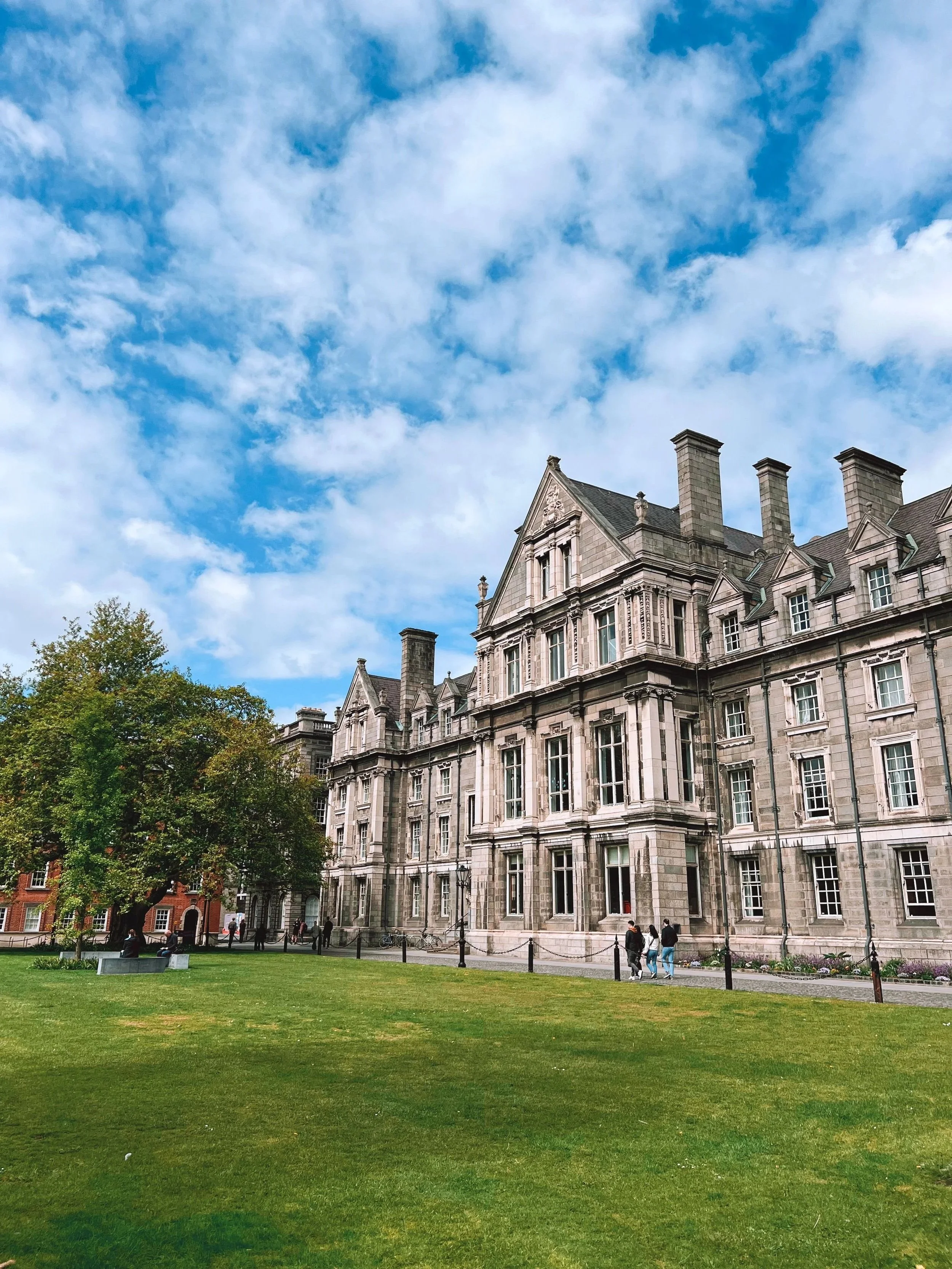
Photo: The Graduates Memorial Building at Trinity College Dublin in Ireland is a historic Gothic Revival landmark facing Parliament Square, known for its distinctive stone architecture.
Photo©: Vincent Rivaud / pexels
What’s included?
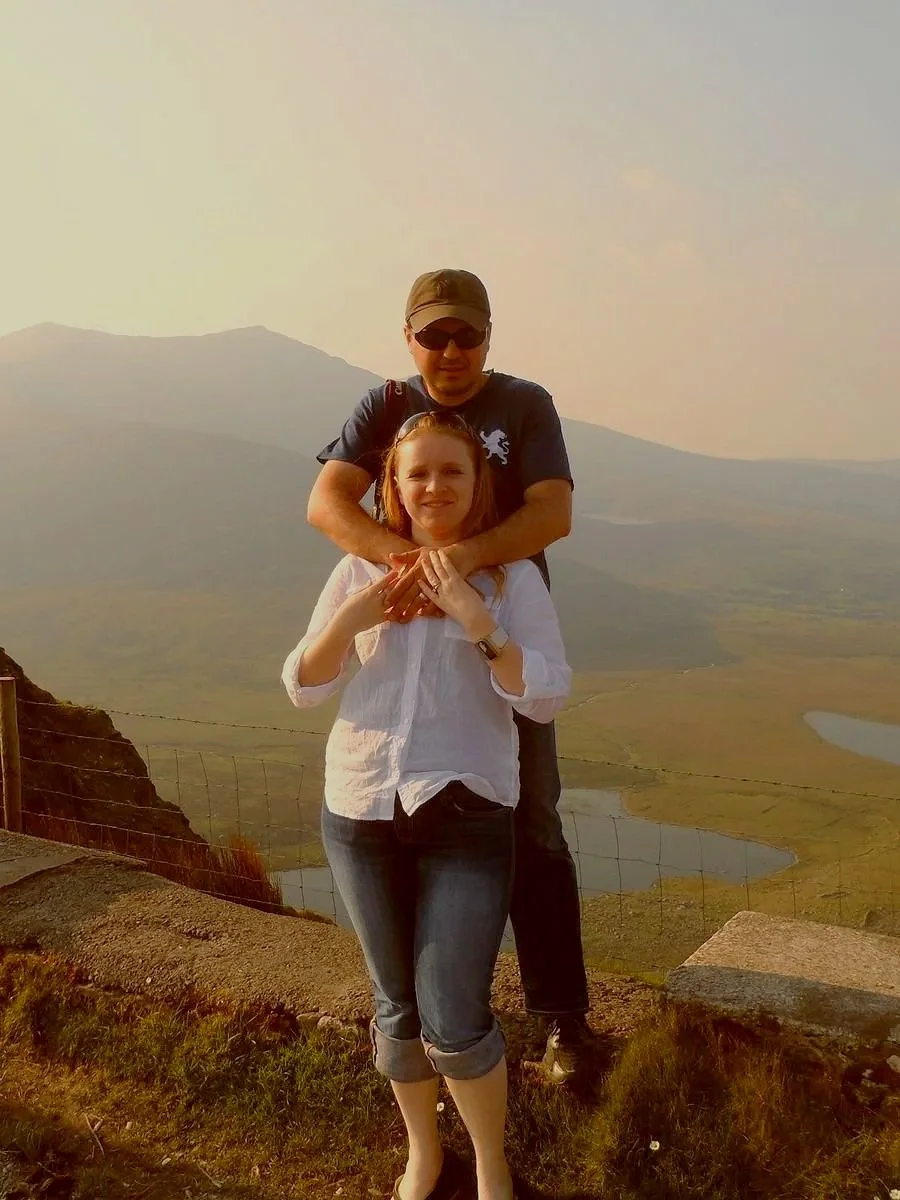
Photo: The Gap of Dunloe in County Kerry, Ireland, is a dramatic mountain pass surrounded by rugged peaks, a scenic valley, and small lakes.
Photo©: Anna Fishman / Olegana Travel Boutique
Included
Private vehicle with a dedicated driver-guide for seven days of touring, plus private airport transfers on arrival and departure
9 nights of boutique hotel and country house accommodations with full Irish breakfast throughout
Admission to Trinity College, the Book of Kells and the Long Room
Admission to the Guinness Storehouse
Admission to the Rock of Cashel
Admission to Blarney Castle and Gardens
Jaunting car ride through Killarney National Park
Full day private guided loop of the Ring of Kerry
Full day private guided tour of the Dingle peninsula, including the sheepdog demonstration
Shannon car ferry crossing from Tarbert to Killimer
Admission to the Cliffs of Moher
Full day private guided tour of Connemara, including Kylemore Abbey and the Walled Garden
Guided coastal walk on the Howth peninsula, finishing in a harbour pub
Curated restaurant recommendations and reservations throughout
24/7 concierge support and emergency contact throughout the trip
Not included
International airfare, travel insurance (quoted separately through Travel Guard), meals at leisure, personal expenses, tips and gratuities, city tourist taxes payable directly at hotels.
Ready to start planning?
Tell me about your travelers and what matters most. I'll build from there.
How many days do you need to see Ireland?
Ten days is the right length for a first visit. It covers Dublin, the southwest and the west coast without a rushed morning, and with only four hotel changes. Seven days forces you to drop either Dublin or Galway. Fourteen lets you add Northern Ireland and the Giant's Causeway, or West Cork, or slow the whole route down. Under five days, stay in one region and do it properly.
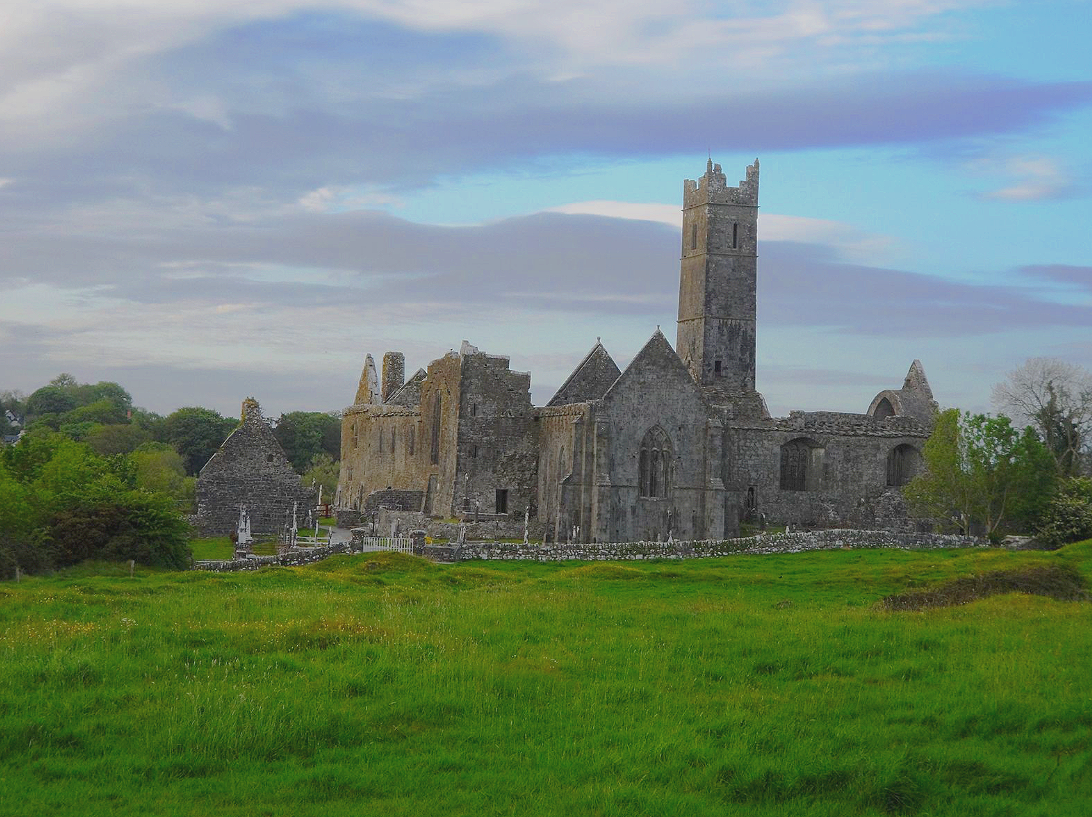
Photo: Quin Abbey in County Clare, Ireland, is a historic 15th-century Franciscan friary known for its Gothic architecture, central tower, and well-preserved cloister.
Photo©: Anna Fishman / Olegana Travel Boutique
Your day-by-day itinerary
This sample itinerary was designed around Ireland's most rewarding first-visit route, the loop from Dublin through Kerry to Galway. It's here to inspire, not to lock you in. You might pick a few pieces and let me build something different around them. Your trip is yours, and we'll customize every detail until it fits.
Photo©: Anna Fishman / Olegana Travel Boutique
Day 1
Dublin
Most flights from the US land in the morning, which gives you a whole day you were not expecting and will not entirely be able to use. Your driver meets you in the arrivals hall and you are at the hotel inside half an hour.
Dublin is a small city and the best thing to do on the first day is walk it without a plan. Along the Liffey and over the Ha'penny Bridge. Through Temple Bar, which is loud and touristed and worth twenty minutes. Trinity College's front square, Grafton Street with the buskers, and St Stephen's Green if the sun is out, which it may well be for eleven minutes.
The afternoon is deliberately empty so you can sleep if you need to, and most people do.
Dinner is early and unfussy. Afterwards, find a pub with instruments in the corner rather than a stage. The session starts around nine, nobody introduces anything, and people stop talking when the singing starts.
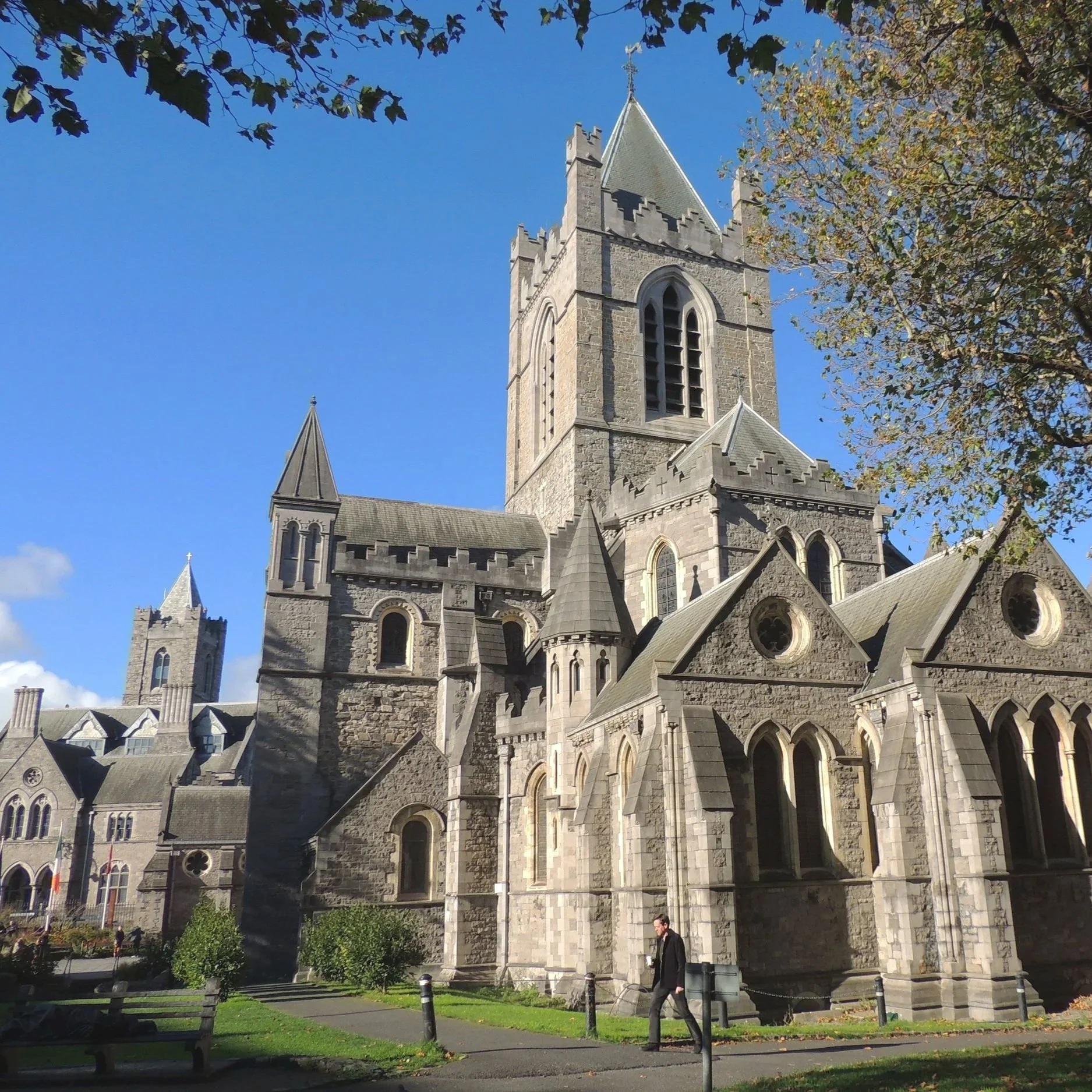
Photo: Christ Church Cathedral in Dublin, Ireland, is a historic medieval cathedral known for its impressive Gothic architecture and distinctive stone exterior.
Photo©: Heinz Klier / pexels
Day 2
Trinity College and the black stuff
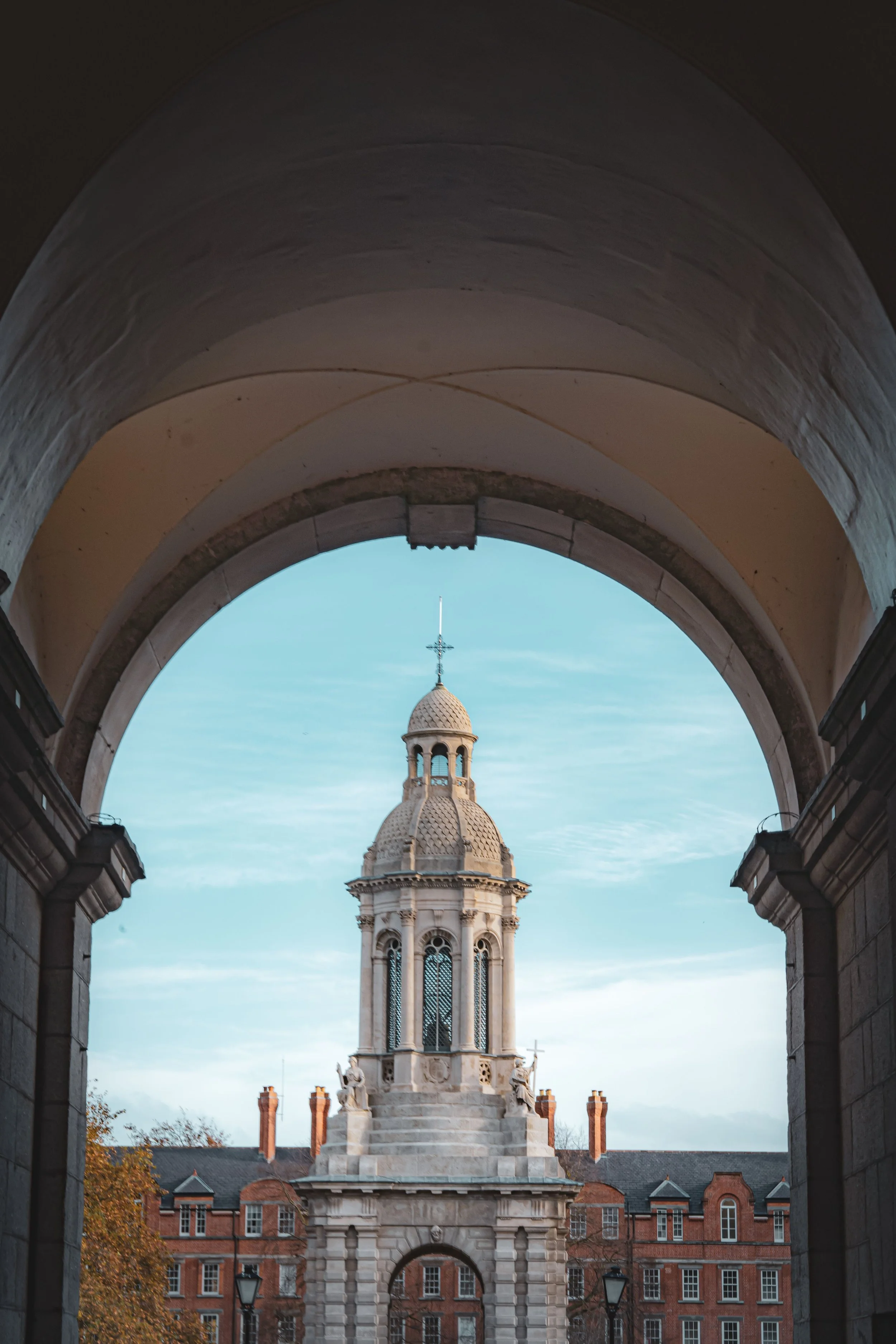
Trinity in the morning, in the middle of the city, where the Book of Kells sits in a dark room. It is a ninth century gospel manuscript covered in knotwork, animals and gold, made by monks with time nobody has any more, and it is genuinely worth the queue. Above it is the Long Room: sixty-five metres of barrel-vaulted oak lined with two hundred thousand old books, which inspired the Jedi archive and looks exactly like it.
Lunch somewhere in the Georgian streets around Merrion Square, then the afternoon is yours. EPIC, the emigration museum in the docklands, explains why forty million Americans think of this place as home and is one of the best museums in Europe. Kilmainham Gaol is grim and extraordinary. The National Museum has the bog bodies, which are exactly as unsettling as they sound.
The Guinness Storehouse in the late afternoon: seven floors, a pint you pour yourself, and the Gravity Bar at the top with the whole city and the mountains behind it.
Dinner in the city. Dublin's food has improved beyond recognition in ten years and it is worth spending money on.
Photo: The Trinity College Campanile in Dublin, Ireland, is a historic landmark framed by an elegant archway at the heart of the university campus.
Photo©: Harshit Mehta / pexels
Day 3
South to Cashel, Cork and the harbour country
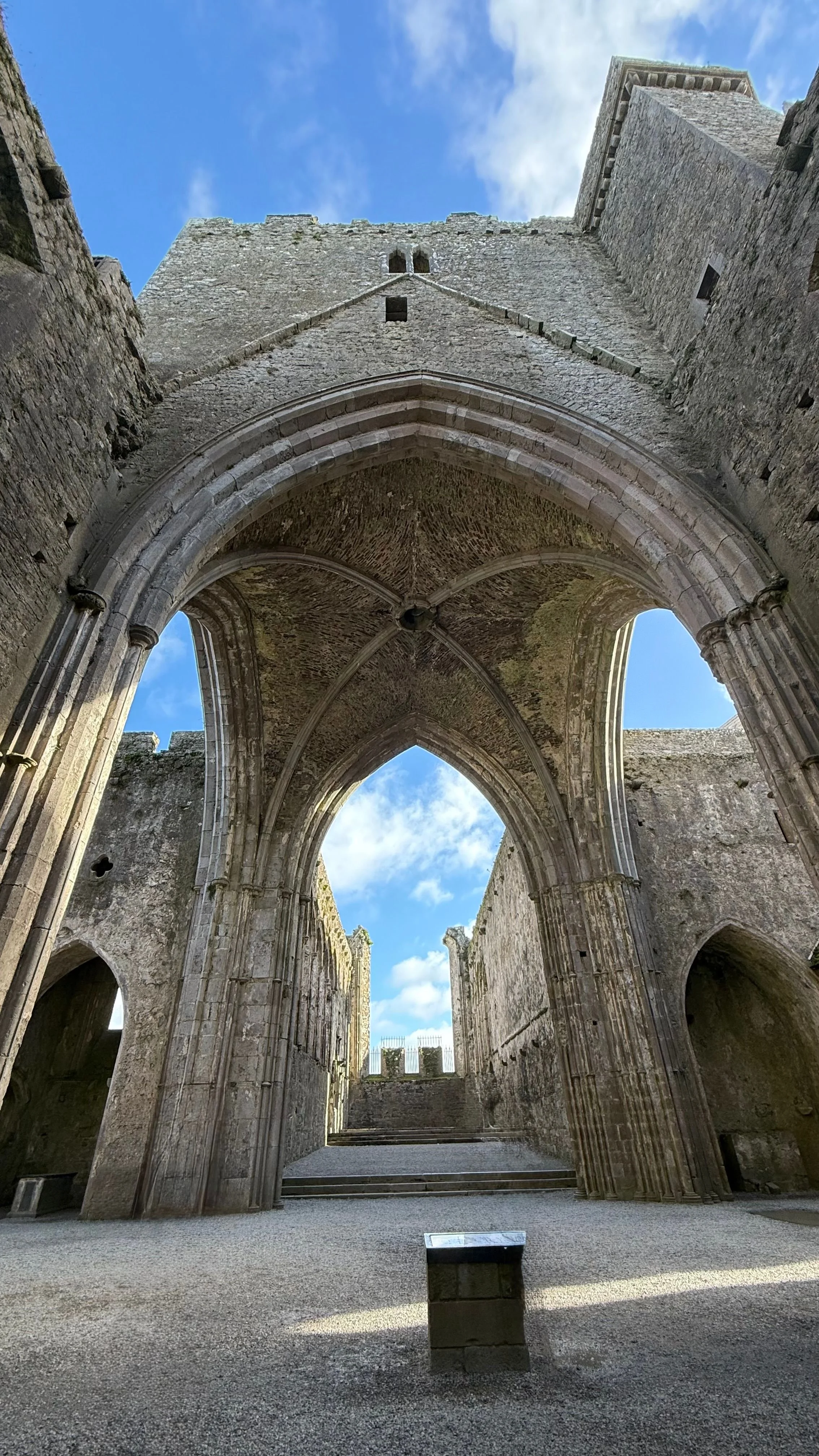
Check out and go south with your driver-guide. About ninety minutes in, the Rock of Cashel appears on a limestone outcrop above the plain: a round tower, a roofless Gothic cathedral, a twelfth century chapel with the only Romanesque frescoes in Ireland, and a view from the top that runs for thirty miles. This was the seat of the kings of Munster and it looks it.
Lunch in the town below, then on to Cork, which is Ireland's second city and does not accept the ranking. Built on an island in the River Lee with the channels filled in, which is why the streets curve and nobody can give directions.
The afternoon is the English Market, trading under its iron and glass roof since 1788, and the Shandon bells, which you can ring yourself, badly, while the whole city listens.
Dinner in Cork, which is the best eating city in Ireland by some distance, and an early night, because tomorrow moves.
Photo: The vaulted interior of the historic cathedral at the Rock of Cashel in County Tipperary, Ireland, showcases medieval Gothic architecture and impressive stone arches.
Photo©: Ovedenie Photography / pexels
Day 4
Blarney, and west into Kerry
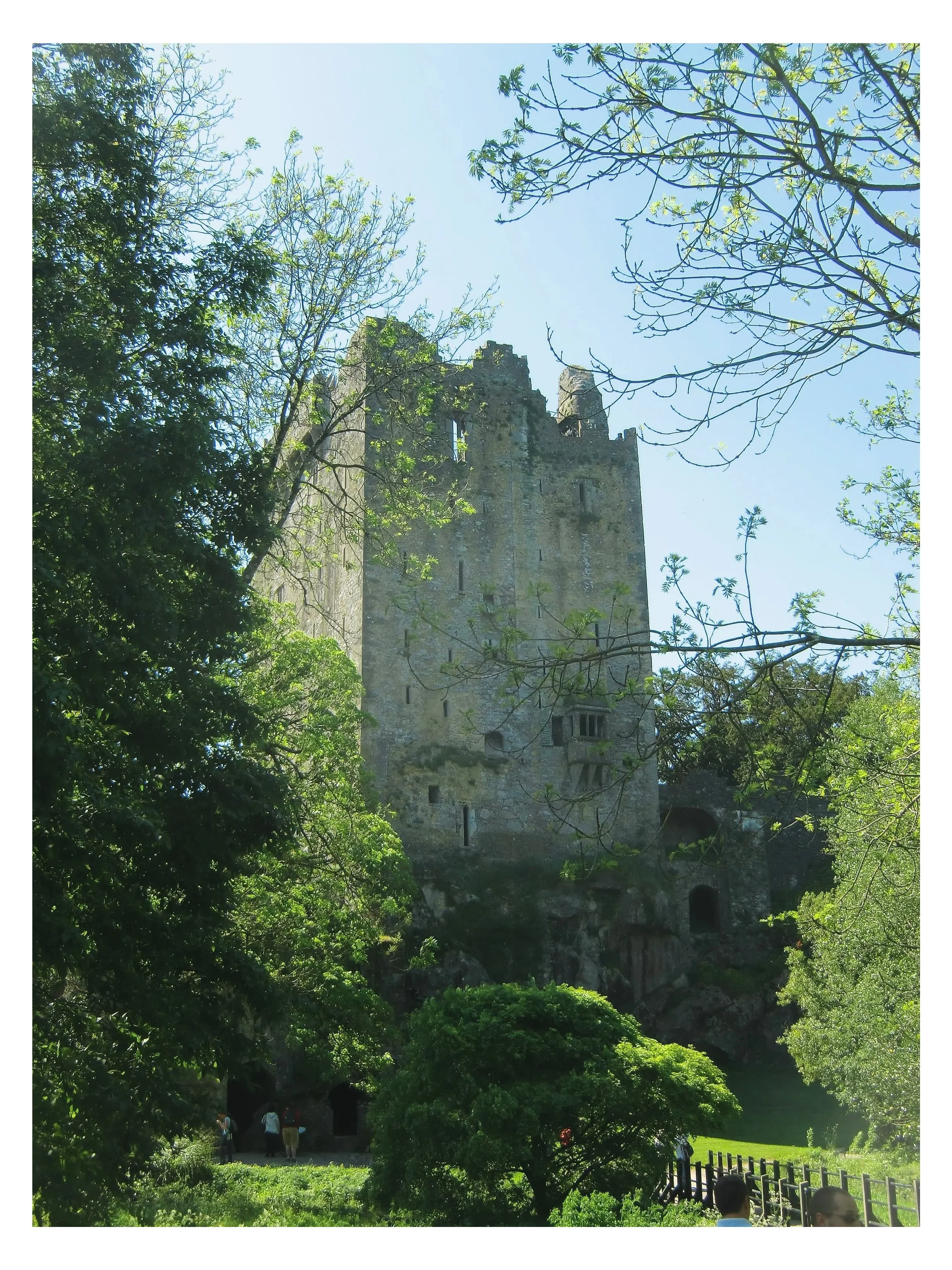
Blarney Castle first thing, before the coaches. The stone is the least of it, though you will queue and lie on your back and kiss it because everybody does. The sixty acres around the castle are the real reason to come: the Poison Garden with its caged and labelled plants, the Wishing Steps you walk backwards with your eyes shut, the Fern Garden under a limestone cliff, and a rock formation called the Witch's Kitchen.
Then west, and the country changes as you go: the fields get smaller, the walls get higher, and the mountains start.
Killarney sits against a national park and is small enough to walk end to end in fifteen minutes. You are here for four nights, which is the decision that makes this trip work: the Ring of Kerry, the park and the Dingle peninsula are all day trips from here, and nobody repacks a suitcase.
The evening is yours. Killarney's pubs have music from about nine and the standard is high, because the town takes it seriously.
Photo: Blarney Castle in County Cork, Ireland, is a historic medieval castle surrounded by lush greenery and scenic grounds beneath a cloudy sky.
Photo©: Anna Fishman / Olegana Travel Boutique
Day 5
The Ring of Kerry
A full day looping the Iveragh peninsula, and your driver takes it anticlockwise so you never meet a coach head on, which is a small thing that changes the whole day.
Over Moll's Gap and down into Kenmare for coffee, a planned Georgian town at the head of a bay with a Bronze Age stone circle at the bottom of it. Then the southern shore, with the Atlantic appearing and disappearing on your left. Sneem, painted in colours somebody clearly enjoyed choosing. Waterville, where Charlie Chaplin holidayed for years and there is a statue of him looking out to sea.
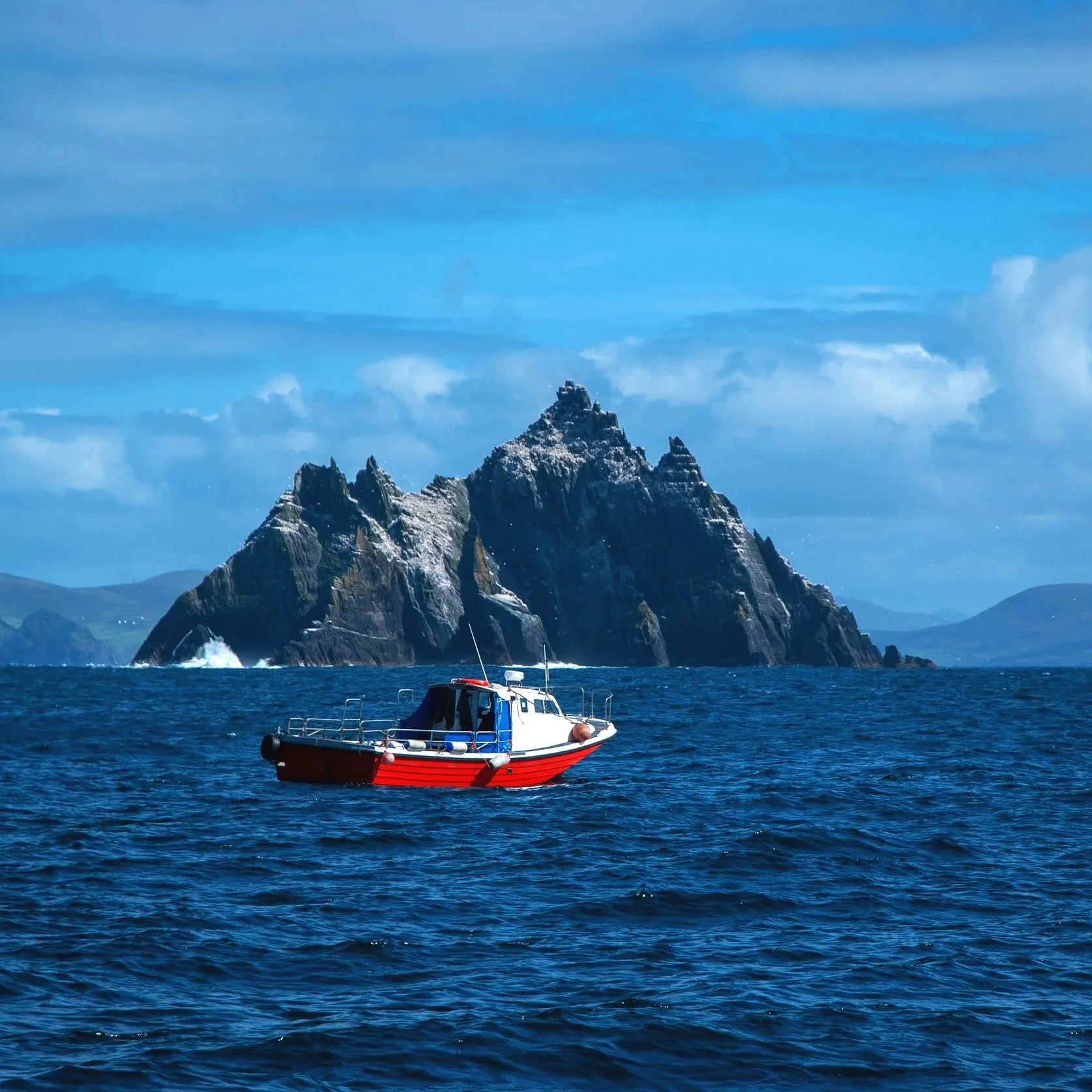
From the viewpoints above Ballinskelligs Bay, on a clear day, you can see two rocks on the horizon: Skellig Michael and Little Skellig, where monks built a monastery seven miles out in the ocean in the sixth century.
Back through Killorglin in the late afternoon. Dinner in Killarney and a walk through the town afterwards, which is one of those places that feels safe and cheerful at eleven at night.
Photo: Skellig Michael off the coast of County Kerry, Ireland, is a UNESCO World Heritage Site known for its dramatic rocky cliffs and remote Atlantic setting.
Photo©: Karl MPhotography / pexels
Love what you're reading?
This is a sample. Tell me about your travel style and I'll build your Ireland trip from scratch.
Day 6
Slea Head and the Dingle peninsula
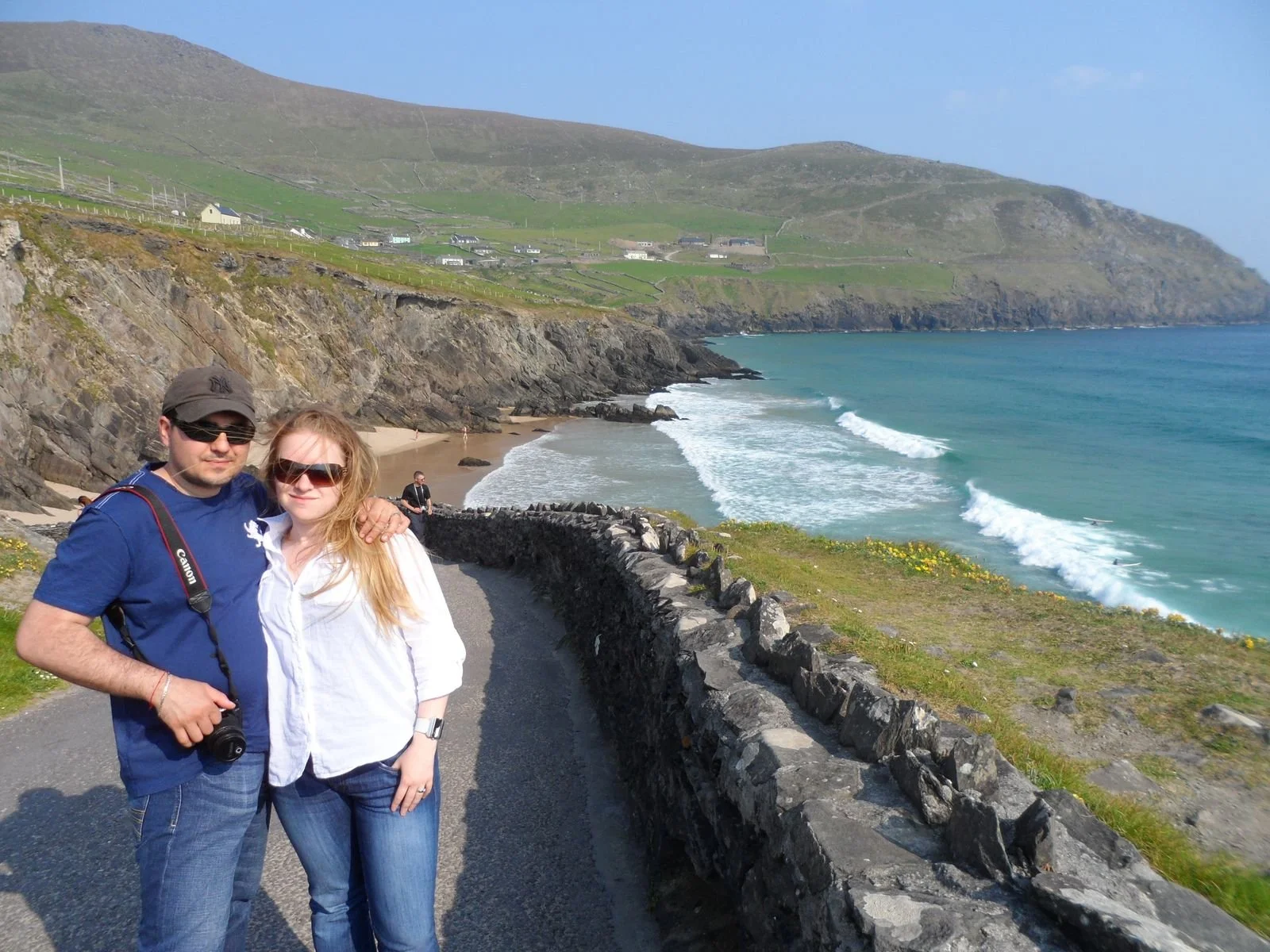
The best driving day in Ireland, and the one people describe afterwards. You go out early around Slea Head, the most westerly road in Europe: Ventry, then Coumeenoole, a beach of black rock and white surf where they filmed Ryan's Daughter, then Dunquin Pier with its switchback path down the cliff and the Blasket Islands lying offshore.
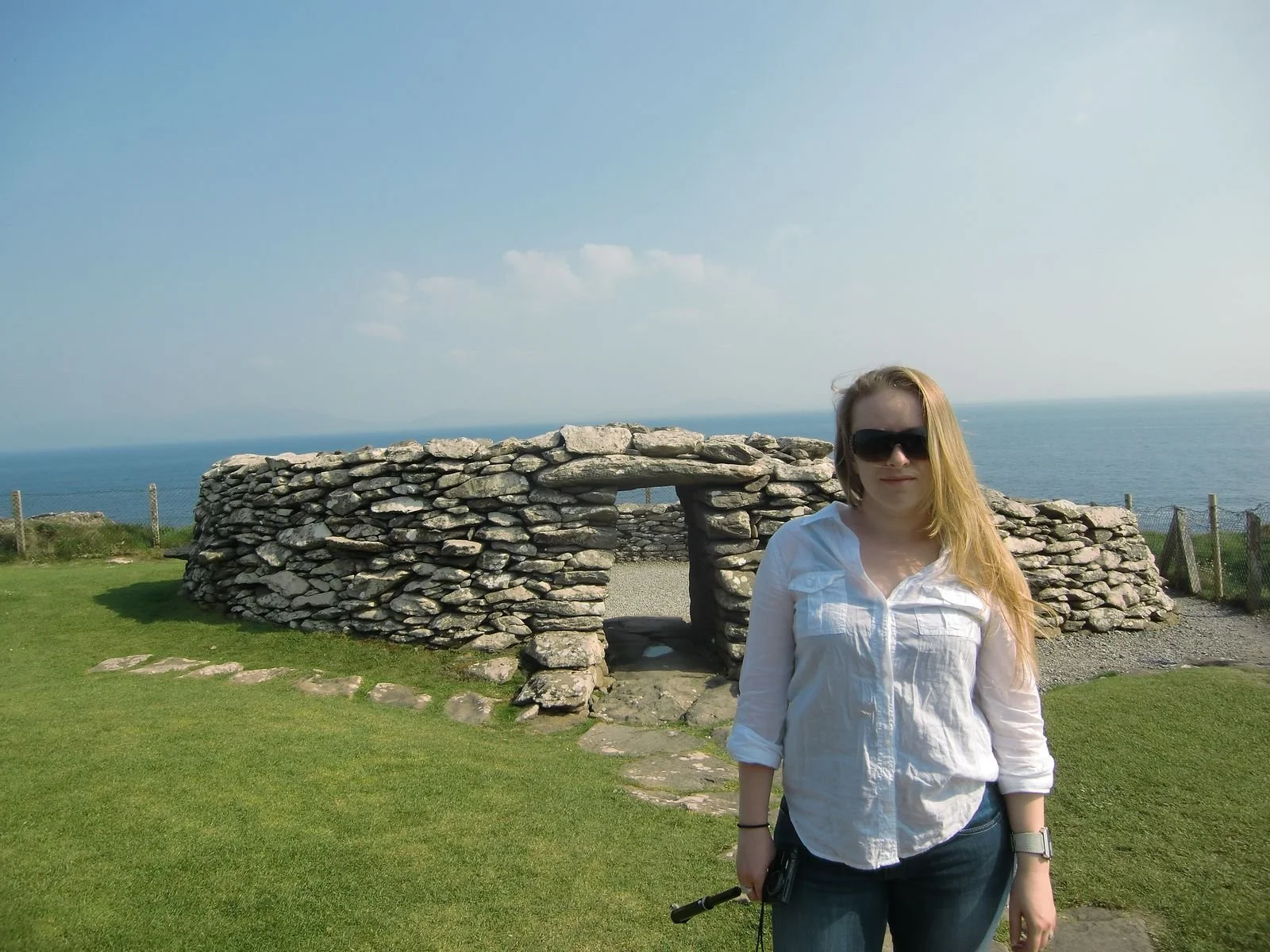
The archaeology out here is extraordinary and mostly unmarked. Beehive huts built dry-stone in the early Christian period and still standing. The Gallarus Oratory, a chapel shaped like an upturned boat, built without mortar more than a thousand years ago and still watertight.
Then the sheepdogs. A farmer, a hillside and three border collies, and a whistle that sends forty sheep exactly where he wants them. On the same farm are the famine cottages, left as they were when the family walked out in the 1840s.
Lunch in Dingle town, which has a working harbour and hardware pubs where you can buy a pint and a pair of wellies in one transaction. Back to Killarney for the evening.
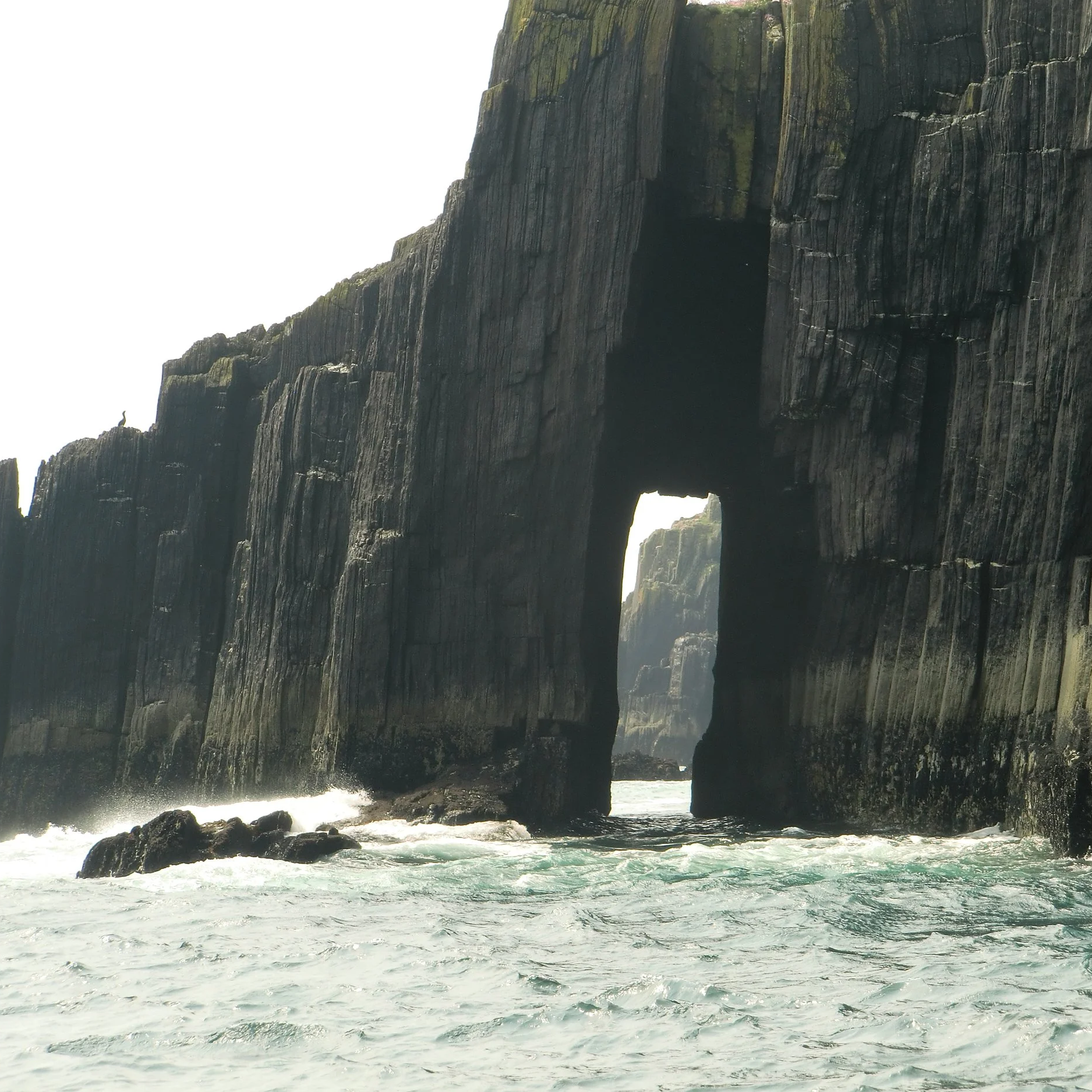
Photo: Cathedral Rocks near Inisnabro off the Dingle Peninsula in County Kerry, Ireland, are dramatic sea cliffs rising from the Atlantic Ocean.
Photo©: Anna Fishman / Olegana Travel Boutique
Day 7
The national park, and a day that is yours
A slower day, and the fourth Killarney night exists so that it can be.
The jaunting cars leave from the middle of town, horse drawn traps driven by jarveys who are licensed, opinionated and very funny. They take you into Killarney National Park past Ross Castle and along the lakes, and the commentary is worth as much as the ride. Muckross House is in the park too, a Victorian mansion Queen Victoria came to see, with a working traditional farm beside it.
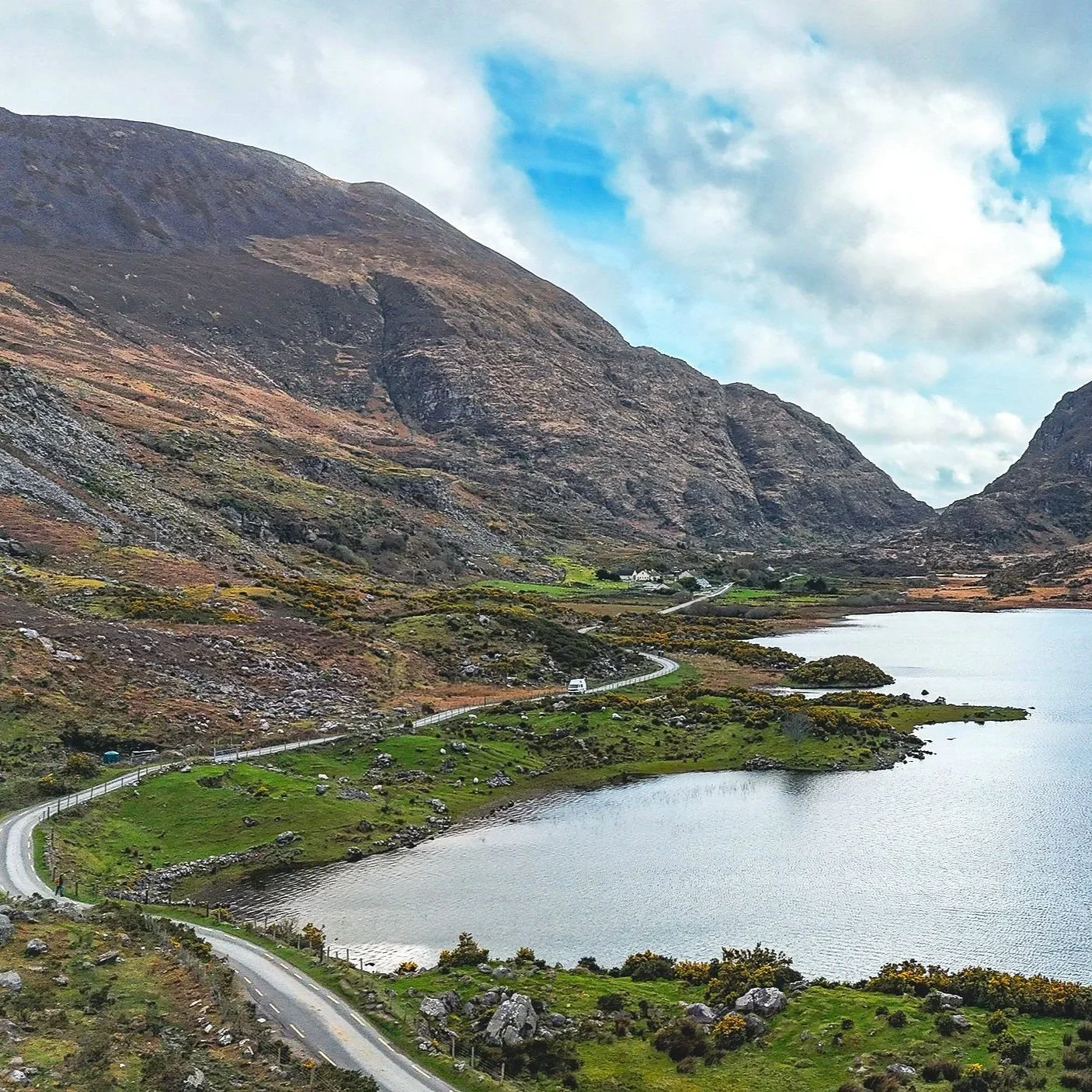
The rest of the day is yours. Torc Waterfall is a twenty minute walk from the road. A boat crosses the lakes to Lord Brandon's Cottage. The Gap of Dunloe is a glacial pass between two mountain ranges and takes most of a day on foot or by pony and trap. There is golf on a course in the park that has hosted the Irish Open six times, and bike hire, and a good bookshop in town.
Or nothing at all. This is usually the day people tell me afterwards was their favourite.
Photo: The Gap of Dunloe in County Kerry, Ireland, is a dramatic mountain pass surrounded by rugged peaks, lush valleys, and scenic countryside.
Photo©: Dahlia E. Akhaine / pexels
Day 8
North across the Shannon to the Cliffs and Galway
Check out and go north. At Tarbert you drive onto a car ferry and cross the Shannon estuary, twenty minutes on the water with the wind doing something unhelpful to everybody's hair and dolphins in the estuary often enough to be worth watching for.
You reach the Cliffs of Moher around the middle of the day: seven hundred feet of vertical rock running eight kilometres along the coast, with the Aran Islands out in the haze and seabirds on every ledge. Puffins in early summer if you know where to look, and your driver will.
Lunch in Doolin, the traditional music village, where the session in at least one pub starts in the afternoon and does not really have an end time. Then north across the Burren, a limestone plateau that looks like the surface of the moon and grows Arctic and Mediterranean plants in the same crack.
Galway by early evening: a city of eighty thousand that behaves like a town of eight thousand, with buskers in the Latin Quarter who are frequently better than the acts you paid to see at home.
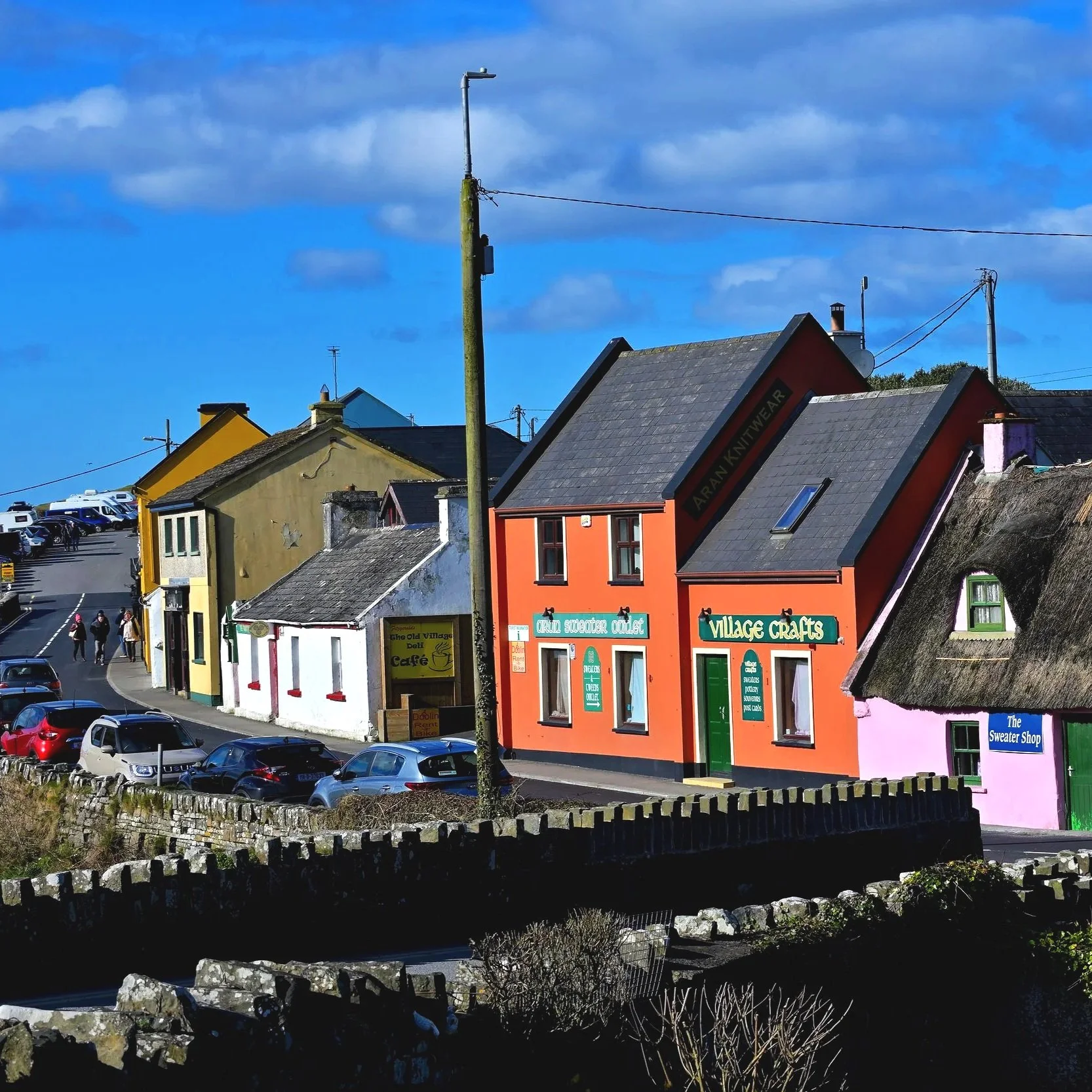
Photo: Doolin in County Clare, Ireland, is a charming village known for its colorful buildings, traditional pubs, and lively streets.
Photo©: Phil Evenden / pexels
Day 9
Connemara, Kylemore and the last night in Galway
West into Connemara, which is a different country again: bog, quartzite mountains, black lakes, and a quality of light painters keep moving here for. Irish is still the everyday language in parts of it.
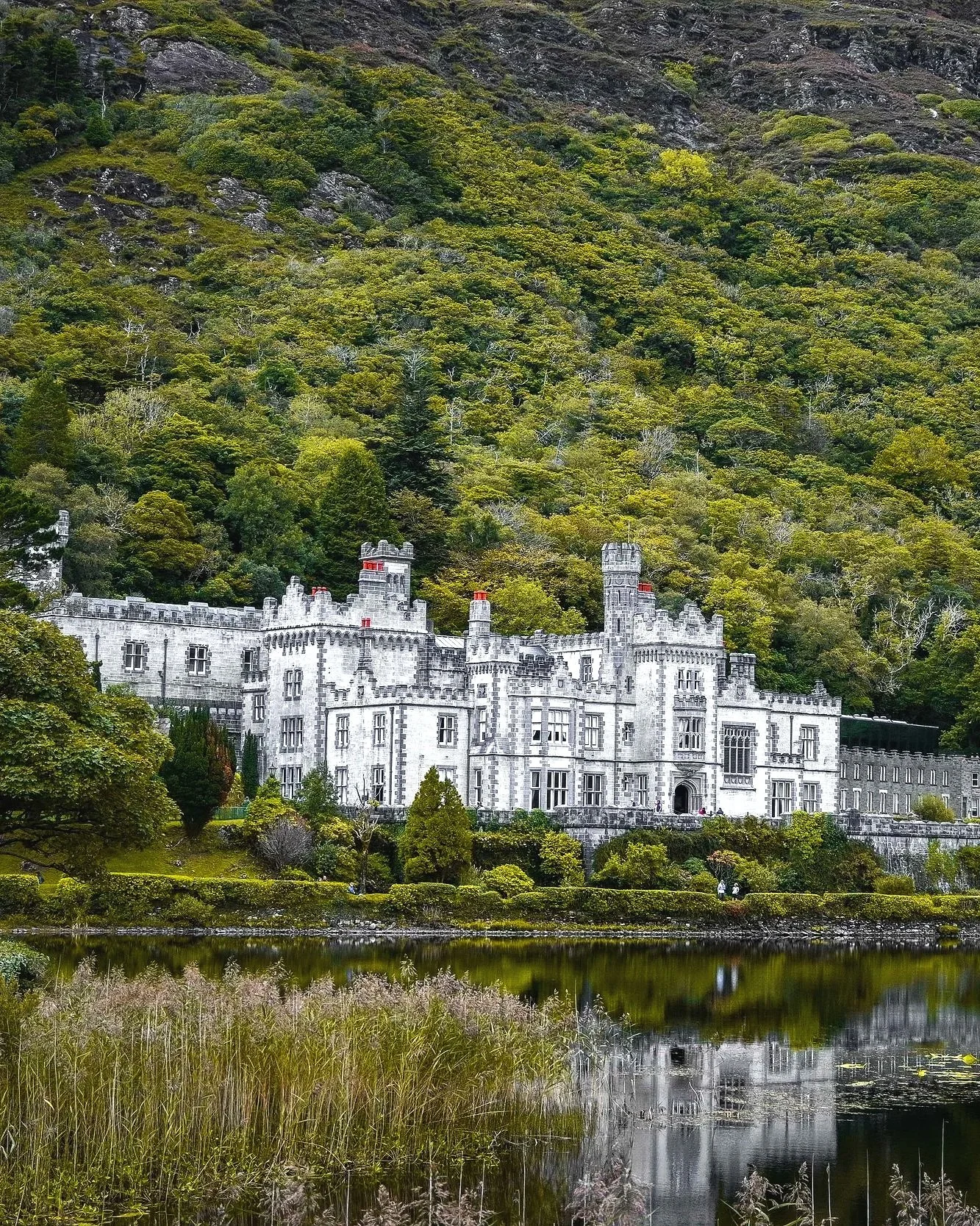
Kylemore Abbey sits on a lake under a mountain, a Victorian castle built by a Manchester businessman for his wife and later a Benedictine abbey, with Ireland's largest walled garden restored behind it. It is as photographed as it is because it earns it. The Sky Road out of Clifden is twenty minutes of driving and worth every one.
Back in Galway for the afternoon: the medieval Latin Quarter, the Spanish Arch, the market if it is a weekend, and the Salthill promenade where you kick the wall at the end because everyone does and nobody will explain why.
A final dinner with oysters and a view of the water, then music in the Latin Quarter for as long as you last.
Photo: Kylemore Abbey in Connemara, County Galway, Ireland, is a historic Gothic Revival landmark set beside a tranquil lake and surrounded by scenic mountains.
Photo©: Rick Johns / pexels
Day 10
Howth, and home
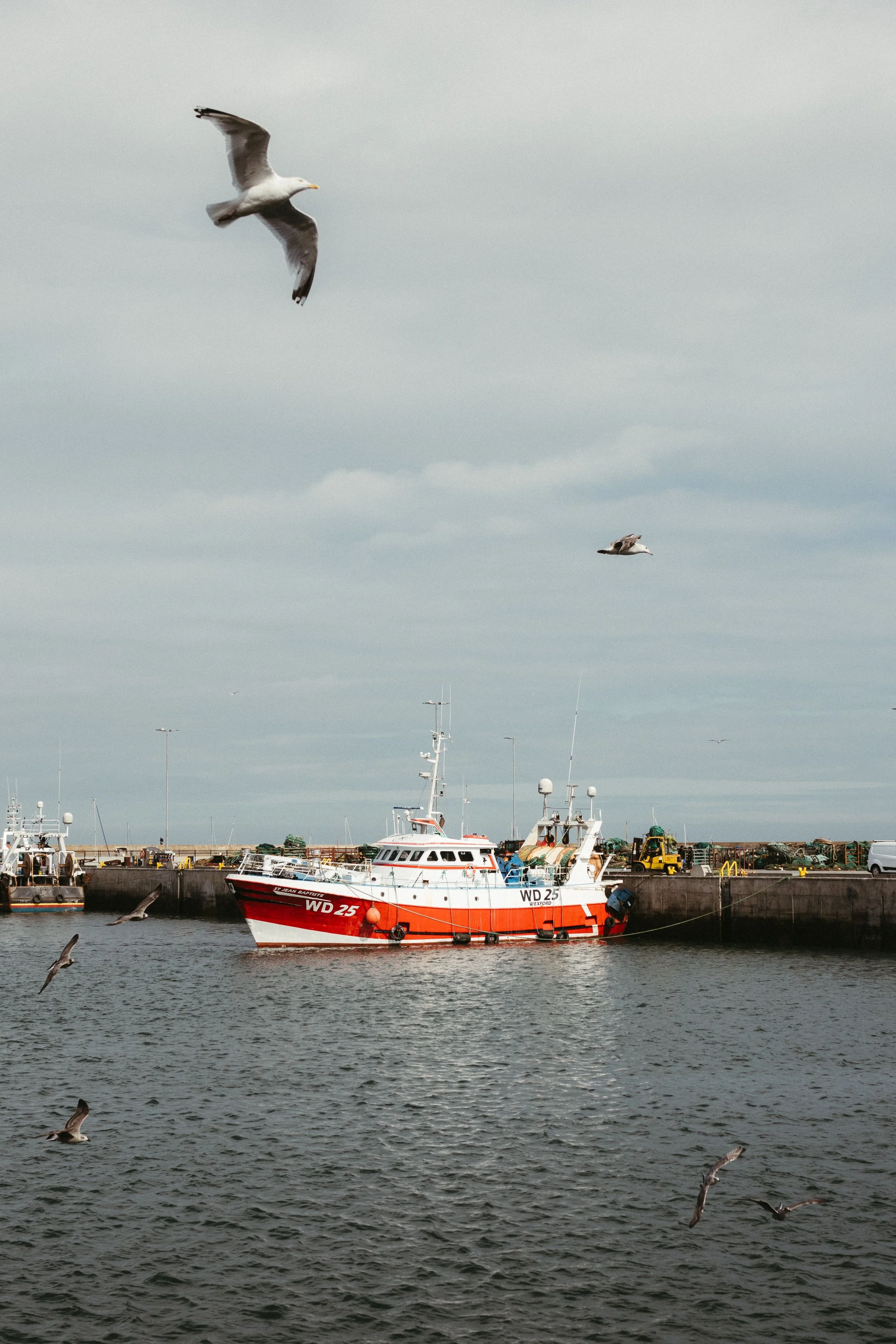
Across the country to Dublin in the morning, about two and a half hours, and if your flight is late enough there is time for one last thing worth doing: the DART out to Howth, a fishing village on a headland with seals begging at the pier and a cliff path around the whole peninsula.
Then a private transfer to Dublin Airport, which has US preclearance, so you clear American immigration here and land at home as a domestic arrival with no queue at the other end.
Or stay on. Northern Ireland and the Giant's Causeway are two hours north of Dublin. West Cork and the whale coast are three hours southwest. Or cross to Scotland, which is a short flight and the natural other half of an Irish trip.
Photo: Colorful fishing boat docked at Howth Harbor, Dublin, with seagulls flying nearby.
Photo©: Jonathan Borba / pexels
Who this trip is perfect for
First-time visitors to Ireland:
This is the route, done properly. Everything you have heard of is on it, and the famous places are timed to avoid the crowds rather than skipped out of snobbery. You will see the Cliffs of Moher. You will see them without standing behind a coach party.
Photo©: Anna Fishman / Olegana Travel Boutique
Couples marking something:
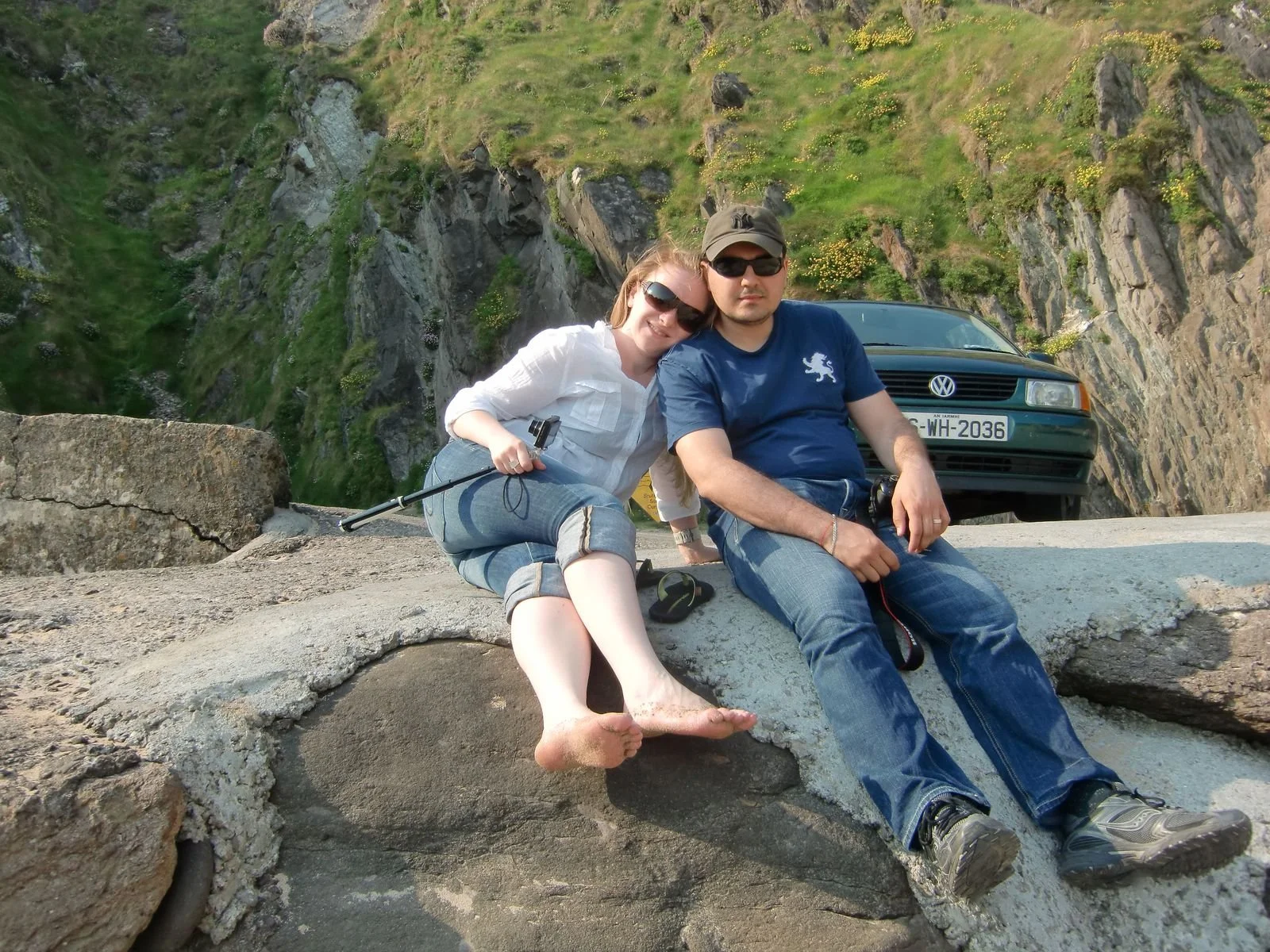
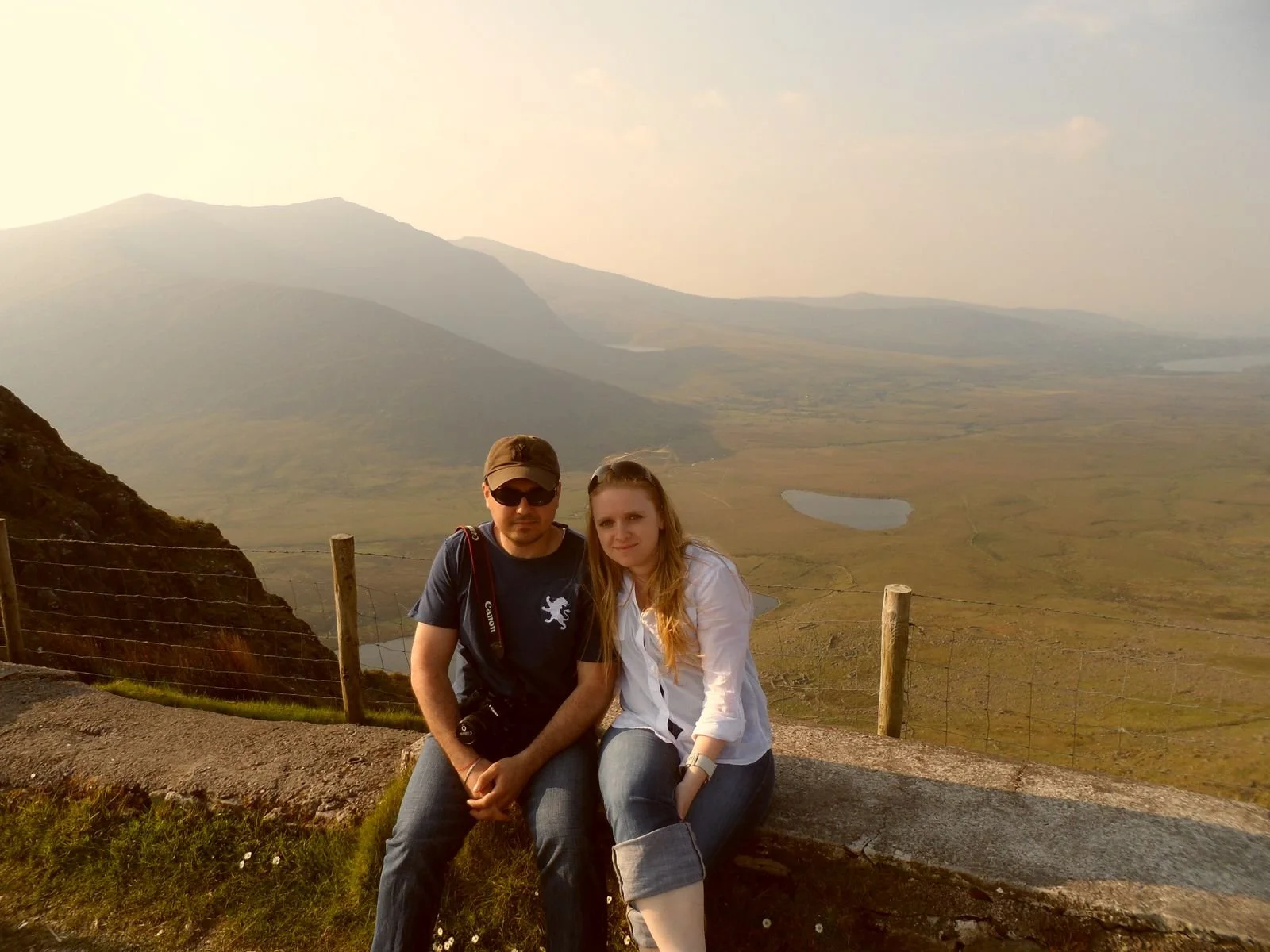
Anniversaries, retirements, a milestone birthday. The pace is unhurried, the evenings are long and unscheduled, and the four nights in Killarney mean the middle of the trip feels like a stay rather than a tour.
Photo©: Anna Fishman / Olegana Travel Boutique
Travelers tracing family back:
A great many American families come from Kerry, Cork, Clare and Galway, which is most of this route. If you know the county, and sometimes the parish, I can build a morning into the trip around the records, the graveyard or the townland. Tell me what you have and we will see what is findable.
Photo©: Anna Fishman / Olegana Travel Boutique
Anyone who would rather not drive:
Seven days with a driver-guide who knows which road to take and which viewpoint has the light, and three days in cities where you do not need a car at all. It is custom trip design, so every day here can move.
Photo©: Anna Fishman / Olegana Travel Boutique
Where you’ll stay
Dublin, two nights. A boutique hotel on a Georgian square in the middle of the city, so Trinity, the museums and the restaurants are all on foot. Irish breakfast included, and the standout is the location: on a first night with jet lag, being able to walk to dinner and back is worth more than any amenity.
Cork, one night. A historic property in the city centre with the English Market and the main streets on the doorstep. Breakfast included, and the standout is the restaurant, which matters because Cork is where the food gets serious and you only have one evening in it.
Killarney, four nights. A family run hotel with grounds running down to the lakes on the edge of the national park, the kind that has been in the same family for generations. Breakfast included, and the standout is the setting: mountains and water out of the window, and the park path starting at the end of the lawn.
Galway, two nights. A comfortable, centrally located hotel a few minutes from Eyre Square, which puts the Latin Quarter, the Spanish Arch and the entire music scene within a ten minute walk. Breakfast included, and the standout is the spa, which lands well after eight days of touring.
Dublin, final night. Back to the same square as the first two nights, which means a familiar room at the end of the trip and a short transfer to the airport. Breakfast included.
Best time to visit Ireland
May, June, September and early October. The months I would pick. May and June bring evenings that stretch past ten o'clock, hedgerows in flower and the driest weather of the year, which in Ireland means it rains less rather than not at all. September and early October give you warm sea, harvest on the plates, thinning crowds and the low gold light that makes the west coast look lit for film. Book these months if you possibly can.
July and August. Warm, busy and expensive. The Ring of Kerry, the Cliffs of Moher and Blarney all take heavy coach traffic in high summer, and the good hotels sell out months ahead at their highest rates. The compensation is daylight until almost eleven and a festival somewhere every week. If summer is your only window, book a year ahead and let me time the famous sights for early morning and late afternoon.
November through March. The off season, and not the compromise people assume. The country is empty, the rates are reasonable, the pubs are full of locals rather than visitors, and a wet afternoon by a fire is close to the point of the place. The catch is real: four o'clock darkness and some coastal attractions on limited hours. For a first trip I would steer you to shoulder season.

Let's design your Ireland trip.
Every itinerary I build starts with a conversation. Tell me what excites you and I'll take it from there.
What past Olegana guests have said…

“I can’t say enough about how excellent our drivers and tour guides were in both countries."
– Louis T., Ireland and Scotland
Frequently asked questions
-
Every itinerary is priced individually, because the number moves with the season, the hotels, how many of you there are and how much private guiding you want. A detailed quote follows our first call, and it will be a real quote rather than a range.
-
For a first visit, yes, and it is the length I recommend most often. Ten days covers Dublin, the southwest and the west coast without a rushed morning. It does not cover Northern Ireland, Donegal or West Cork, and I would rather tell you that plainly than pretend they fit.
-
No, and I would talk you out of it. Irish roads are narrow, the wheel is on the other side, and the Ring of Kerry and Slea Head are not where you want to discover either of those things. A driver-guide also turns every transfer into a touring day, which is why the driving days on this trip are among the best of it.
-
Completely. This is a sample, not a package. The Ring of Kerry can become the Beara peninsula, Connemara can become the Aran Islands, the Killarney days can flex around whatever you are actually interested in, and if you would rather have three nights in Galway than two, we move it.
-
Often, yes. If you know the county and a surname we can usually get somewhere, and if you have a parish or a townland we can frequently get to the exact place. It works best when you send me what you have well before the trip so there is time to do the research properly.
-
Dublin has the most nonstop service from the US and is the right arrival and departure point for this loop. It also has US preclearance, so you clear American immigration in Dublin and land at home as a domestic arrival. Shannon works if you would rather start in the west and run the route in reverse, which is a good option in high season.
-
Yes, quoted separately through Travel Guard. I would treat it as part of the booking rather than an afterthought, particularly for the trip cancellation cover.
-
For May, June or September, nine to twelve months. The good driver-guides in Ireland are a small pool and they are spoken for early, and the hotels worth staying in on this route are not large.
-
All three, and each extends the trip rather than replacing anything in it. Northern Ireland with Belfast, Derry and the Giant's Causeway adds four days on the northern end. West Cork with the whale coast and the island gardens adds four on the southern end. Scotland is a short flight and the natural other half of an Irish trip. Tell me on our call and I'll rebuild the shape around it.