
Luxury Montenegro and Albania vacation: Kotor Bay to Berat, 8 days
Montenegro and Albania are two of the most rewarding corners of Europe right now, and they won't stay quiet much longer. Eight days is enough to experience both: the dramatic fjord at Kotor, the coastal drive south through walled medieval cities, the Ottoman hilltop towns of Albania, and the coastal villages of the Albanian Riviera that feel the way the Amalfi Coast must have felt in 1965. This is the trip I love designing most for couples ready for the next chapter of Europe.
This is the trip for couples who have already done Croatia, who have done the Amalfi Coast, who have done the classic Mediterranean and want to know what's next. It's a route I've been building and refining for years, and every couple who does it tells me the same thing when they get home: they can't believe more people haven't been here yet. The food is extraordinary. The wines are extraordinary and unknown outside their own countries. The hotels are quietly world-class in a way that lets you actually feel like you've found something. And the people running them, from the family that owns your Kotor hotel to the guide who will walk you through the ruins at Butrint, are the reason this trip works.
Neither country is easy to plan on your own. The right roads, the right guides, which hotels have actually been renovated in the last five years, which border crossings move and which ones leave you sitting, and which airport to fly into (more often Tirana than Dubrovnik these days) all matter here. That's the work I do before you arrive, and it's why this trip feels effortless once you're in it. Every detail is handled: the transfers, the border logistics, the guides, the hotels, the reservations, the route. You just show up and live it. Picture the two of you here. Tell me what you love, and I'll design the rest. Start with the planning form below.
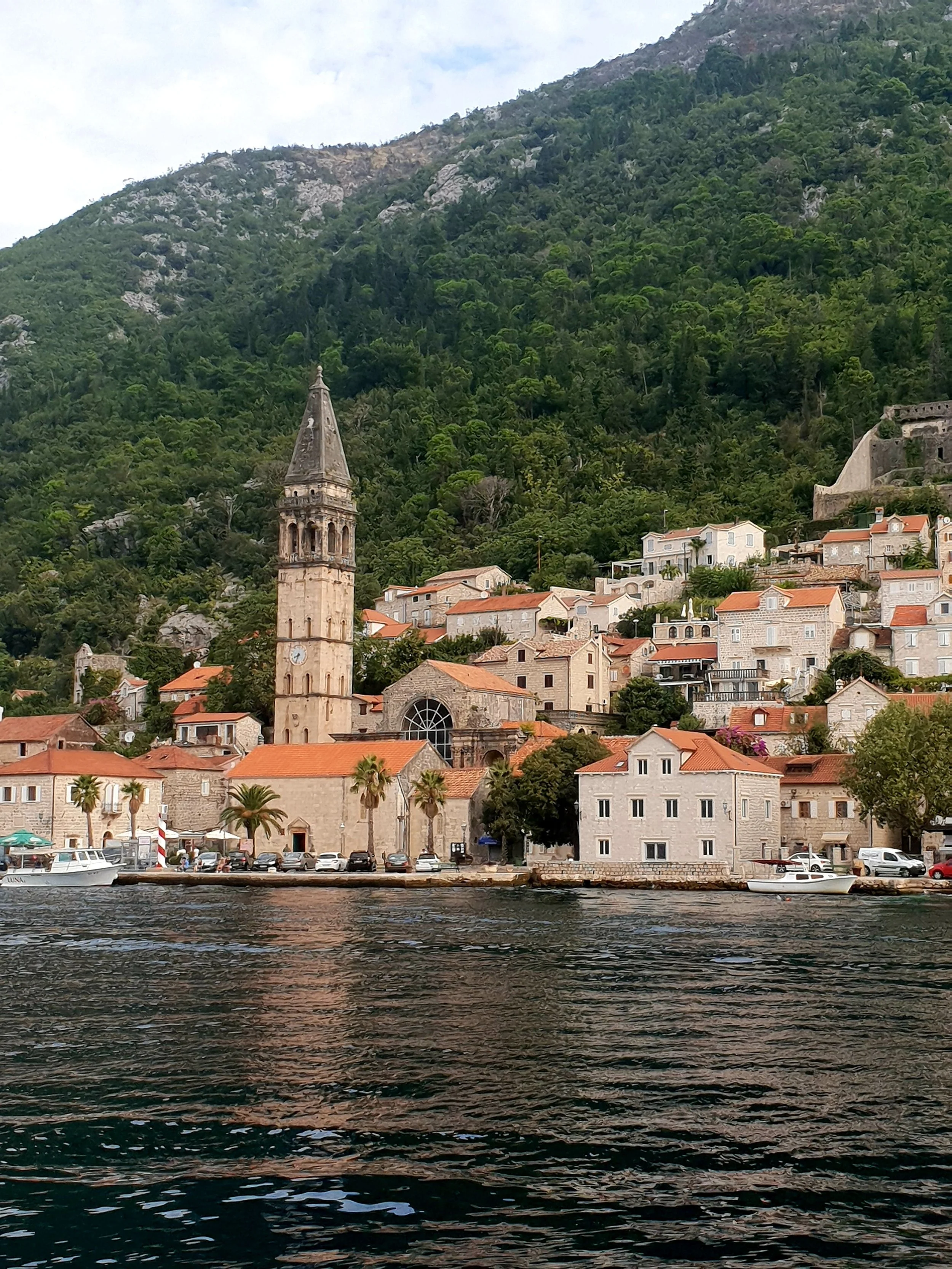
Photo: Perast, Montenegro, is a picturesque historic village along the Bay of Kotor, surrounded by dramatic mountains and calm blue waters.
Photo©: Alistair Mockett / pexels
What’s included?
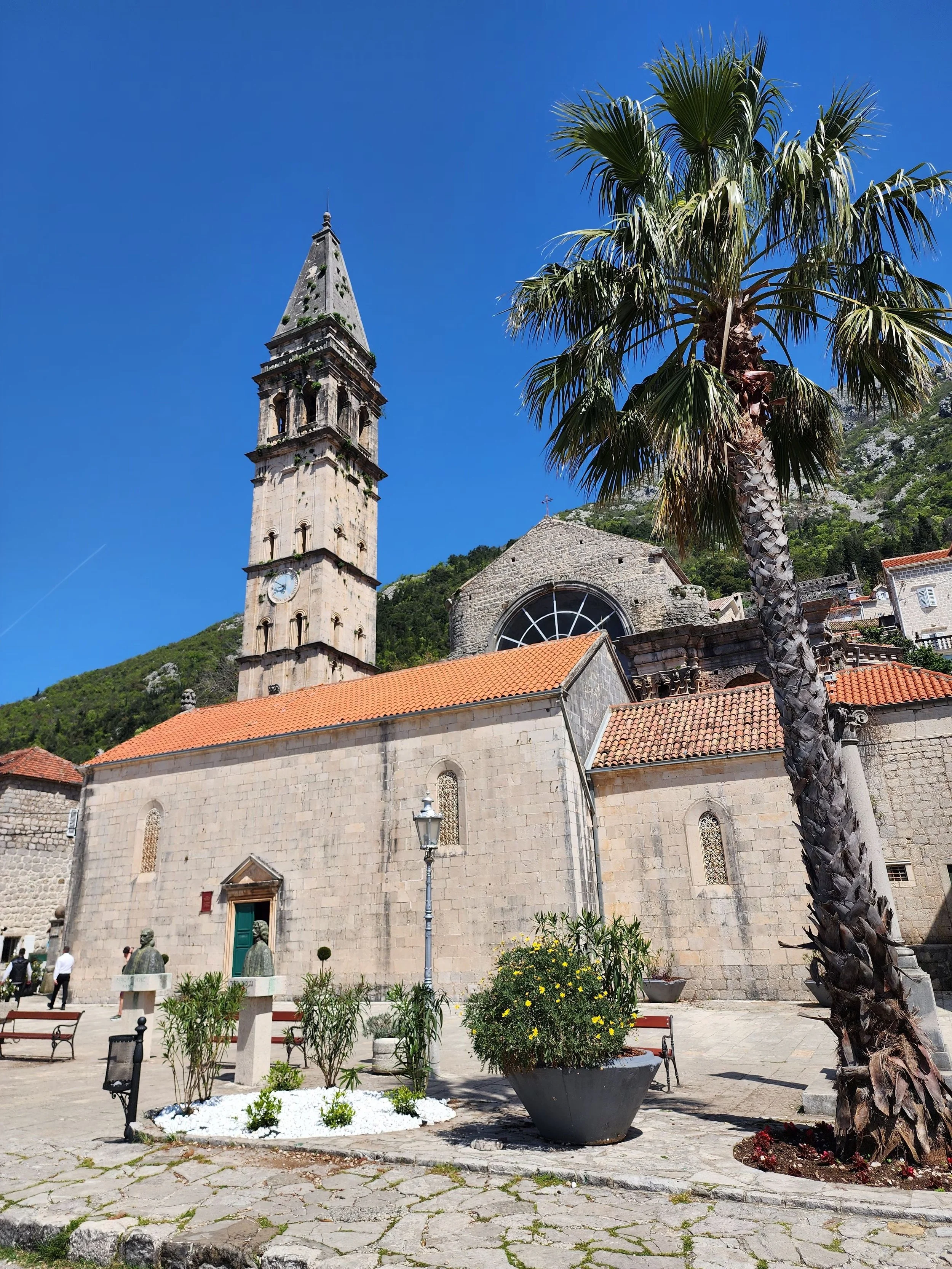
Photo: A historic stone church with a bell tower in Perast, Montenegro, framed by a palm tree beneath a sunny sky.
Photo©: Hale Ş / pexels
Included
Private vehicle with a dedicated driver-guide throughout (for parties of up to six or seven, this is typically one person, which keeps the trip personal and the logistics simple)
Airport meet-and-greet and private transfers, including the Montenegro-to-Albania border crossing and the paperwork that goes with it
7 nights at hand-selected boutique and luxury properties in Montenegro and Albania, with breakfast throughout
Private guided tours with local experts in Kotor, Budva, Kruje, Butrint, Berat, and Tirana
A private boat hour on Kotor Bay to Our Lady of the Rocks
A private boat afternoon among the Ksamil islands
Dinner at Lekurs Castle above Saranda and a folklore dinner in Berat
The curated lunches and dinners noted in your itinerary
24/7 concierge support and emergency contact from the moment you land
Not included
international airfare, travel insurance (quoted separately through Travel Guard), meals at leisure, personal expenses, tips and gratuities, and any tourist taxes payable at hotels.
Every itinerary I design is priced individually. Once we have talked through your dates, your pace, and whether you'd like the longer version, I'll follow up with a detailed quote. There's no set package price, because no two of these trips are the same.
Ready to start planning?
Tell me about your travelers and what matters most. I'll build from there.
How many days do you need for Montenegro and Albania?
Eight days covers the highlights of both countries: Kotor Bay, Budva, Kruje, the Albanian Riviera, Saranda, Butrint, Ksamil, and Berat. It moves quickly, with mostly one-night stays, so travelers who prefer to unpack once should add two or three nights, which allows a northern Albanian farm estate and a slower pace. With less time, choose Montenegro alone. With more, start with a week in Croatia.
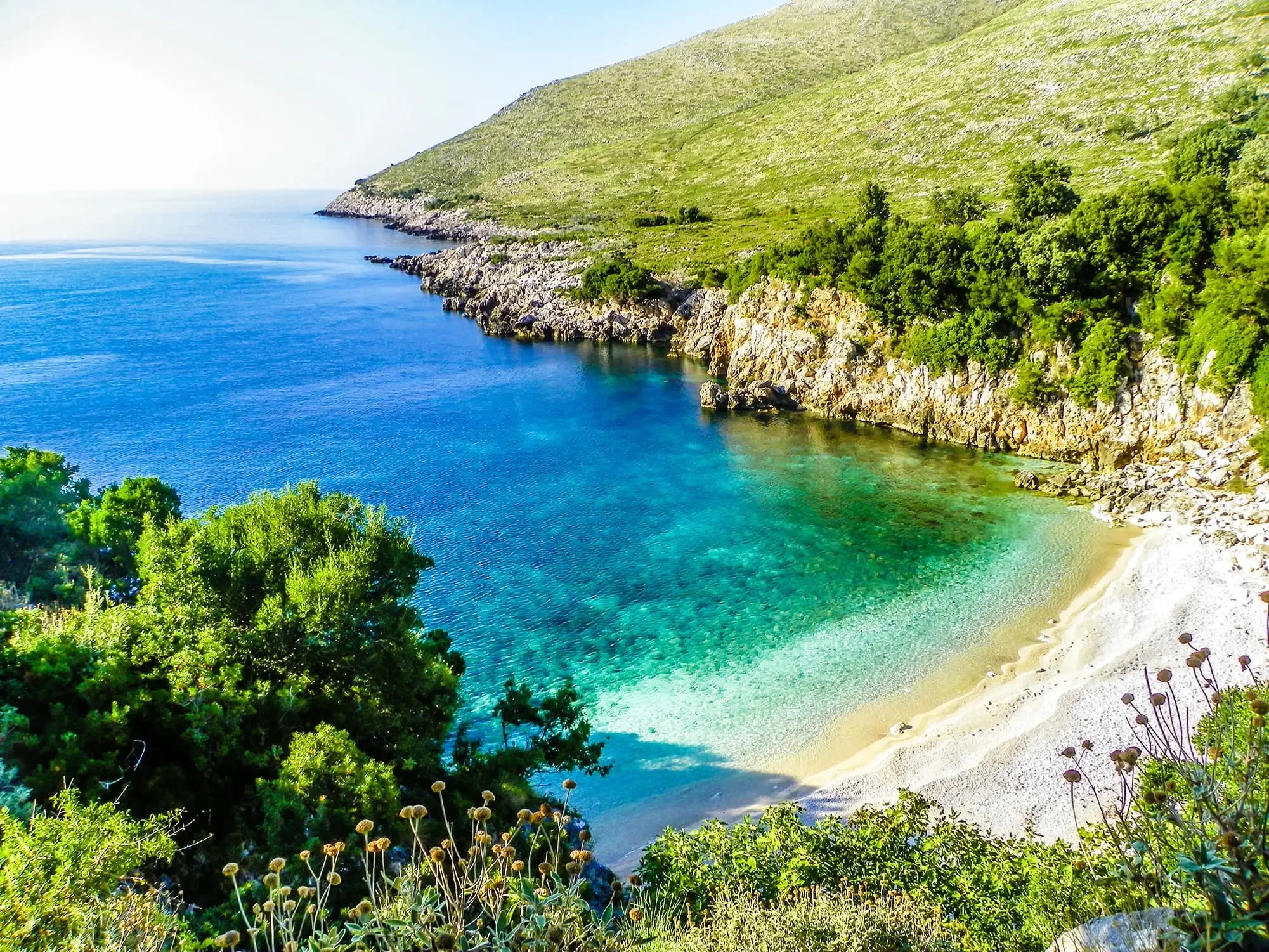
Photo: The Karaburun Peninsula in Albania is known for its rugged coastline and clear waters, with legends of an ancient submerged settlement beneath the sea.
Photo©: Albania Tourism 2026
Your day-by-day itinerary
This sample itinerary was designed around an 8-day route through Montenegro and Albania. It's here to inspire, not to lock you in. You might pick a few pieces and let me build something different around them, including a longer, slower version. Your trip is yours, and we'll customize every detail until it fits.
Photo©: Donald Meta / pexels
Day 1
Arrival on Kotor Bay, Montenegro
Welcome to Montenegro. Depending on your routing, you'll arrive into Tivat (a short hop from Tirana, and my usual recommendation) or be transferred up from Dubrovnik. Either way, you settle into a boutique palazzo hotel inside or just outside the Kotor old town walls, with views over the bay.
The evening is yours. A quiet dinner at a seafront restaurant in Perast, a tiny Baroque village across the water, eases you into the pace of the trip.
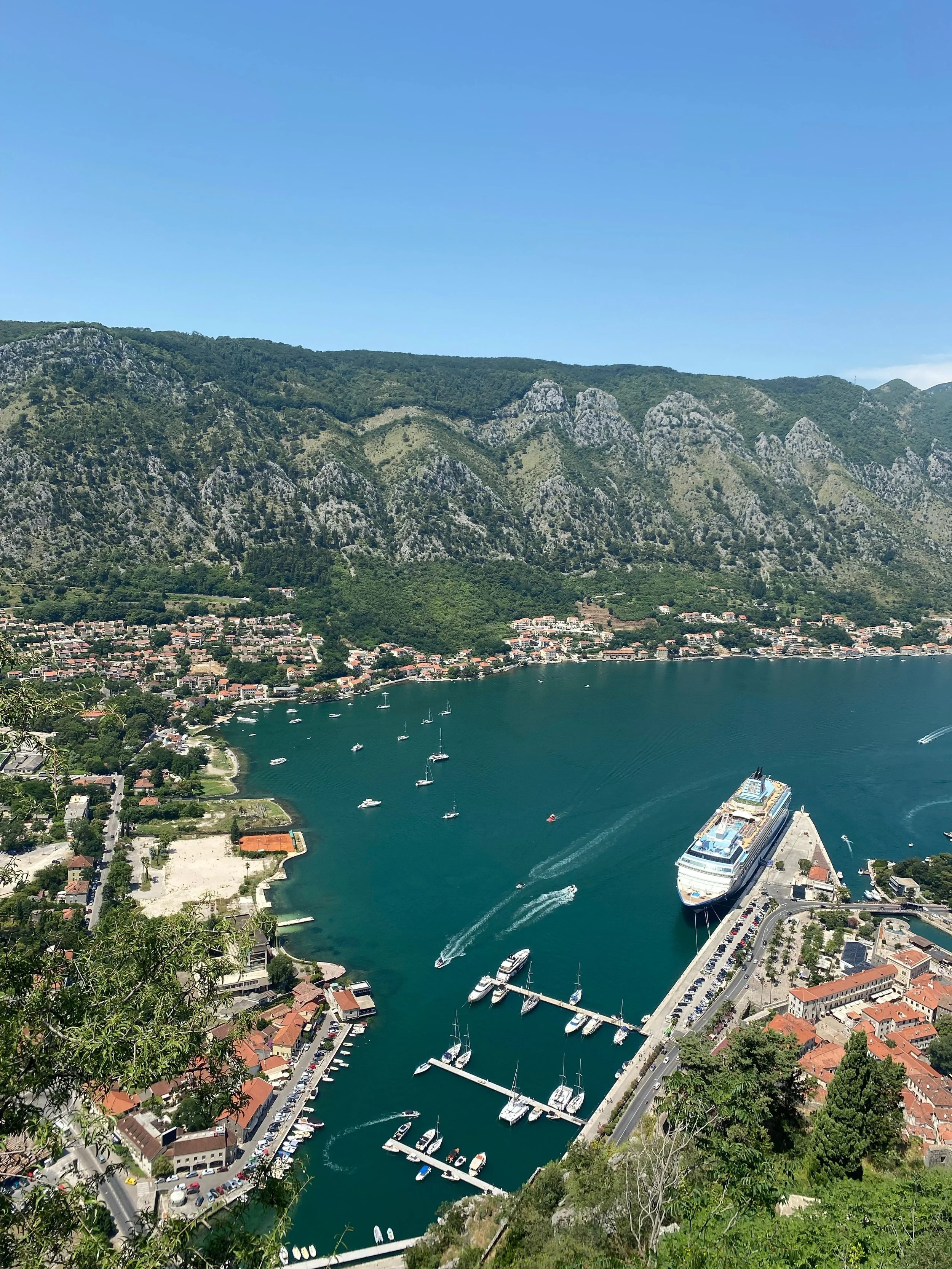
Photo: Aerial view of Kotor Bay in Montenegro, featuring cruise ships, the historic medieval town, and dramatic surrounding mountains.
Photo©: Gizem Arslan Ok / pexels
Day 2
Kotor Bay
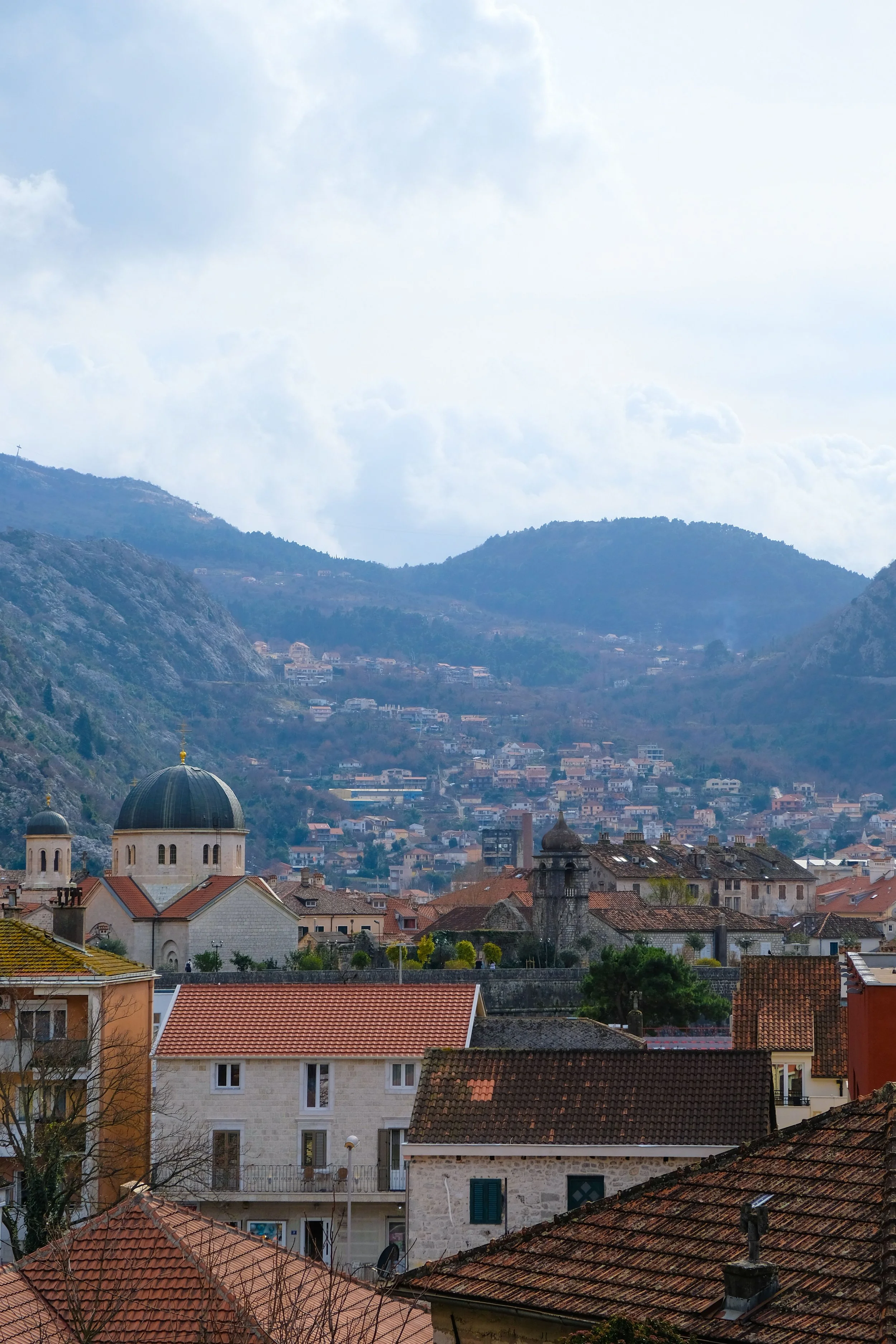
Kotor sits at the back of a bay so deep and so steep-sided that the Venetians, who ran it for four centuries, thought of it as their private lake. A morning with a local guide is a walk through their city: the twin-towered cathedral of Saint Tryphon, older than most of Venice, the maritime museum in a shipowner's palace, the squares where the old families still have their names on the doors.
If you're up for the climb, the 1,350 steps to the fortress of Saint John above the old town are one of the great views in the Adriatic; steep, but the payoff is unreal. In the late afternoon, a private hour on the bay, a small boat pulling up to Our Lady of the Rocks, the island church built from stones dropped by sailors over three centuries. Dinner back in Kotor.
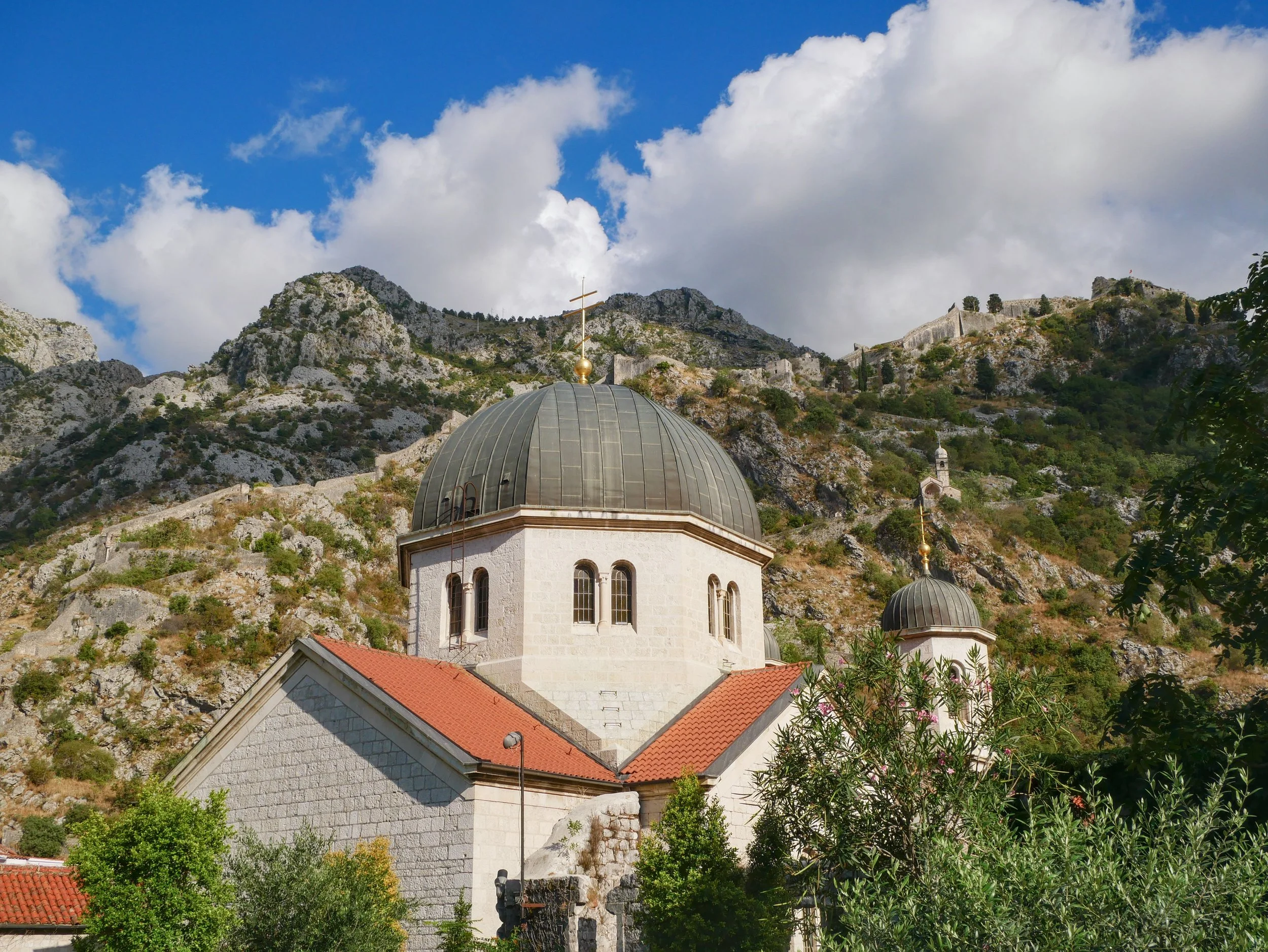
Photo: Picturesque mountain town in Kotor, Montenegro, featuring traditional rooftops and a scenic mountainous backdrop.
Photo©: Fotoğrafınruhu / pexels
Day 3
Kotor to Budva to Shkoder
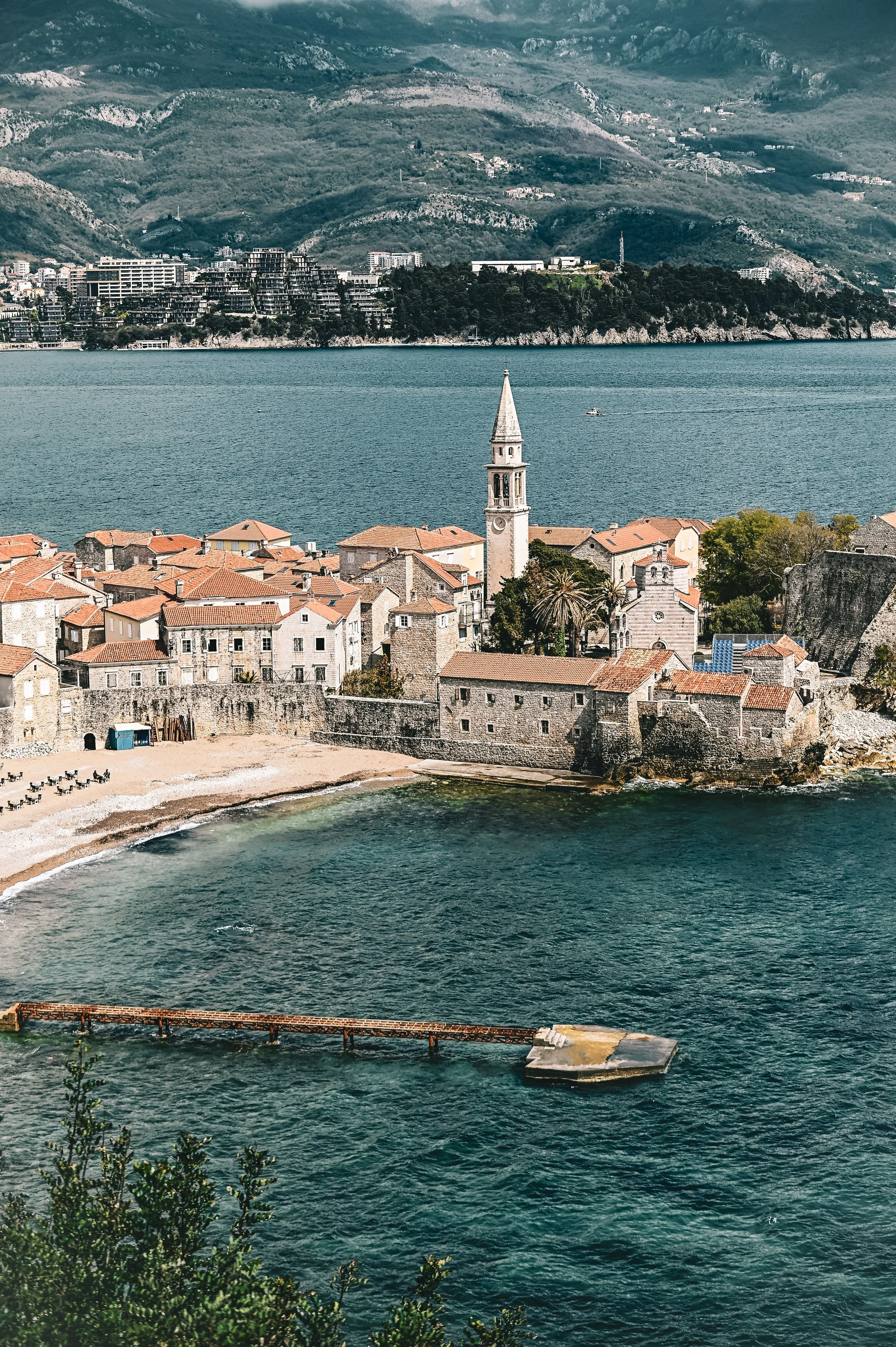
In the morning, south to Budva, a 2,500-year-old coastal town with a small medieval old town wrapped in stone walls and a long beach that runs twenty kilometers along the Adriatic. A stop for a late lunch at a beach club looking across to Sveti Stefan, the famous island-village (the island itself is closed to non-guests, but the view from the beach is the real experience).
In the afternoon we cross into Albania. Crossing times can vary, which is exactly why we build the day with margin and why I handle the paperwork in advance. Check in to a boutique hotel in Shkoder, the old cultural capital of the Albanian north, on the shore of the largest lake in Southern Europe. Dinner at your leisure.
Photo: Budva, Montenegro, offers a stunning aerial view of its historic coastal town surrounded by dramatic mountains and the Adriatic Sea.
Photo©: Alexander Nadrilyanski / pexels
Day 4
Lake Shkoder, Kruje, and the Northern Estates
This morning takes you deeper into Albania, the least-traveled country on this route and, quietly, one of the most rewarding. Start with Rozafa Castle, the fortress above Shkoder with views across the lake into two countries, and the drive south along the water, one of the prettiest in the Balkans.
Continue to Kruje, a small hilltop town wrapped in mountains and threaded with cobblestone lanes, where copper workers, silversmiths, and rug makers still work the old bazaar the way their grandparents did. For travelers who want a softer landing in Albania, the north has a handful of lovely agrotourism estates, working farms with rooms, long tables, and food grown a few steps from the kitchen, and I'll often place a night here instead of, or alongside, the Kruje hotel. It's one of the most memorable ways to meet the country. Dinner tonight is on the estate or at a hillside restaurant with a view over the valley.
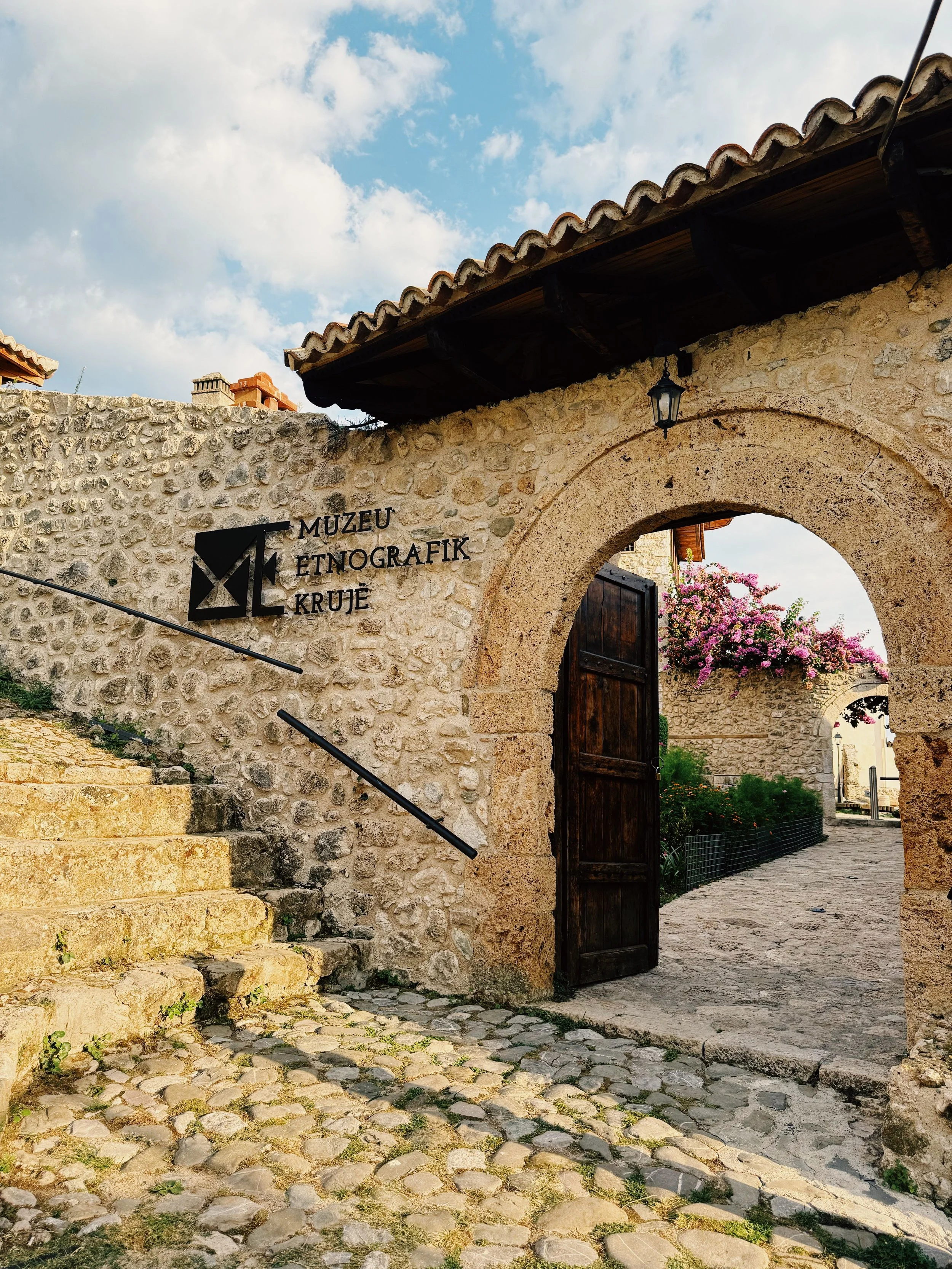
Photo: The stone entrance to Krujë’s Ethnographic Museum in Albania, showcasing traditional architecture beneath a sunny sky.
Photo©: Emine Aydoğdu / pexels
Love what you're reading?
This is a sample. Tell me about your travel style and I'll build your Croatia trip from scratch.
Day 5
Kruje, the Albanian Riviera, and Saranda
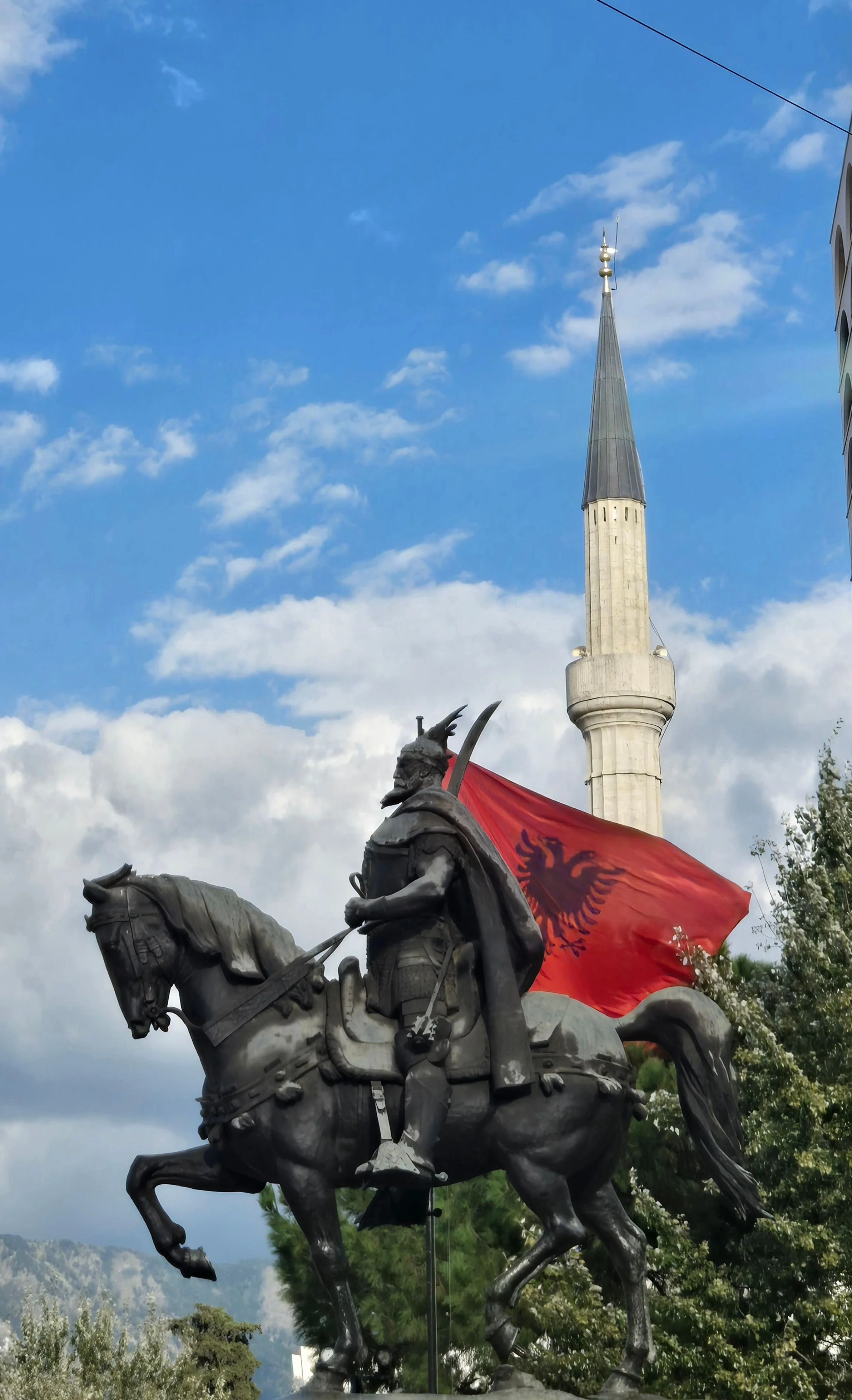
A morning visit to the castle at the top of Kruje, tied to Albania's national hero Skenderbeu, who held off the Ottomans from these hills in the 1400s, and the small, well-curated ethnographic museum before we hit the road.
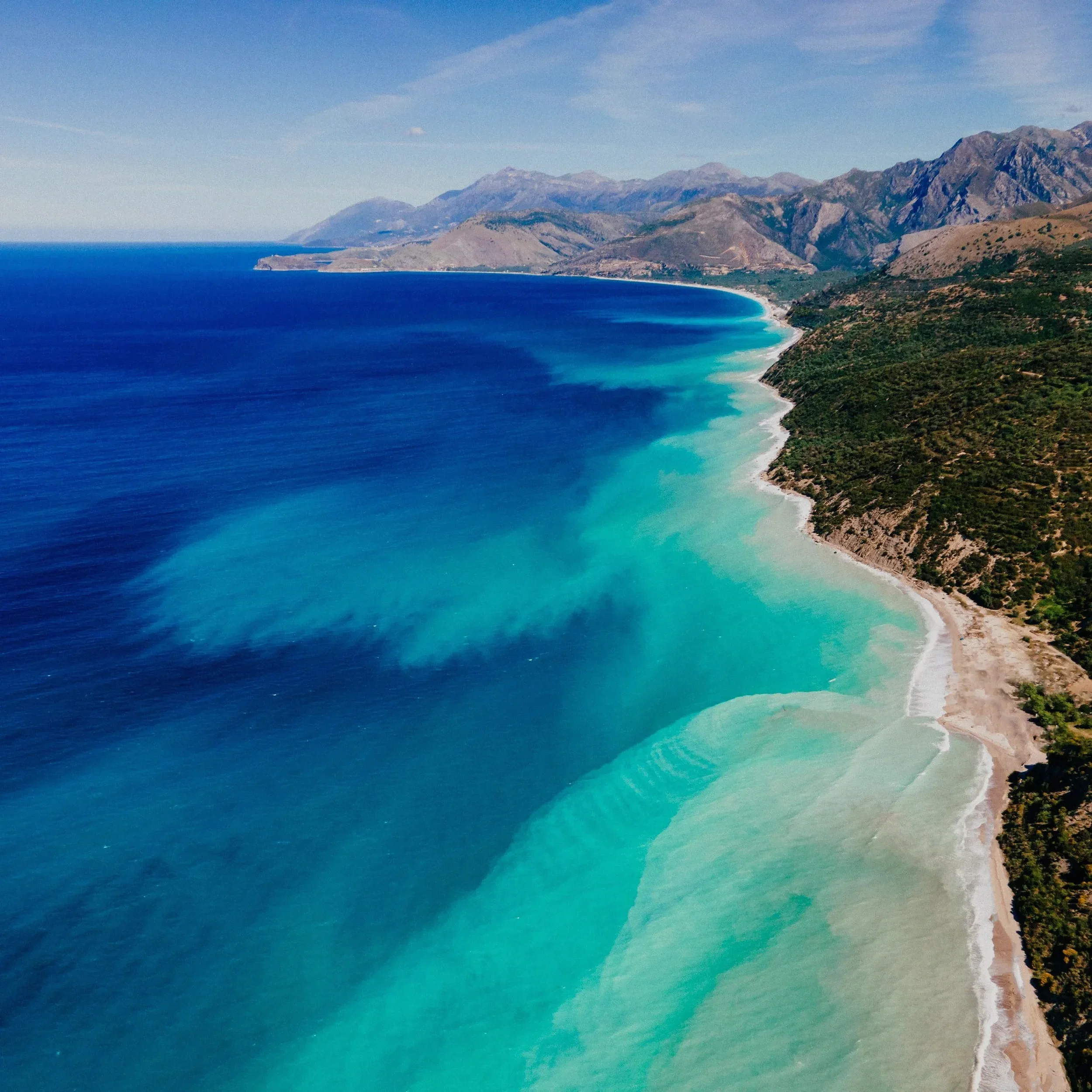
Today is a longer driving day, but the drive is the point. Down the Albanian Riviera, where the Adriatic becomes the Ionian Sea and the coastline is still largely undeveloped: pine-shaded beaches, small harbors, terraced villages tumbling down the hillsides. A stop at the ancient Greek and Roman ruins of Apollonia, an archaeological park with almost none of the crowds you'd find at anything similar in Italy. Arrive in Saranda in the late afternoon, at the southern tip of Albania, looking across the water to Corfu. Tonight, dinner at Lekurs Castle, an Ottoman-era hilltop fortress with one of the best views on this coast.
Photo: The Albanian Riviera along the Ionian Sea is known for crystal-clear waters, secluded beaches, charming coastal villages, and dramatic landscapes.
Photo©: : Albania Turism 2026
Day 6
Butrint and Ksamil
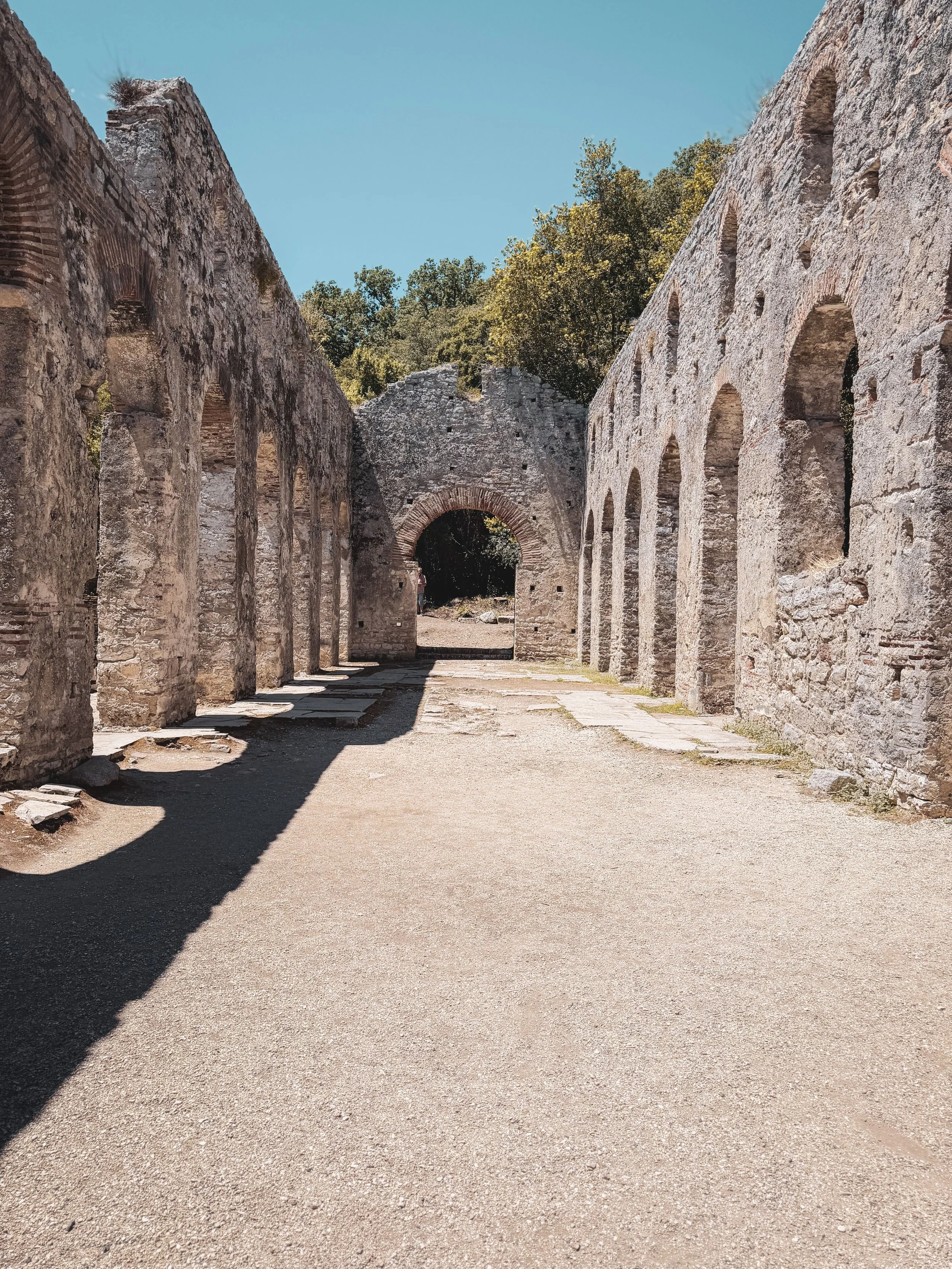
A morning at Butrint, a UNESCO-listed archaeological site where Greek, Roman, Byzantine, and Venetian histories stack on top of each other in one extraordinary place. A private guide walks you through ruins that feel more alive than most Italian sites, because there are almost no other visitors.
In the afternoon, rather than the much-photographed Blue Eye spring (popular on social media, underwhelming in person, and better saved for travelers spending longer in the area), we head to Ksamil. A small boat takes you out among its little islands and clear coves for an afternoon of swimming, followed by a long, late seafood lunch at one of the village's waterfront restaurants, the kind of meal where the fish was swimming that morning. Back to Saranda for a relaxed evening.
Photo: Butrint in Albania features ancient ruins, historic stone architecture, and impressive Roman-era arches surrounded by lush greenery.
Photo©: Eleni Zafeiri / pexels
Day 7
Saranda to Berat, the City of a Thousand Windows
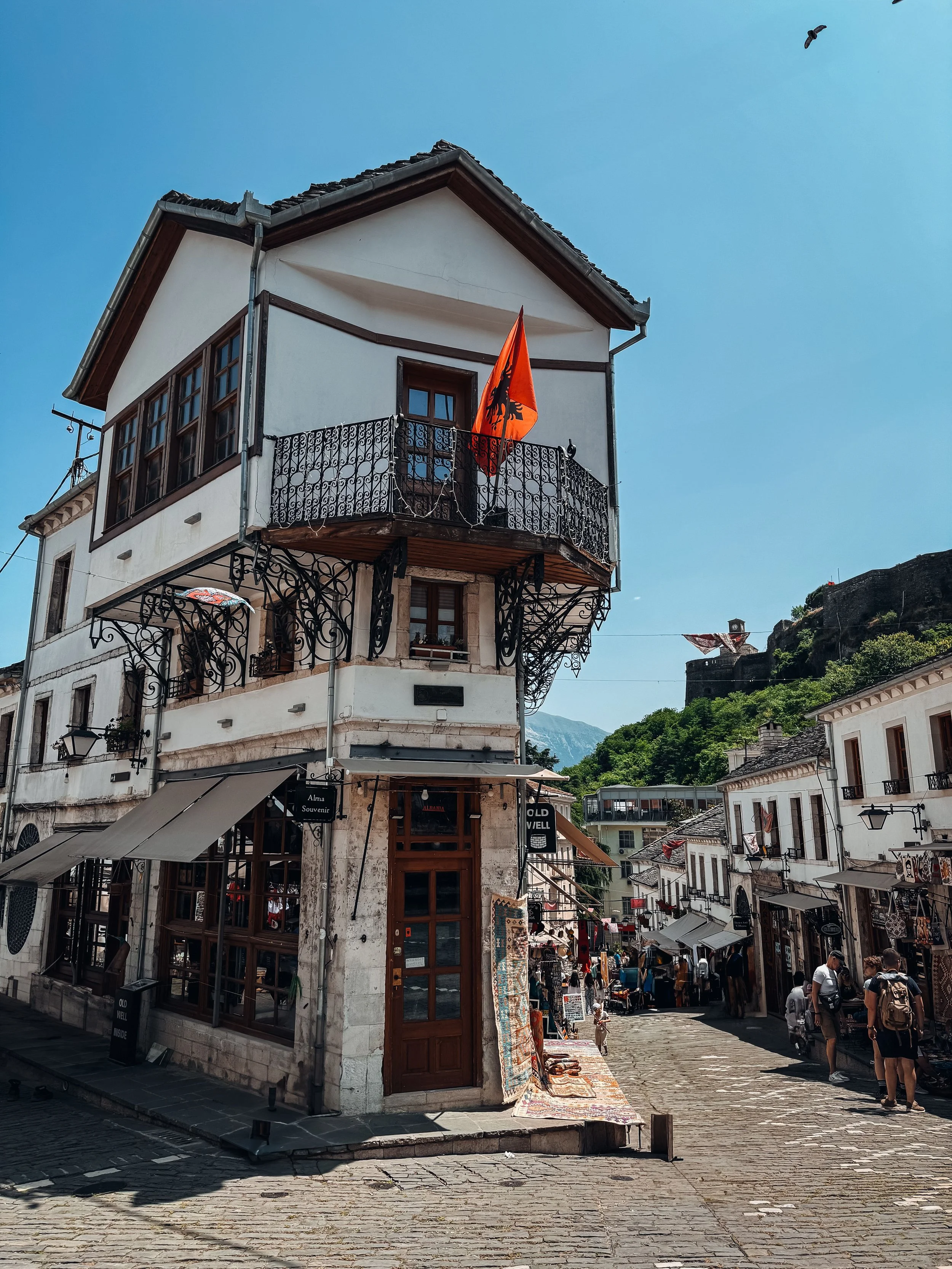
A scenic drive north through Gjirokastra, a UNESCO-listed stone-walled town known as the City of Stone, with its Ottoman fortress above and cobblestone lanes below. Time for a walk and a coffee before continuing on to Berat, arguably the most beautiful town in Albania.
Berat is the one you end on. A fortress at the top of the hill, still lived in, still with homes and churches inside its walls. The old town below is UNESCO-listed, its white Ottoman houses stacked up the hillside, their tall windows catching the late light (this is where the City of a Thousand Windows nickname comes from, and it's accurate). Check in to a traditional Ottoman-style guest house in the old quarter. A folklore dinner tonight, with live local music and a wine list from nearby producers almost no one outside Albania knows.
Photo: A charming historic street in Gjirokastër, Albania, featuring traditional stone architecture and the Albanian flag.
Photo©: G Cicconeto / pexels
Day 8
Berat and Tirana Departure
A morning tour of the Berat fortress and the old town with a local guide. Lunch at the castle restaurant, with views back across the town and the valley.
In the afternoon, a private transfer north to Tirana, Albania's capital. Depending on your flight, either a short evening in Tirana to see the city that has reinvented itself more than any other European capital in the last twenty years, or a direct transfer to Tirana International Airport for your flight home. Eight days, two countries, and one of the most rewarding trips Europe still has to offer.
Photo: The Skanderbeg Monument in Tirana, Albania, with the Albanian flag and Et’hem Bey Mosque in the background.
Photo©: Semiha Deniz / pexels
Who this trip is perfect for
Couples who have done the classic Mediterranean:
If you've already done Italy, Croatia, Greece, the Amalfi Coast, and you want to know what's next, this is the trip. Montenegro and Albania are where the travelers who love Europe for its underexplored corners are heading now. Not because the countries are undiscovered, but because the infrastructure has quietly reached a level where you can travel them beautifully while the crowds haven't caught up yet.
Photo©: Anna Fishman / Olegana Travel Boutique
Culturally curious travelers:
This isn't a beach-and-cocktail trip. It's a trip for couples who want to understand the places they visit: who fought here, who built this, why this church has Ottoman architecture and Byzantine frescoes at the same time, why the food tastes the way it does. If that's the kind of traveler you are, Montenegro and Albania will reward you more than almost anywhere in Europe.
Photo©: Anna Fishman / Olegana Travel Boutique
Couples celebrating something:
Anniversaries, big birthdays, retirements, a year that needed celebrating. This is a memory trip, not a vacation. The places you'll stay, the views you'll see, the dinners you'll have, the stories you'll tell when you get home: these are the ingredients of a trip that anchors in memory for a long time. For a celebration, I'd lean toward the longer, slower version so the pace matches the occasion.
Photo©: Anna Fishman / Olegana Travel Boutique
Extension travelers: this pairs beautifully with Croatia:
If you're already planning a Classic Croatia or a Croatia sailing trip, adding these days on is the single best Europe extension I can design. We simply keep going south instead of flying home, and I'll route the border logistics so the join is seamless.
Photo©: Anna Fishman / Olegana Travel Boutique
Where you’ll stay
Kotor, Montenegro, 1 night. A boutique palazzo hotel inside or just outside the old town walls, with stone interiors, beamed ceilings, and views over Kotor Bay. Breakfast included. The kind of property that makes a short stay feel like a full immersion.
Shkoder, Albania, 1 night. A boutique hotel in the old town, close to the pedestrian street of Ottoman-era houses and cafes, with a rooftop terrace and breakfast included. A gentle first night in Albania.
Kruje or a northern agrotourism estate, Albania, 1 night. Either a boutique hotel inside Kruje's old town, wrapped in cobblestone lanes and mountain light, or a working agrotourism estate in the north with long tables, breakfast from the farm, and food grown on site. On the longer version we often do both.
Saranda, Albania, 2 nights. A modern coastal property looking across the water to Corfu, with rooms built for slow evenings, a pool terrace, and breakfast included. Saranda is the base for Butrint and Ksamil, so two nights here lets you explore without packing a bag in between. This is the one place on the route where you get to settle in, which is exactly why I keep it.
Berat, Albania, 1 night. A traditional Ottoman-style guest house within the old quarter, with hand-carved wooden ceilings, white stone walls, breakfast in the courtyard, and quiet terraces overlooking a town that feels unchanged in four centuries. This is the hotel most clients don't stop talking about.
The night count above assumes the route runs Kotor to Tirana. When flights make the reverse direction smoother, the same hotels run in the opposite order.
Best time to visit Montenegro and Albania
Shoulder season: May through mid-June and mid-September through late October. The sweet spot. Spring brings wildflowers in the Montenegrin mountains and cool, clear light along the Albanian coast, with temperatures in the 70s. Fall is warm, the Ionian coast at Ksamil is still swimmable into October, and the archaeological sites like Butrint and Apollonia are at their best when the crowds, such as they are here, have thinned out. October is the month I'd choose.
Peak summer: July and August. Beautiful but hot, with temperatures in the 90s in the Albanian interior and at the ruins, and this is a trip with a lot of outdoor walking, much of it in full sun. Kotor also fills with cruise passengers on port days. If summer is your only option, we start the site visits at opening time and put the middle of the day on the water at Ksamil.
Off-season: November through April. Winter closes parts of the Albanian interior and reduces some road and ferry service, and the coastal hotels at Saranda largely shut. The cities of Kotor, Berat, and Tirana are atmospheric and empty, but this route depends on the coast and the drives, so I recommend holding it for the shoulder months.
One practical note for any season: the smoothest version of this trip usually flies into Tirana rather than relying on the Dubrovnik land border. I'll plan your entry point around current conditions.

Let's design your Montenegro and Albania trip
Every itinerary I build starts with a conversation. Eight days, two countries, and the part of the Adriatic coast most travelers haven't met yet, or a longer, slower version if you'd rather linger. Tell me what you love, and I'll design the rest.
Frequently asked questions
-
Every itinerary is priced individually. The total depends on the season, the room category you choose, the size of your party, and whether you choose the eight-day or the longer version, so there's no set package price. Once I know what you're looking for on our first call, I'll follow up with a detailed quote.
-
Eight days covers the highlights of both countries (Kotor Bay, Budva, Kruje, the Albanian Riviera, Saranda, Butrint, Ksamil, and Berat), but I'll be honest that it moves, with mostly one-night stays. If your style is to unpack once and settle in, I recommend adding two or three nights so we can slow the pace, fold in a northern agrotourism estate, and give Albania the room its geography asks for. I'm glad to send the longer version.
-
For this route, I now lean toward Tirana. Land crossings out of Croatia have gotten slower, so flying into Tirana, either to start from the Albanian end or to take the short direct flight to Tivat in Montenegro, avoids the busiest border entirely. There are good connections into Tirana from the East Coast, and I'll route your flights around the smoothest entry point for your dates.
-
No. A private driver-guide handles every kilometer, including the border crossing and the mountain roads in the Albanian interior, which are not roads you want to learn on vacation. You never touch a steering wheel.
-
Late spring or early fall: May to mid-June, or mid-September to late October. Those two windows give you the best combination of weather, light, and small crowds. October is particularly lovely because the coast is still warm, the sites are quiet, and the light turns golden. July and August are beautiful but hot, and this trip has a lot of outdoor walking in full sun.
-
Yes, and it's the single most common add-on I build. Most couples who do this trip pair it with a Classic Croatia week or a Croatia sailing trip. I'll design the combined trip as one seamless itinerary and route the border logistics so the join is effortless.
-
International airfare and travel insurance aren't included. Most clients now fly into Tirana rather than Dubrovnik. Travel insurance is strongly recommended for any multi-country trip, quoted separately through Travel Guard, and I'll guide you on coverage once the itinerary is set.
-
Six months ahead for spring or fall. The boutique hotels on this route are small (the Berat guest house has a handful of rooms), and the best English-speaking guides in Albania are few and are booked by the tour operators early. Summer has more availability but is not when I'd send you.