
Portugal with kids: the best spring break trip in Europe
Six and a half hours from Newark, five hours ahead, warm enough for castles and cliff walks, and a fraction of the crowds you'll find in Italy or Spain. Here's how I build a Portugal spring break for families.
Every January my inbox fills with the same question, phrased about fifteen different ways. Spring break is coming, the kids need something better than another week in Florida, and the family wants Europe without the misery of dragging tired children through four cities in eight days.

Jerónimos Monastery in Belém, Lisbon, Portugal, is a magnificent Manueline landmark set against the city’s bright, sunny skies.
Photo©: Anna Fishman / Olegana Travel Boutique
My answer is almost always Portugal, and it has been for years now.
Part of that is practical. It's one of the easiest transatlantic trips a family from this area can make. Part of it is that Portugal in late March and April is genuinely at its best, in a way that summer visitors never see. And part of it is that Portuguese culture is warm toward children in a way that changes how a trip feels. Restaurants do not flinch when you walk in with a four-year-old. Nobody sighs at a stroller. Your kids will be fussed over, and they will notice.
Why spring break specifically
The flight is the easiest one in Europe. Newark to Lisbon is a nonstop of roughly six and a half hours, which means an overnight departure and a morning arrival. More importantly, Lisbon runs five hours ahead of New York, the smallest time difference of anywhere on the European mainland. That gap matters enormously with children. A five-hour shift is a rough first night and then you're fine. An Italy or Greece trip is nine hours of dragging everyone through the fog for three days.
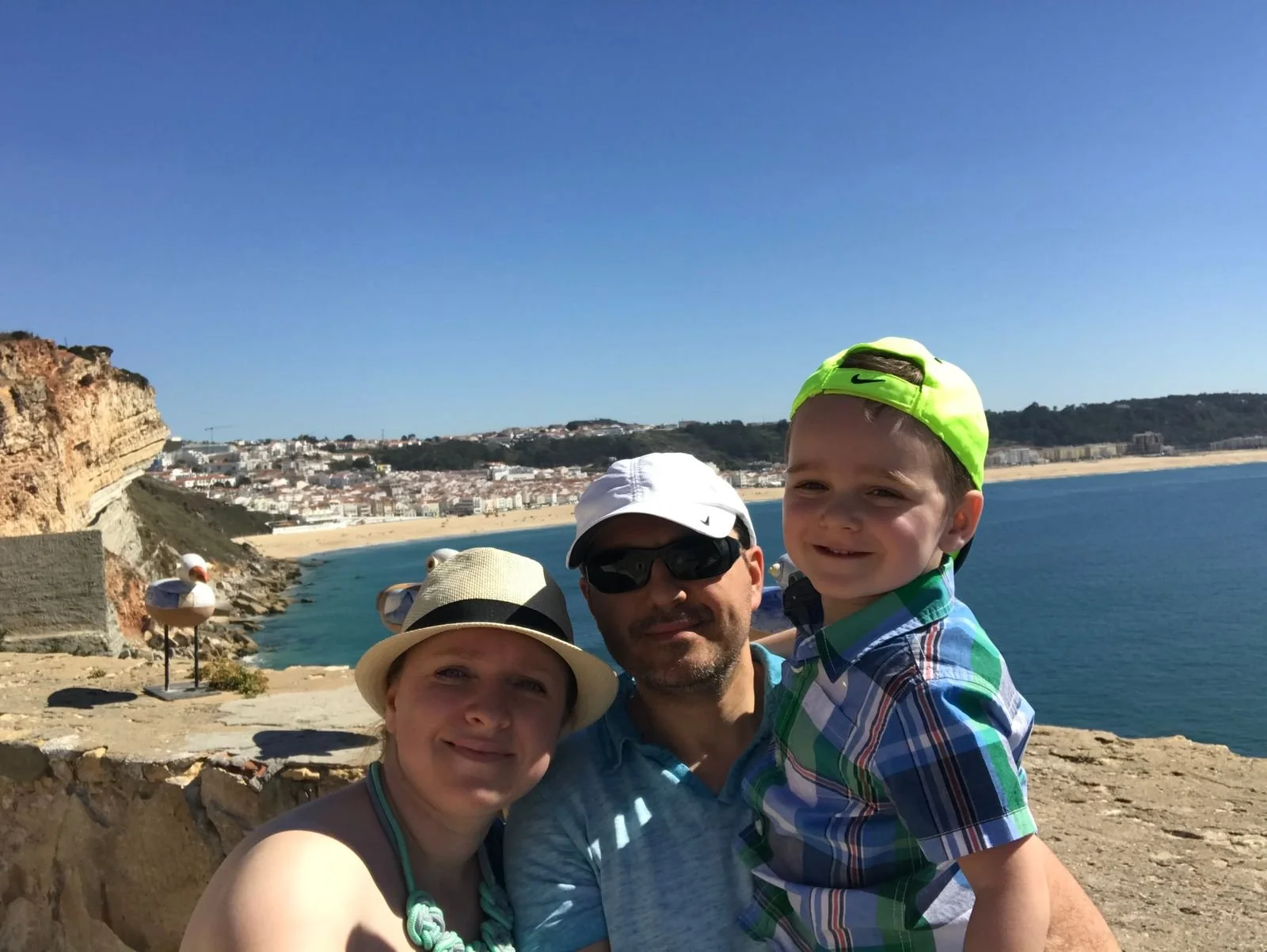
The stone walls near the Fort of São Miguel Arcanjo in Nazaré, Portugal, overlook the town, sandy coastline, and Atlantic Ocean from the Sítio promontory.
Photo©: Anna Fishman / Olegana Travel Boutique
The weather is built for the kind of day kids can actually handle. Lisbon in late March and April sits in the mid to high sixties, and the Algarve runs a few degrees warmer, into the low seventies by April. That's the temperature at which a child will happily walk around a castle for two hours. In July, the same castle at ninety-five degrees is a negotiation that ends in tears.
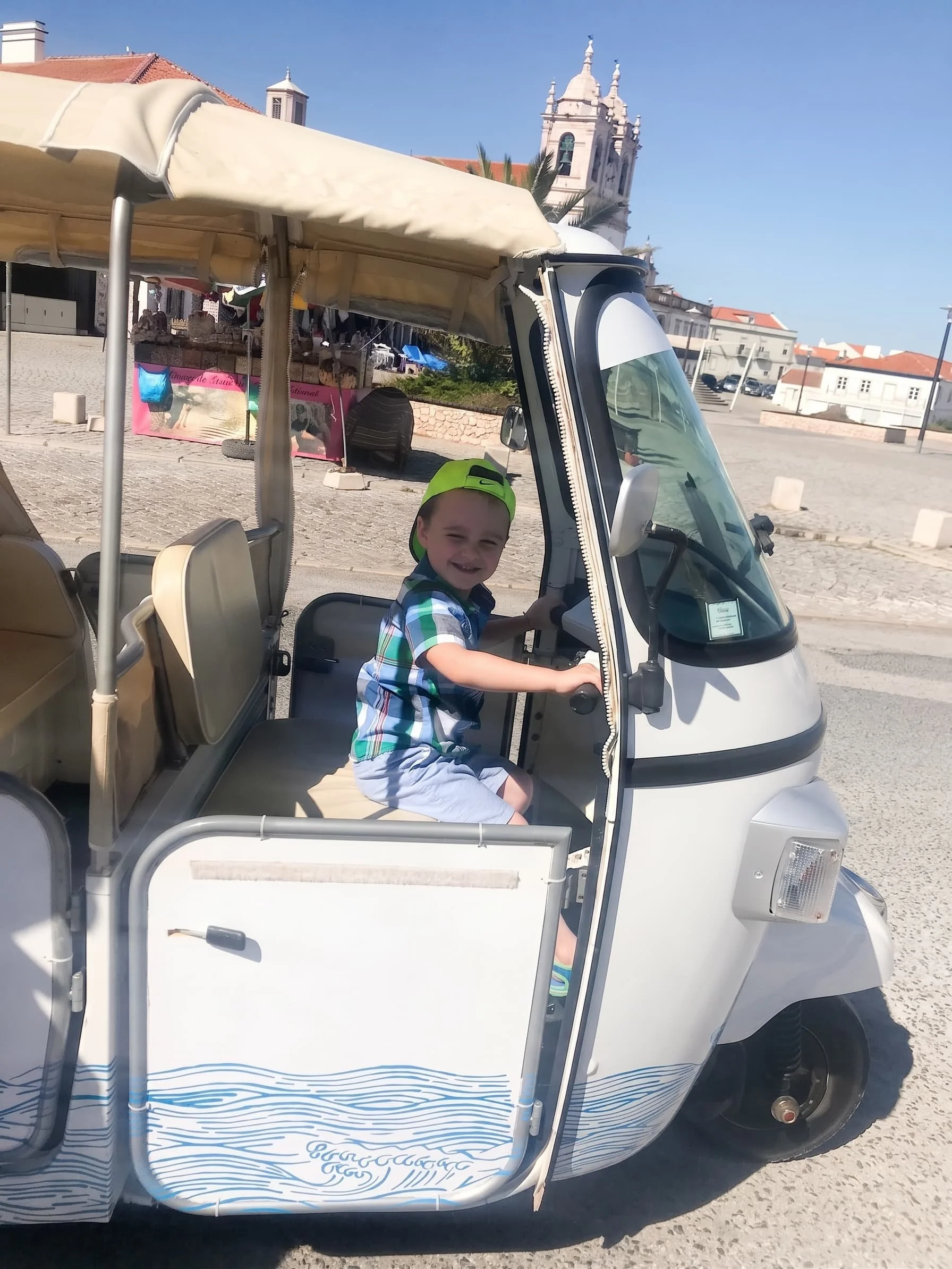
A tuk-tuk ride in Nazaré, Portugal.
Photo©: Anna Fishman / Olegana Travel Boutique
Everything is open and nothing is crowded. By late March the Algarve resorts have opened for the season, but the crowds don't really arrive until June. Sintra, which in August involves genuinely brutal queues, is manageable in April. You get the whole country running at full speed with a fraction of the people in it.
It costs meaningfully less. Flights and hotels in the spring shoulder season sit well below July and August rates. For a family of four, that difference is not marginal.
The countryside is putting on a show. The almond trees bloom across the Alentejo in March, and by April the whole country has gone green. Portugal in spring looks like a different place from the dry gold of high summer.
What we actually do with the kids
Lisbon, three or four nights
Lisbon is one of those rare capitals that works for children without anyone pretending. The hills are a workout, so I plan around that with trams and funiculars rather than fighting it.
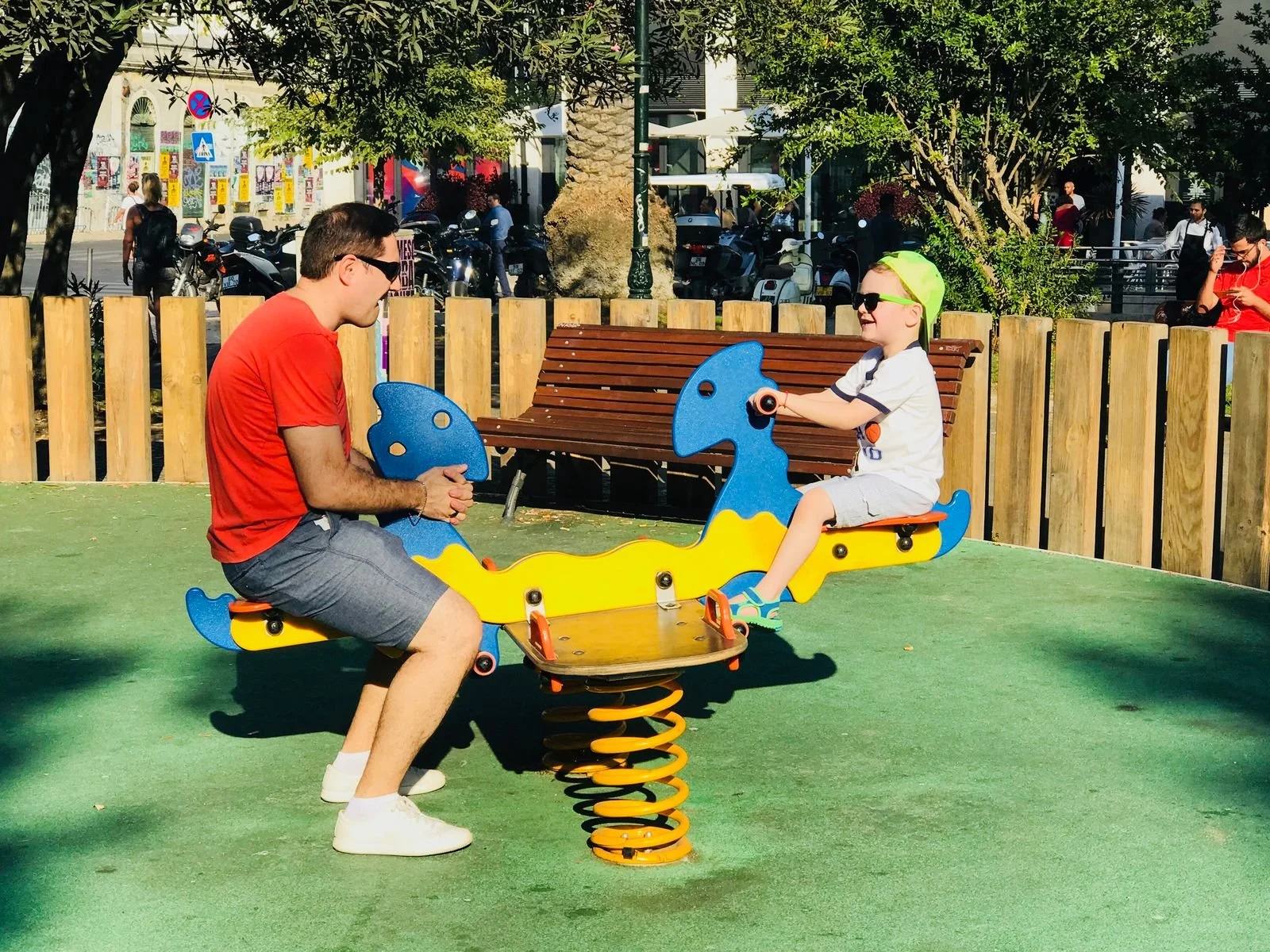
A family-friendly park in Lisbon, Portugal, featuring a children’s playground, shaded seating, and a relaxed neighborhood setting.
Photo©: Anna Fishman / Olegana Travel Boutique
The Oceanário is the anchor. It's among the best aquariums in Europe, built around a vast central tank with sharks and rays and ocean sunfish circling through it, and even teenagers who have decided that nothing is interesting tend to go quiet in front of it. Pair it with the cable car ride over the Parque das Nações afterward.

A vintage coin-operated motorcycle kiddie ride on a sidewalk outside a shop in Portugal.
Photo©: Anna Fishman / Olegana Travel Boutique
In Belém I book a private guide who runs the visit as a treasure hunt. The kids get the clues, they lead, and the adults trail behind. It turns the Jerónimos Monastery and the Belém Tower from a history lecture into a game, and it ends at the bakery where the original pastéis de nata have been made since 1837. One of my families told me it was the best thing they did in the city.
Tram 28 is a rite of passage. Sit at the back, hold on, and let the kids treat it as a roller coaster.
For a rainy afternoon, and April will give you a few, the LX Factory is a converted industrial complex full of bookshops, design stores and food stalls where every age group finds something.
Sintra, one full day, and please make it private
Sintra is the single place I insist on. Quinta da Regaleira has initiation wells, which are underground spiral staircases descending into the earth, plus grottos and garden tunnels connecting one part of the estate to another. For a child it is essentially a real-life adventure game. The Castle of the Moors gives them stone ramparts to run along a thousand-year-old ridge.

Pena Palace in Sintra, Portugal, is a colorful hilltop landmark known for its vibrant yellow and purple walls, eclectic Romantic architecture, and scenic setting in the Sintra Mountains.
Photo©: Anna Fishman / Olegana Travel Boutique
Here is the practical part. Sintra is a nightmare of queues and parking without a private guide and skip-the-line entry, and that is true even in April. One of my families used a guide who had a two-year-old of her own, and the difference it made with their toddler was the sort of thing you cannot book on a website. Their verdict on the day was simply that it was the best tour they did.
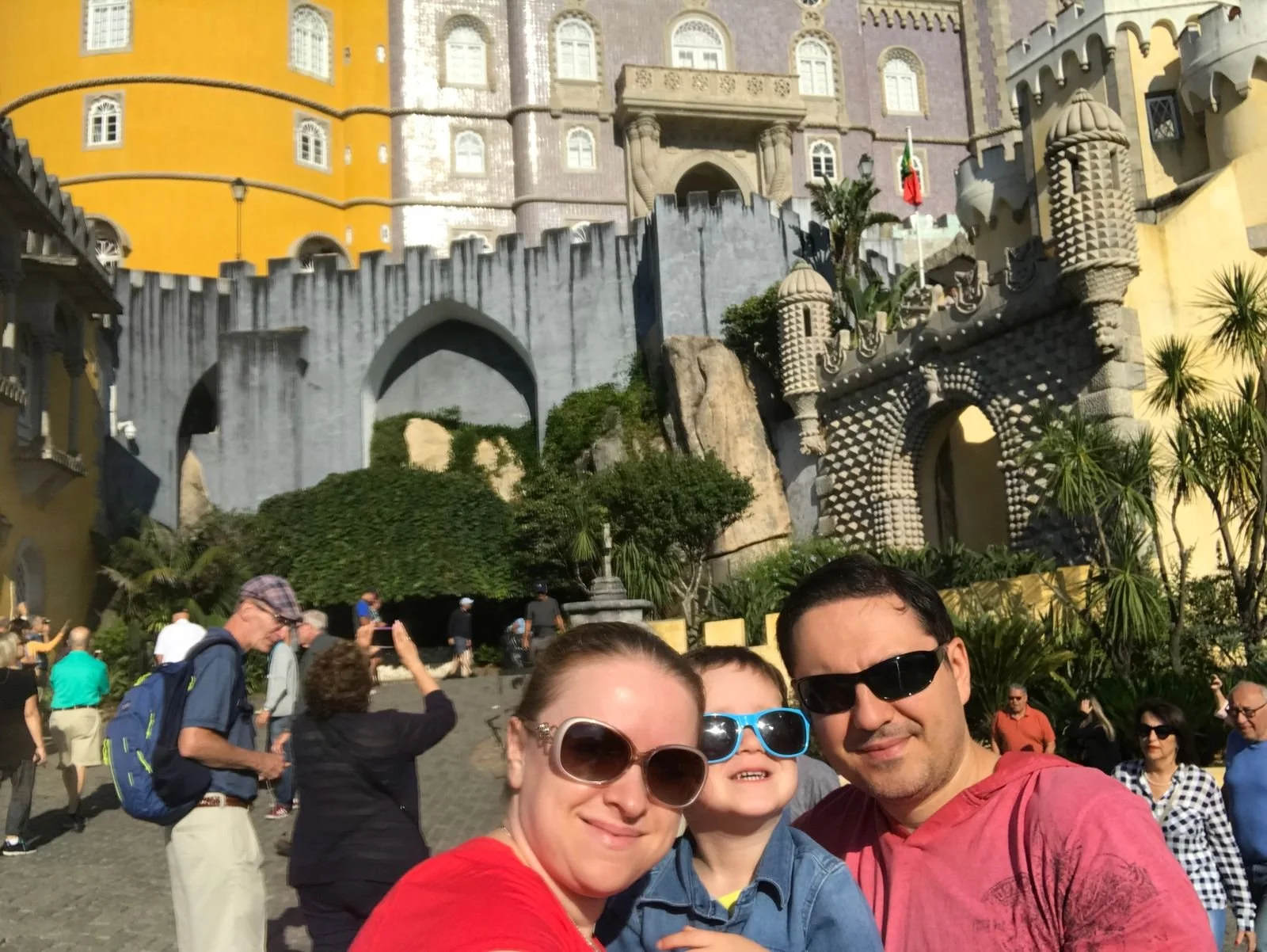
Pena Palace in Sintra, Portugal, is a vibrant hilltop landmark known for its colorful Romantic architecture and mountain views.
Photo©: Anna Fishman / Olegana Travel Boutique
On the way back, Queluz National Palace is twenty minutes from central Lisbon, far quieter than Sintra, and the gardens with their tile-lined canals and fountains give kids somewhere to run. A client of mine called it "so beautiful" and she was right. It's the most underrated stop in the region.
The Algarve, four or five nights
This is where a spring break trip earns its keep, because the Algarve in April is warm, open, and empty.
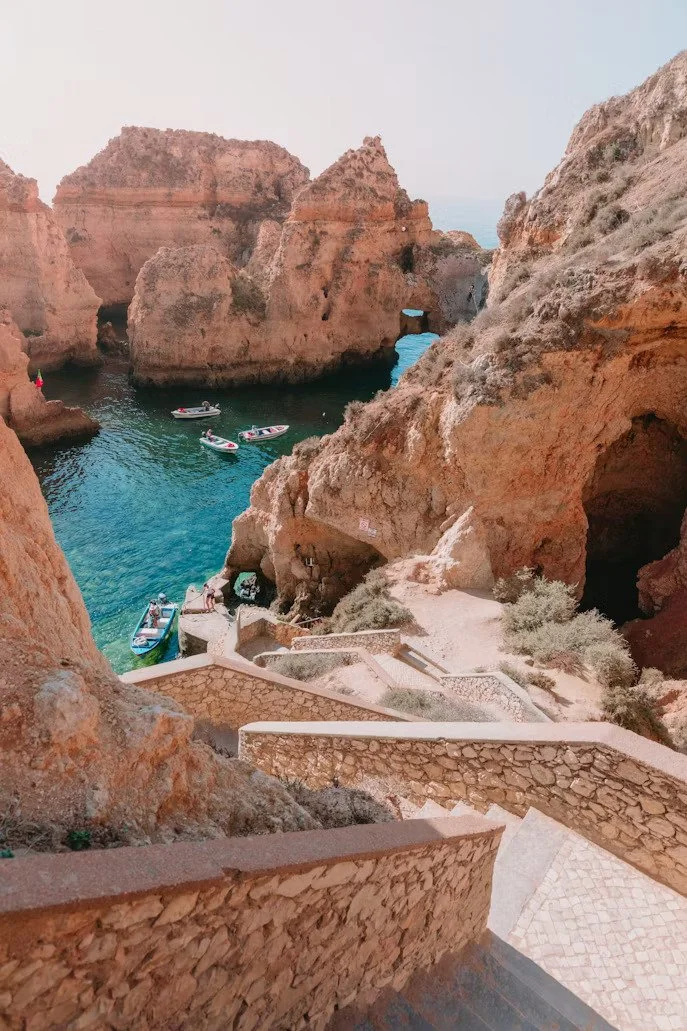
Ponta da Piedade in Lagos, Portugal, is renowned for its towering limestone cliffs, dramatic rock formations, natural arches, turquoise waters, and scenic coastal viewpoints.
Photo©: KOBU Agency / unsplash
The coastline is the draw: golden cliffs, sea caves, and the rock formations around Ponta da Piedade. A private boat day along the coast is consistently the thing families rate highest. One family described it flatly as the best day of their trip. You anchor in a sheltered bay, the kids swim and snorkel, the parents sit on deck, and somebody else is driving.
Lagos makes an easy day out, with medieval walls to walk and a compact old town. Faro by tuk tuk is a genuinely good format for younger children who have hit their limit on walking. And out on the wild southwest coast, the cliffs and cove beaches around Aljezur are worth the drive if you have a day to spend. I've written more about that stretch in my post on Portugal's hidden gems.
If you have longer: north to Porto and the Douro
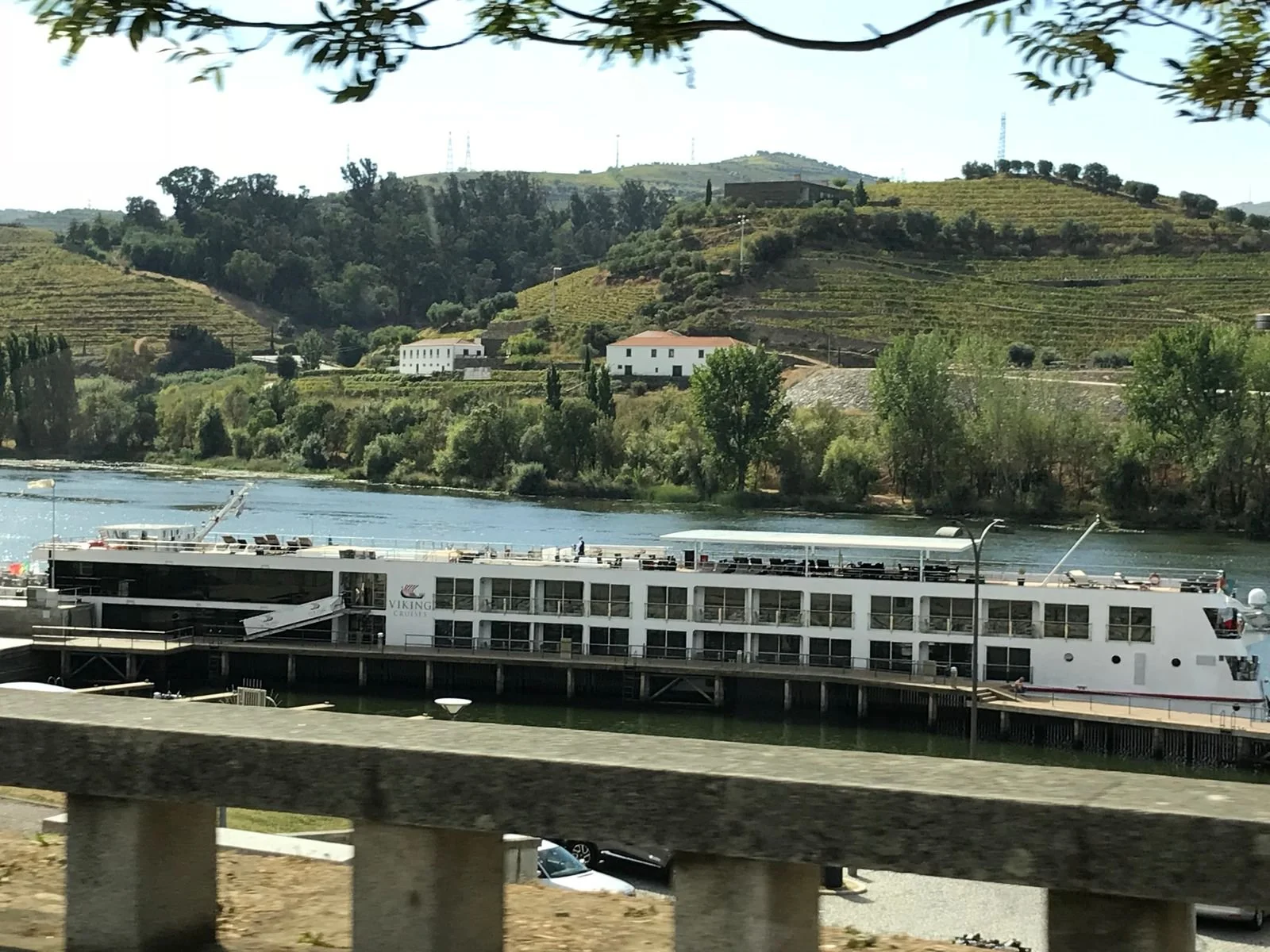
A scenic one- to two-hour river cruise through Portugal’s Douro Valley, offering beautiful views of the winding Douro River and terraced vineyards.
Photo©: Anna Fishman / Olegana Travel Boutique
I took my own family up the coast from Lisbon to Porto, stopping in Nazaré on the way, and I would do it again. Nazaré is a working fishing village with a funicular up to a clifftop fort, and it breaks up the drive so nobody spends five straight hours in a car.
In the Douro Valley, the thing I learned firsthand: book the short river cruise, not the long one. A one to two hour boat trip on the Douro is genuinely fun for children. The week-long river cruises are wonderful for adults and would bore a child into open rebellion. We hired a private driver for the valley itself, which meant nobody was navigating hairpin roads and everyone could look out of the window.
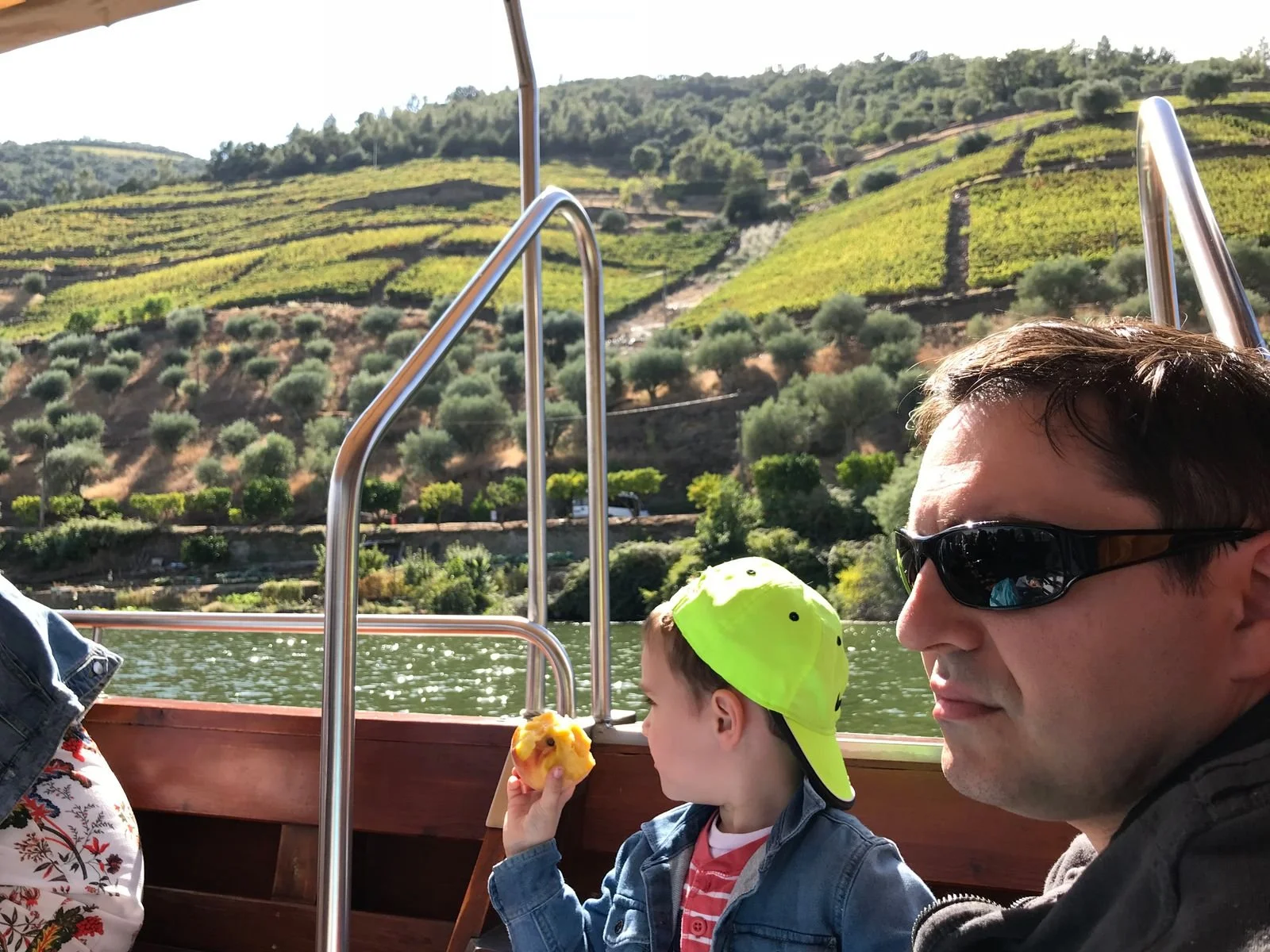
A scenic short river cruise through Portugal’s Douro Valley, showcasing the winding Douro River and surrounding terraced vineyards.
Photo©: Anna Fishman / Olegana Travel Boutique
If you're in Coimbra, Portugal dos Pequenitos is a miniature-Portugal park built for exactly this age group.
The full northern route is laid out in my Lisbon, Porto and Douro Valley itinerary, which works well as a longer spring break for families with older kids.
Planning a spring break to Portugal?
Tell me your kids' ages and how you like to travel, and I'll build the route around that.
The honest part: you are not swimming in the ocean
I would rather tell you this now than have you find out on day one.
The Atlantic off the Algarve in April sits around sixty-one to sixty-three degrees. That is too cold for almost every child and most adults. It stays cold through May. If your mental image of this trip involves the family splashing in the sea, adjust it.
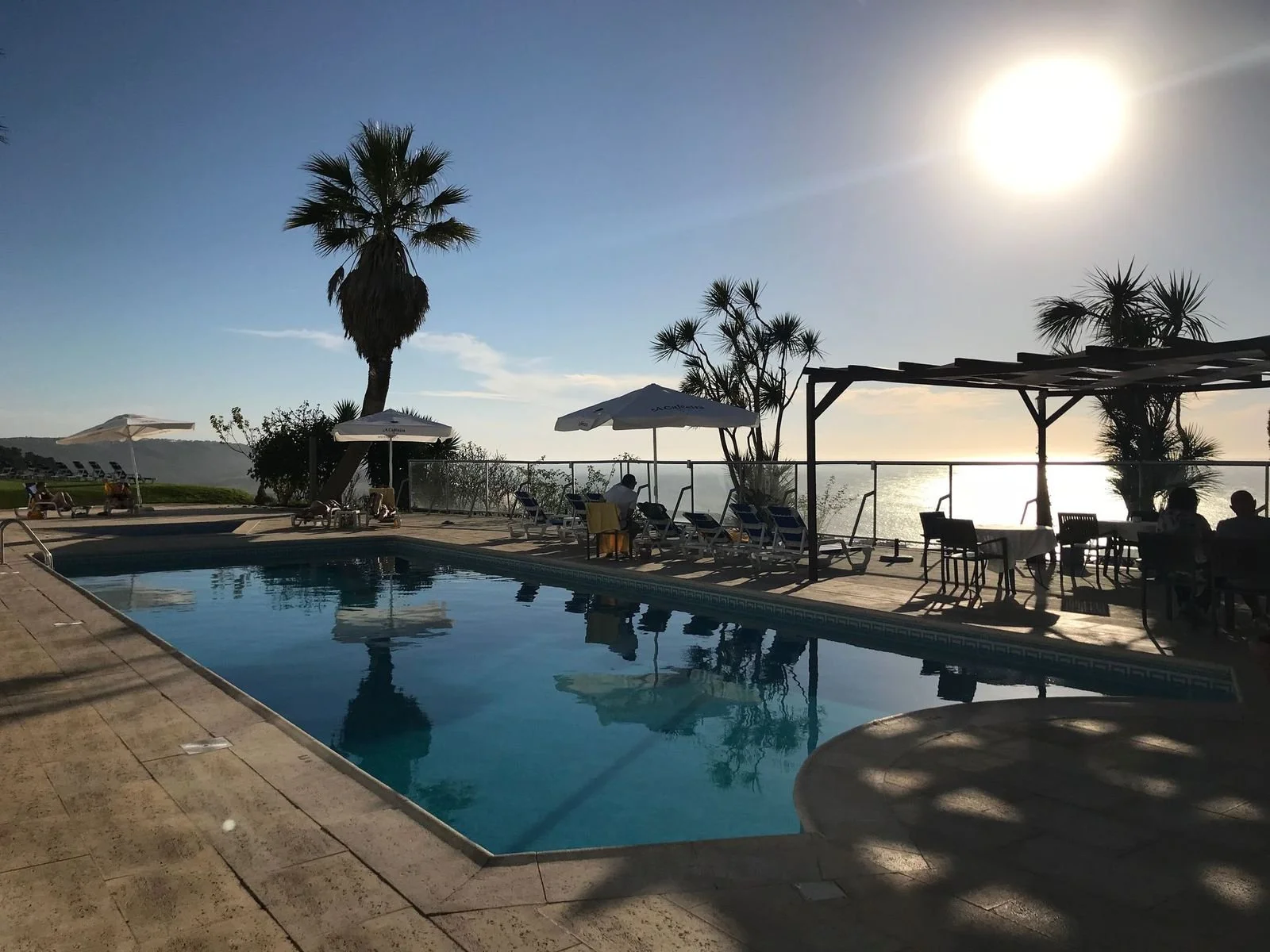
The Lisbon Coast, Portugal, is known for its Atlantic scenery, seaside pools, golden sunsets, and charming resort towns near Lisbon.
Photo©: Anna Fishman / Olegana Travel Boutique
What that actually means in practice: I book resorts with heated pools, and the pool becomes the water part of the holiday. The beach becomes a place for walking, rock pools, sandcastles and cliff paths, which children enjoy more than adults expect. And the trip becomes a castles-and-coastline spring break rather than a swimming one.
If ocean swimming is genuinely the priority for your family, I'll tell you honestly that you want June at the earliest, or a different part of the world. That conversation takes five minutes and it saves the whole trip.
Where to stay
Pine Cliffs, Algarve
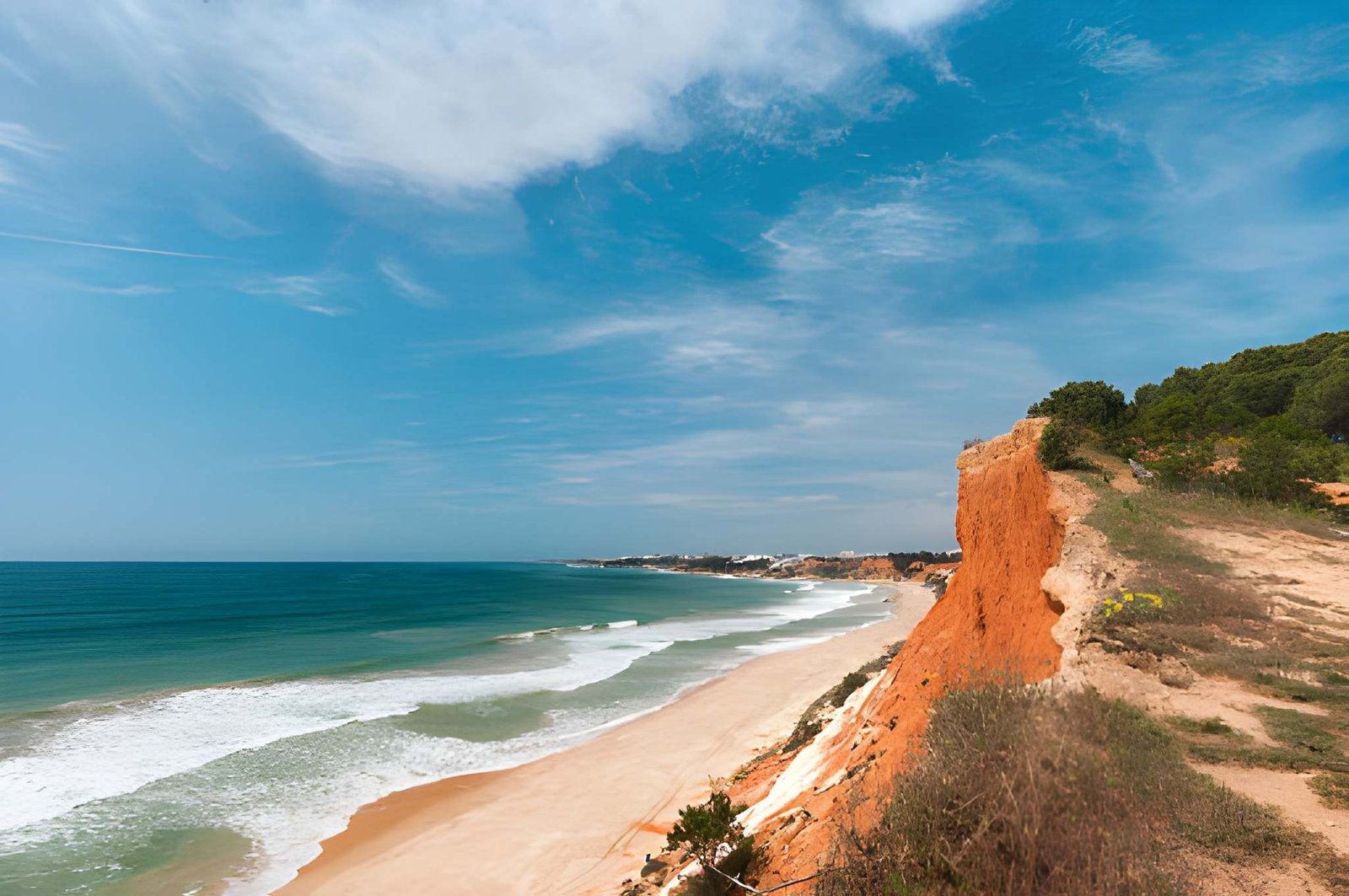
Praia da Falésia in Portugal’s Algarve region is a spectacular beach known for its long sandy shoreline and dramatic red and golden cliffs.
Photo©: :anyaivanova / istock
This is the one I recommend most often for families, and one of my clients put it more strongly than I would have dared: "If I were you I wouldn't recommend another hotel to families in the region." It sits on the cliffs above Praia da Falésia with a lift down to the beach, which matters more than you'd think when you're carrying a toddler and a cooler.

Porto Pirata Children’s Village at Pine Cliffs Resort in Portugal, a family-friendly outdoor play area featuring pirate ships, swimming pools, mini golf, and other children’s activities.
Photo©: Anna Fishman / Olegana Travel Boutique
The important detail for spring break: the Porto Pirata kids' club takes children from twelve months to eight years, and the Junior Club runs from eight to thirteen. Porto Pirata operates April through October plus festive periods including Easter, when they run an egg hunt and themed activities. If your break falls in late March and does not overlap Easter, the club may not be running, so this is something I confirm with the resort before we book rather than assuming. The two and three bedroom residences with kitchenettes are what I'd put a family in.
Lisbon: an apartment hotel, not a hotel room
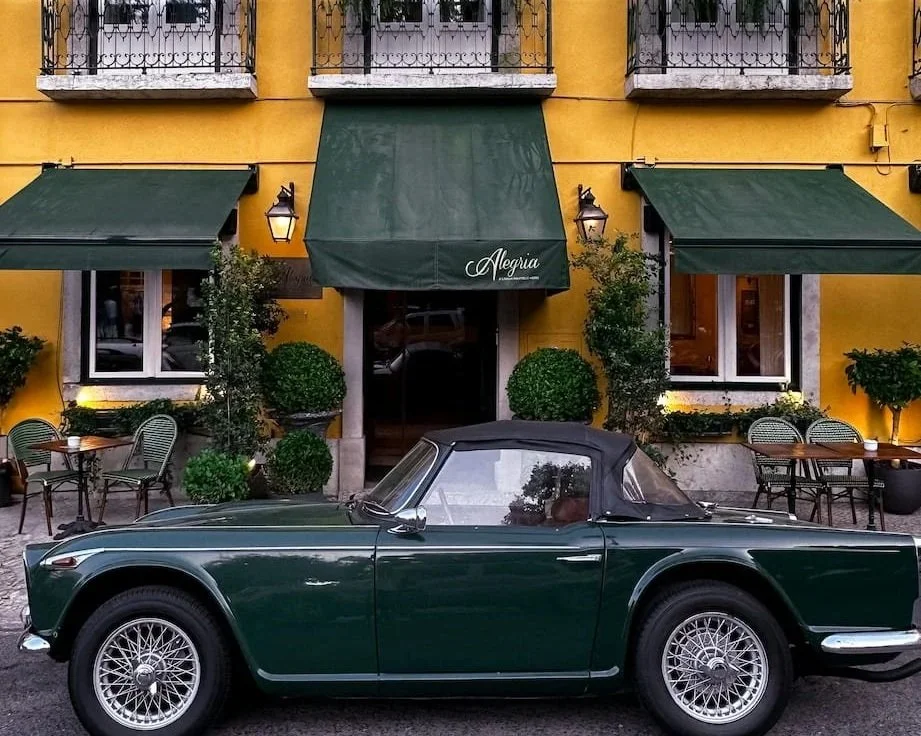
Hotel Alegria in Lisbon, Portugal, with the hotel’s charming historic facade in the background.
Photo©: imren tutuncu / pexels
For a family, a two-bedroom apartment in Chiado with a living room, a kitchen and a kids' room with bunk beds beats two adjoining hotel rooms every time. Space to spread out at the end of a walking day is the difference between a good evening and a bad one. I've stayed in this style of property with my own family.
On restaurants

A family-friendly restaurant in Lisbon, Portugal, where families with young children can enjoy a relaxed dining experience.
Photo©: Anna Fishman / Olegana Travel Boutique
Portugal is easy with children, but I still book. One family of mine ate at a Lisbon restaurant with a genuine date-night reputation and found the staff completely unbothered by their toddler. They also said of another Lisbon dinner that it was "half the price of any Michelin restaurant in NYC and just as good, if not better," which is a fair summary of eating in this country.
Who this trip is right for

Families who want Europe without the jet lag tax.
Five hours is the gentlest transatlantic adjustment available on the continent.
Photo©: Anna Fishman / Olegana Travel Boutique

Parents of kids aged roughly four to fourteen.
Old enough for the castles and the boat, young enough that a treasure hunt still lands. I adjust either direction, with more downtime for toddlers and more independence for teenagers.
Photo©: Anna Fishman / Olegana Travel Boutique
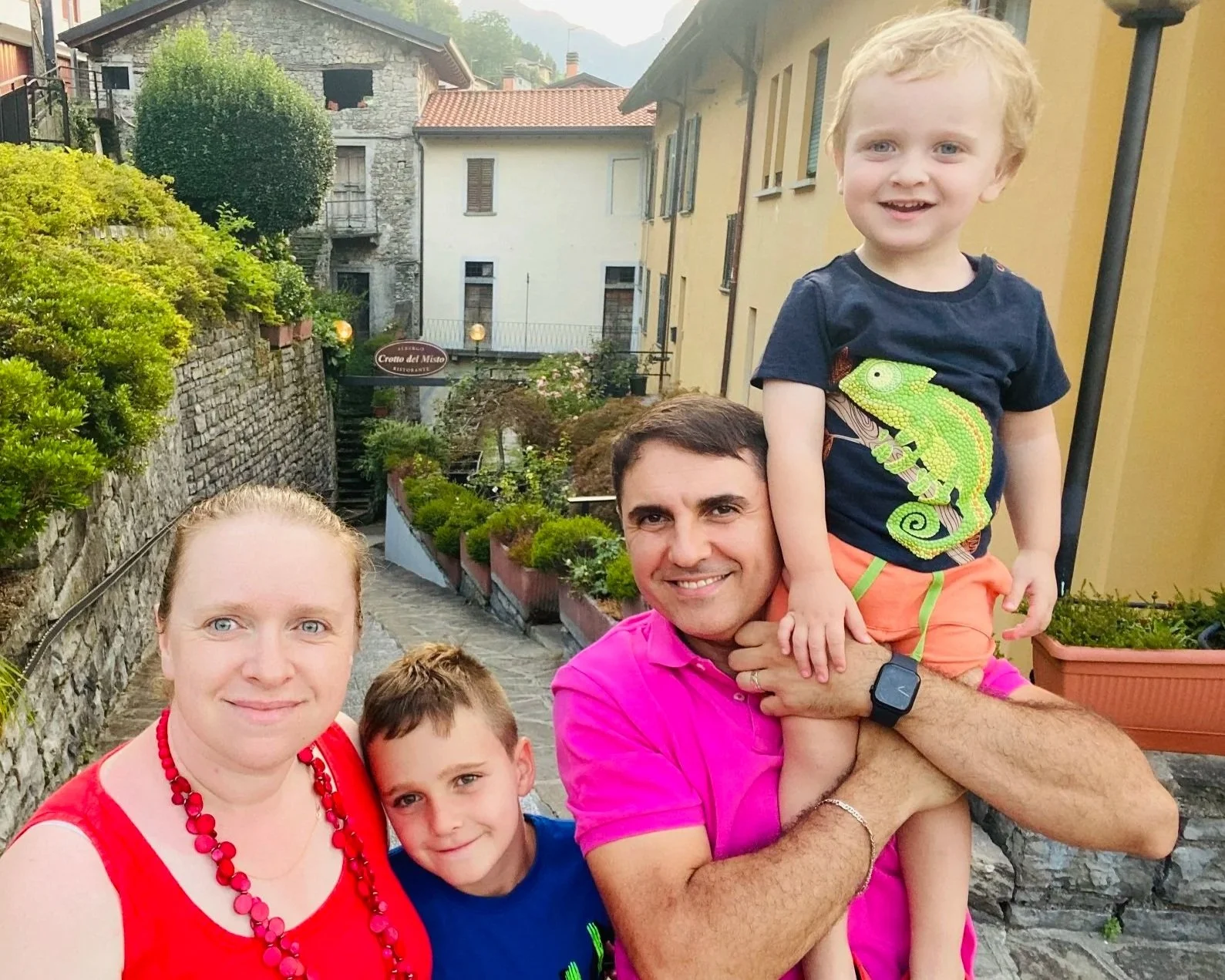
Families who have done Italy, Spain or Greece.
Portugal is the one that still feels like a discovery, and it's noticeably less crowded and less expensive.
Photo©: Anna Fishman / Olegana Travel Boutique
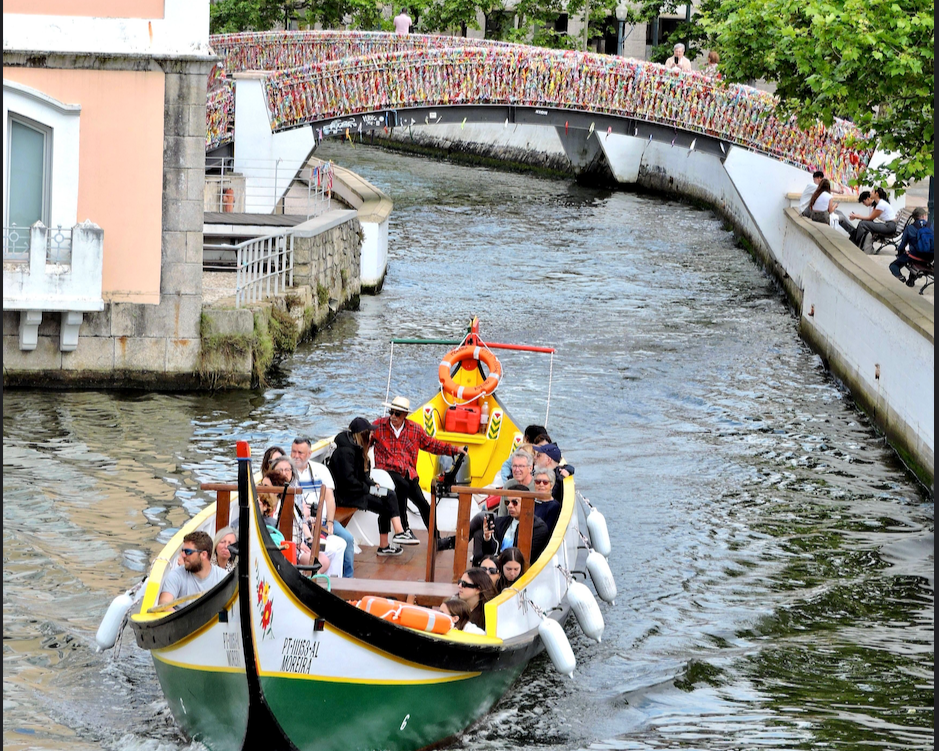
Multigenerational groups.
Grandparents travel well here. The pace is gentle, the distances are short, and there's enough variety that everyone gets a day built for them.
Photo©: Rafael Rodrigues / pexels.com
"If I were you I wouldn't recommend another hotel to families in the region."
Kori A., past client, family trip to the Algarve, Lisbon and Sintra
Why work with an advisor for a family trip
Family travel has a low tolerance for error. An adult can absorb a bad hotel or a two-hour queue. A family cannot, because the whole day tips over and you spend the evening recovering from it.
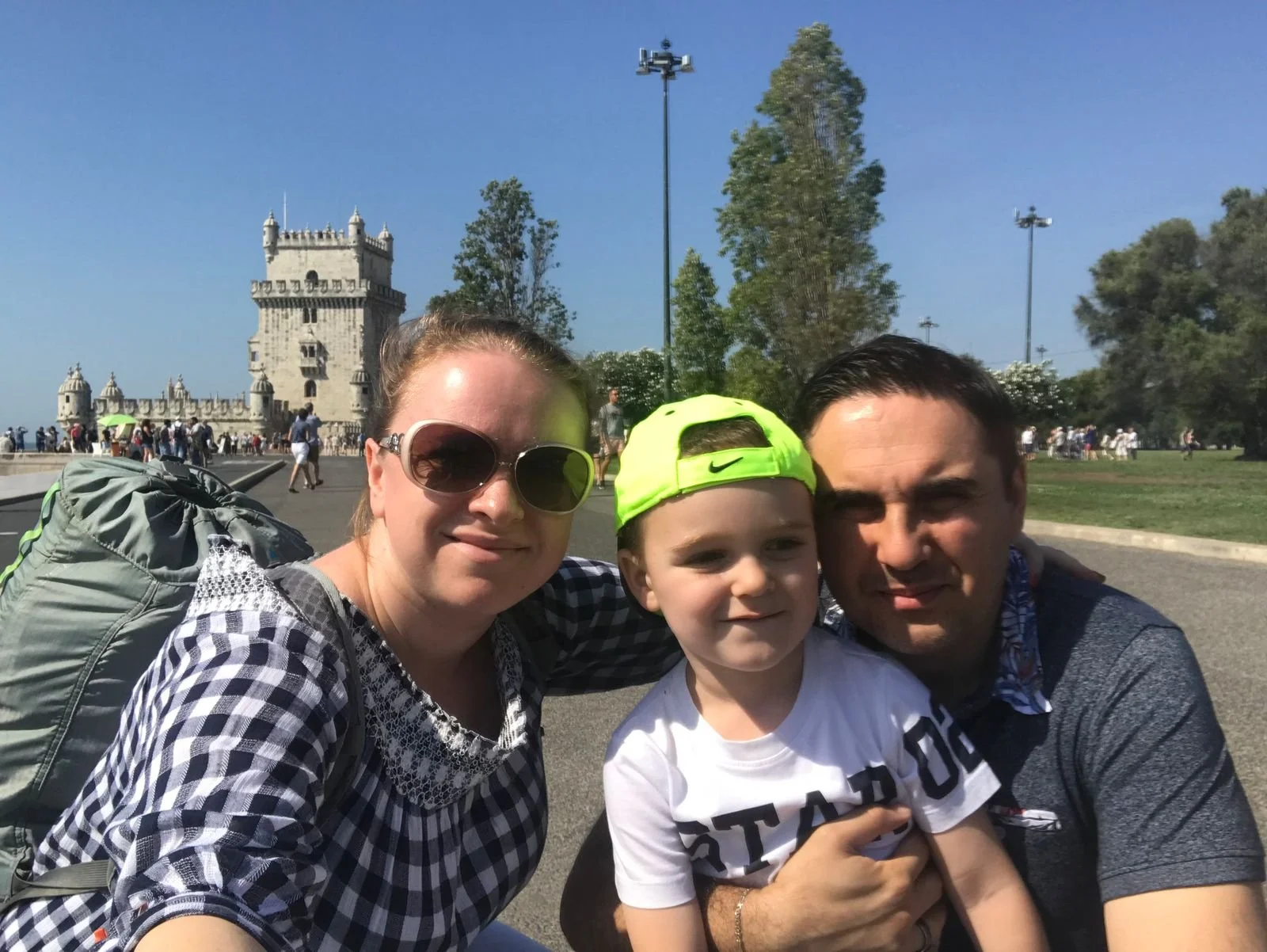
Belém Tower in Lisbon, Portugal, is a historic 16th-century fortress on the Tagus River, renowned for its distinctive Manueline architecture and UNESCO World Heritage status.
Photo©: Anna Fishman / Olegana Travel Boutique
What I actually do is remove the failure points before you leave. Car seats correctly sized to your children's ages, installed and waiting at the airport. Skip-the-line entry at Sintra so you're not standing in a queue with a six-year-old. Guides chosen because they're good with children, not just because they're good. Restaurant reservations at places that will genuinely welcome your family. A route where the drives are short enough that nobody melts down in the back seat.
I also tell you the things that will not be in a brochure. That the water is cold. That the kids' club has an age minimum and a seasonal schedule. That the long Douro cruise will bore your children and the short one will not. Those details are the whole job.
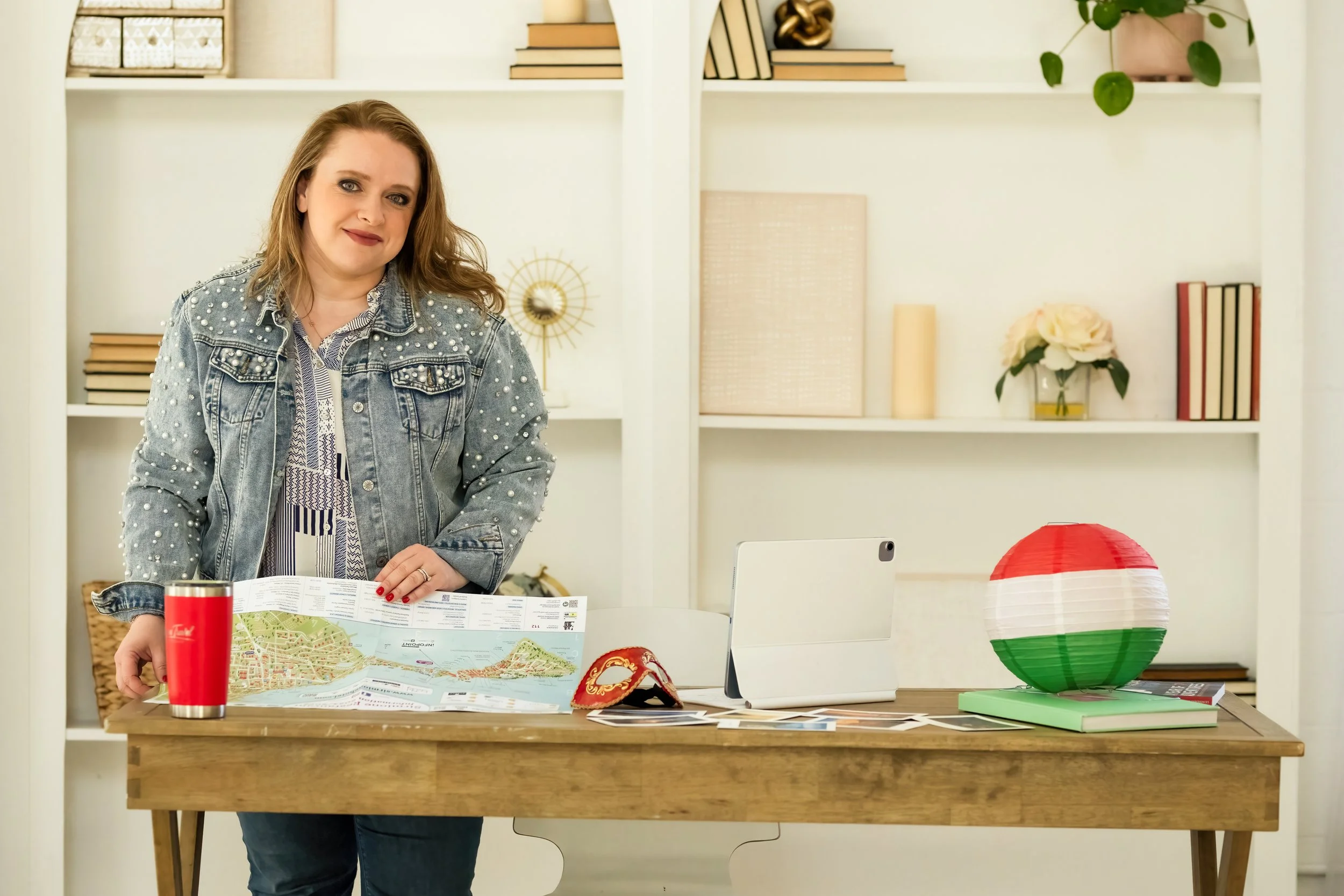
Anna Fishman is the visionary and soulful force behind Olegana Travel Boutique, orchestrating transformative journeys where meticulously curated adventures meet authentic connection and exquisite, bespoke exploration.
Photo©: Dania Sander / Unique Focus Photography
Ready to plan your family's Portugal spring break?
Spring break dates get booked early, particularly for the Algarve properties worth staying in, so this is a trip that rewards planning ahead by several months.
Grab a time on my calendar for a free consultation here!
Or take a look at the full Portugal family itinerary, which covers the Algarve, Lisbon and Sintra across twelve days and can be shortened for a spring break week.
Frequently Asked Questions
-
It's my most recommended European destination for spring break. The flight from Newark is nonstop and around six and a half hours, the time difference is only five hours, temperatures in late March and April sit in the mid sixties to low seventies, resorts are open but not crowded, and prices are well below summer. The one caveat is ocean temperature, which is too cold for swimming until roughly June.
-
Four to fourteen is the sweet spot for the itinerary I usually build. Younger children do well with more resort time and fewer touring days. Teenagers do well with more independence, surfing lessons and kayaking swapped in for the treasure hunts. I adjust the balance either way.
-
Realistically, no. The Atlantic sits in the low sixties Fahrenheit through April and May. I book resorts with heated pools so there is still water in the trip, and plan beach time around walking, cliff paths and rock pools rather than swimming.
-
Lisbon. The nonstop from Newark to Faro is a seasonal summer service, so it will not be running at spring break. Fly into Lisbon, spend your city days first, then drive south to the Algarve, which takes about two and a half to three hours with a lunch stop built in.
-
Eight to ten days covers Lisbon, Sintra and the Algarve at a comfortable pace. Twelve days lets you add Porto and the Douro Valley. Under a week, I'd suggest choosing either the cities or the coast rather than trying to do both.
-
For the Algarve portion, yes, and I arrange it with the correct child seats. In Lisbon, no. The city runs on private transfers and guides, and parking there is not worth the trouble.
-
Less than most of Western Europe, and noticeably less at spring break than in summer. Dining in particular is good value, which adds up quickly when you're feeding four people three times a day.