
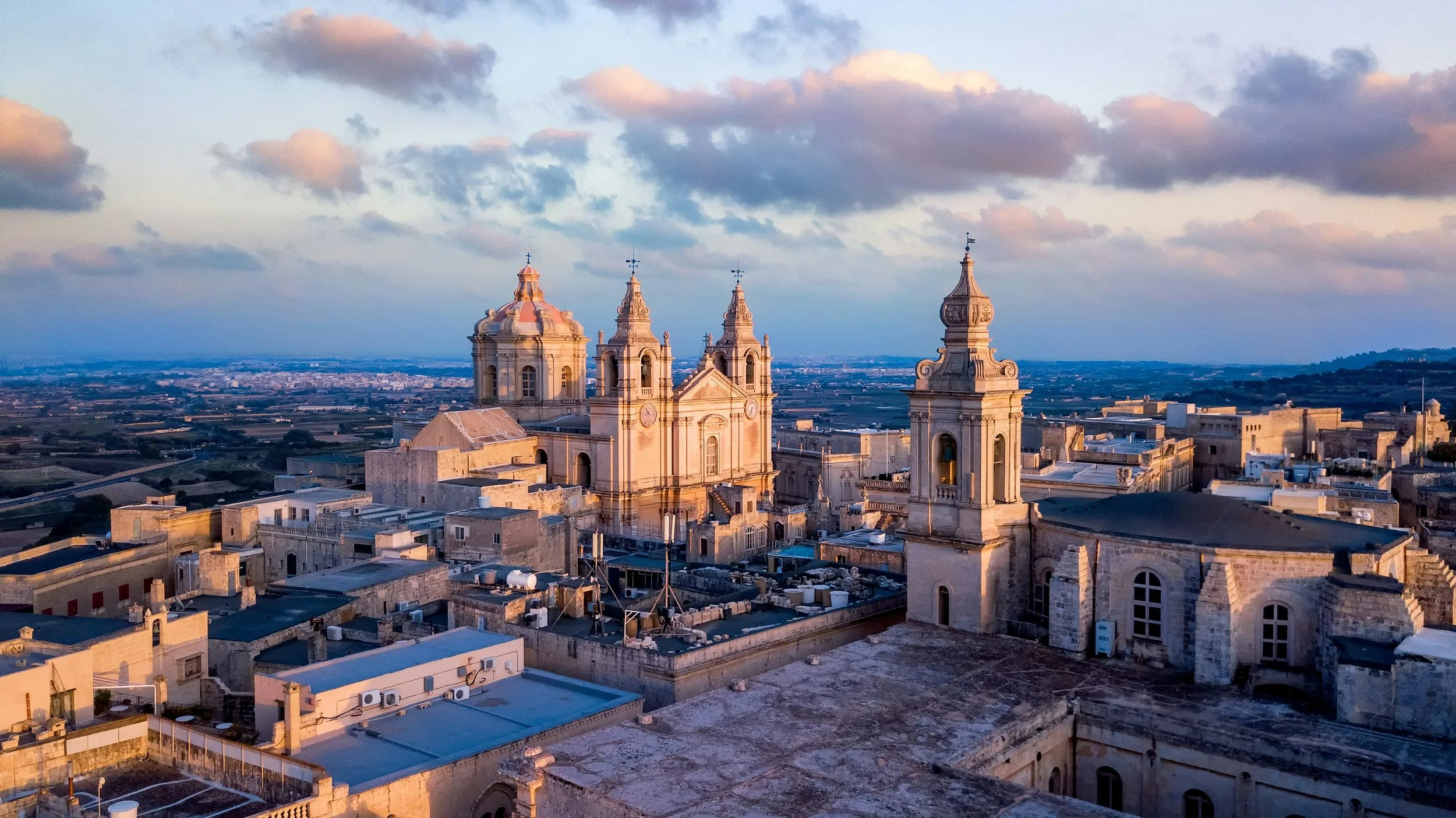
Luxury Malta and Sicily Vacation: Valletta, Gozo and Taormina, 11 Days
Part of our luxury Malta trips.
A boat the shape of a gondola, painted in colors nobody would choose for a boat, crossing a harbour that has been fought over for five hundred years. You step off at Valletta, a city built by knights in golden limestone, and the whole Mediterranean argument is standing in front of you at once. I had been going to Italy for years before I finally went to Malta, and I have been sending people there ever since.
Eleven days, two islands, and no backtracking. Four days on Malta covers more than you would expect: the Three Cities across the water from Valletta, a dinner inside the old Inquisitor's Palace built from the recipes the Grand Masters actually ate, the walled silence of Mdina, the cliffs at Dingli, a boat into the Blue Grotto, and a full day on Gozo among salt pans still worked by the same family. Then the fast ferry to Sicily, which lands you in the Baroque southeast rather than back at an airport: Modica for chocolate made the way it has been for four hundred years, Ragusa for the Baroque, Ortigia for the best two square kilometres on the island, and north to Taormina with Etna behind it. You fly home from Catania, having never covered the same ground twice.
Every detail is handled: the ferry, the transfers, the guides, the hotels, the reservations. You just show up and live it. Picture yourself here. Tell me what you love, and I'll design the rest. Start with the planning form below.
Photo: Polignano a Mare in Puglia, Italy
Photo©: Mike Nahlii (pixelcore) / Unsplash
What’s included?
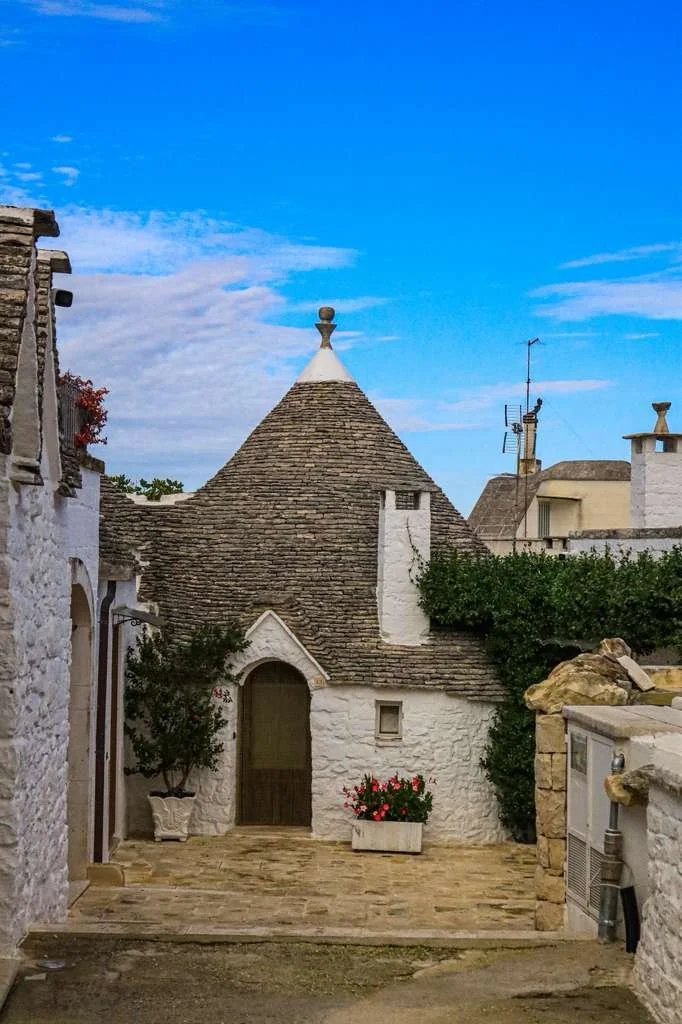
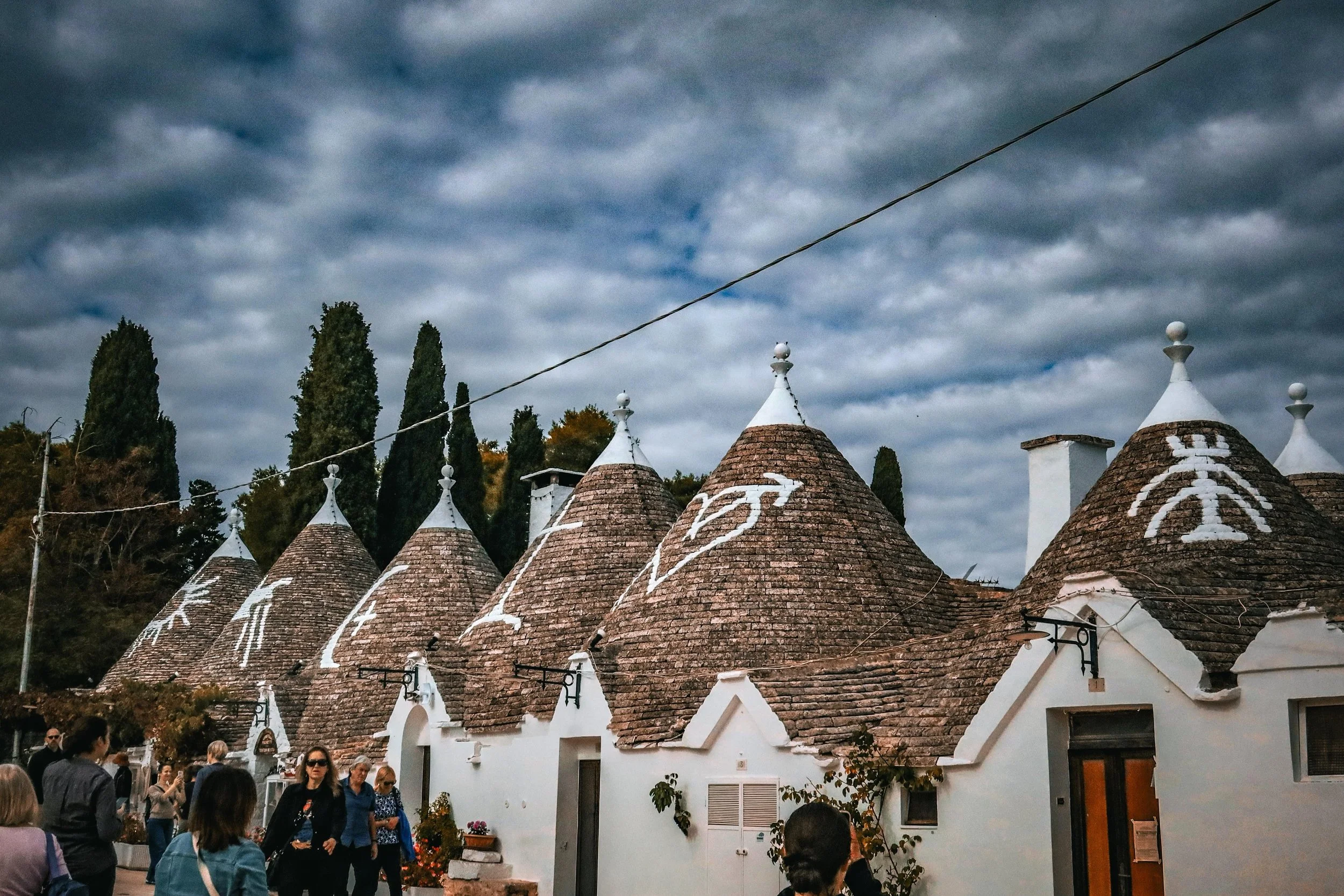
Photo: A traditional trullo house in Alberobello, Puglia, Italy.
Photo©: Anna Fishman / Olegana Travel Boutique
Not included: international airfare, travel insurance (quoted separately through Travel Guard), meals at leisure, personal expenses, tips and gratuities, and city tourist taxes payable directly at the hotels.
Included
Private airport transfers throughout, including the arrival into Malta and the departure from Catania
The fast ferry crossing from Malta to Sicily
10 nights of boutique hotel accommodation with breakfast throughout
A private guided day across the Three Cities and Valletta, including the traditional dghajsa crossing of the Grand Harbour
St John's Co-Cathedral with a guide, including the Caravaggio
A historical dinner at the Inquisitor's Palace in Vittoriosa, recreating dishes eaten by the Grand Masters, corsairs and merchants of Malta
A private guided day through Mdina, the Dingli Cliffs and the south coast
A boat into the Blue Grotto from Wied iz-Zurrieq
A tasting at a boutique Maltese wine estate
A full private day on Gozo, including the Mixta Cave above Ramla Bay, the Xwejni salt pans with the family who still work them, Ta' Pinu, Dwejra Bay and the Citadel at Victoria
A chocolate-making visit in Modica, where the technique has not changed in four hundred years
A hands-on clay workshop with Sicilian artisans
A guided city and food tour of Ortigia
A private boat day to the Grotta Azzurra and Isola Bella, with lunch aboard
A Sicilian market visit and cooking class
A wine tasting and long lunch at a countryside estate
Curated restaurant recommendations and reservations throughout
24/7 concierge support and emergency contact
Ready to start planning?
Tell me about your travelers and what matters most. I'll build from there.
Can you combine Malta and Sicily in one trip?
Yes, and they pair better than most people realize. A fast ferry connects Valletta to Pozzallo in southeastern Sicily in under two hours, so no flight is needed between them. Eleven days is the right length: four on Malta, six in Sicily, and a travel day home. Eight days works if you cut a Sicilian base. The route runs one way throughout, so you never cover the same ground twice.
Your day-by-day itinerary
This sample itinerary was designed around two Mediterranean islands shaped by completely different sets of invaders, linked by a ferry rather than a flight. It's here to inspire, not to lock you in. You might pick a few pieces and let me build something different around them. Your trip is yours, and we'll customize every detail until it fits.

Day 1
Arrive in Malta
You land at Malta International, somebody meets you, and twenty-five minutes later you are on the coast north of Valletta with the afternoon in front of you. The first day is deliberately empty. Walk the promenade, swim if it is warm enough, eat fish somewhere with the water in view, and get used to the fact that everybody speaks English, which is a legacy of a hundred and fifty years of British rule and makes Malta the easiest country in the Mediterranean to land in cold. The islands are small and the trip does not need you to rush at them. It starts properly tomorrow.
Photo:
Photo©:

Day 2
The Three Cities, a painted boat, and dinner with the Inquisitors
The morning starts in Vittoriosa, which Malta calls Birgu, one of the Three Cities across the harbor from Valletta and the place the Knights actually lived before Valletta existed. It held out through the Great Siege of 1565, which is why it is called the victorious city. Then you cross the Grand Harbour the old way, in a dghajsa, the gondola-shaped boat Maltese boatmen have rowed for centuries, painted in colors you would not choose for a boat and would not change.
Valletta on the far side is a UNESCO site and effectively an open-air museum: a Baroque grid laid out by knights, small enough to cross on foot. St John's Co-Cathedral was built in the 1570s and holds Caravaggio's largest painting, which he made here while on the run for murder.
In the evening, dinner inside the Inquisitor's Palace, where curators and chefs have reconstructed the food that Grand Masters, corsairs, merchants and inquisitors actually ate. It is the most unusual meal on this itinerary and the one people describe first.
Photo:
Photo©:
Day 3
Mdina, the cliffs, and a grotto you enter by boat
Inland and uphill to Mdina, the old capital, walled and almost entirely free of cars, which is why it is called the silent city and why the silence is real. Then out to the Dingli Cliffs, which drop two hundred and fifty meters straight into the sea at the highest point on the islands and have nothing at all on the other side of them until Libya. Lunch nearby.
In the afternoon a small boat from Wied iz-Zurrieq runs you into the Blue Grotto, a sequence of sea caves where the water turns a color that photographs badly and looks implausible in person. The day finishes at a boutique wine estate, tasting wines made from Maltese grapes that are grown almost nowhere else and are essentially impossible to buy at home.
Photo:
Photo©:
Day 4
Gozo, which is where Malta slows down
The ferry across takes twenty-five minutes and the change is immediate. Gozo is greener, emptier and about forty years behind its sister island in the best way. The Mixta Cave sits above the red sand of Ramla Bay and was lived in during the Bronze Age, which you can believe standing in it. The salt pans at Xwejni have been cut into the rock since the 1740s and are still worked by the same family, who will show you how it is done and are visibly pleased that anybody asked.
Ta' Pinu is a basilica standing alone in a field with fourteen marble stations of the cross climbing the hill opposite. Dwejra has an inland sea connected to the open water by a tunnel through the cliff. And the Citadel above Victoria has been the center of Gozo since Neolithic times. You are back on Malta for dinner.
Photo:
Photo©:
Love what you're reading? This is a sample. Tell me about your travel style and I'll build your trip from scratch.
Day 5
The ferry to Sicily, and chocolate made the old way
The fast ferry leaves Valletta and lands at Pozzallo in under two hours, which puts you in the southeastern corner of Sicily rather than at an airport outside Catania with a two-hour drive back. This matters more than it sounds. From the port you are twenty minutes from Modica, a town stacked up both sides of a gorge, where chocolate has been made since the Spanish brought the technique from the Aztecs in the sixteenth century. It is worked cold, so the sugar never dissolves and the texture is grainy and nothing like what you are used to. You watch it made and then you taste a great deal of it.
Photo:
Photo©:
Day 6
Ragusa, and clay under your fingernails
The morning is a hands-on workshop with artisans who still throw and fire the way the island has for centuries, which is harder than they make it look and is the kind of thing people are skeptical about beforehand and competitive about by the end. In the afternoon, Ragusa Ibla, the lower town, rebuilt in Baroque after the 1693 earthquake flattened everything and now a UNESCO site: a maze of honey-colored stone and churches on a ridge, with a garden at the far end that looks out over the whole valley. Dinner is somewhere I will have booked.
Photo:
Photo©:
Day 7
Ortigia, which is the best two square kilometers in Sicily
Ortigia is the island at the tip of Syracuse and the oldest part of a city the Greeks founded in 734 BC. A guided walk and food tour together, because the two are the same thing here: the market in the morning, the cathedral built straight into the columns of a Greek temple to Athena and never knocked down, the fountain full of papyrus, and a sequence of stops for appetizers, local wine and a granita, which in Sicily is breakfast and not a dessert. The afternoon is yours by the water. This is the day most people say they would have given another night to.
Photo:
Photo©:
Day 8
North to Taormina
You move up the coast to Taormina, which sits on a terrace six hundred feet above the Ionian with Etna smoking away to the south. It has been the island's glamorous address since the Victorians found it, and it has the Greek theatre to prove the Victorians were late: built in the third century BC and positioned so that the volcano is the backdrop to the stage. The rest of the day is the town itself, which is small, steep and made for walking slowly with something cold in your hand. Dinner is pizza, done the Sicilian way, which is not the Neapolitan way and people have strong feelings about it.
Photo:
Photo©:
Day 9
A boat, a market, and a kitchen
The morning is a private boat along the coast to the Grotta Azzurra and around Isola Bella, the tiny island joined to the shore by a strip of shingle that appears and disappears with the tide, with lunch aboard and time to swim. In the afternoon you go to the market with a cook, buy what looks good rather than what a recipe says, and then cook it. This is the day that changes how people shop at home for about a month afterwards.
Photo:
Photo©:
Day 10
Vineyards on the slopes of a volcano
Etna's foothills are among the most interesting wine country in Italy right now, because the soil is volcanic, the vines are old, some of them pre-phylloxera, and the wines taste of somewhere specific in a way that is becoming rare. A tasting and a long lunch at a countryside estate with the mountain above you and the sea below. The afternoon is free. The farewell dinner is in Taormina.
Photo:
Photo©:
Day 11
Home from Catania
Breakfast, then a transfer down to Catania, which is forty-five minutes away. No connections, no backtracking, and nothing to work out on the last morning, which is worth more at the end of eleven days than it sounds.
Photo:
Photo©:
Who this trip is perfect for

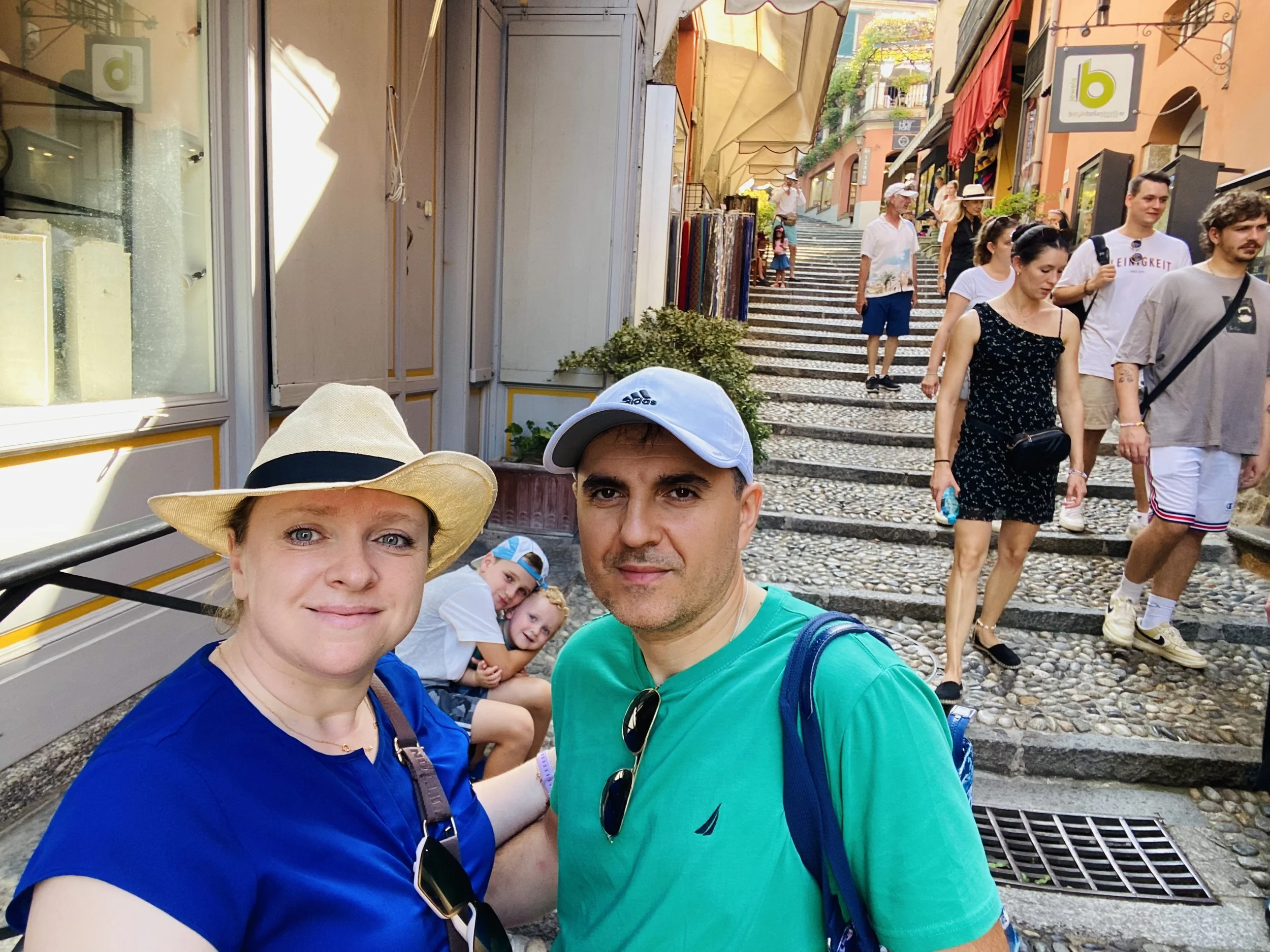
Travelers who have done Italy and want what is next.
If Rome, Florence and the Amalfi Coast are behind you, Malta is the thing almost nobody in your circle will have done, and it sits right next door.
Photo©: Anna Fishman / Olegana Travel Boutique
Couples who would rather move twice than five times.
Three bases across eleven days, each one for several nights, with the moves built into the trip rather than fighting it.
Photo©: Anna Fishman / Olegana Travel Boutique
Photo©: Anna Fishman / Olegana Travel Boutique
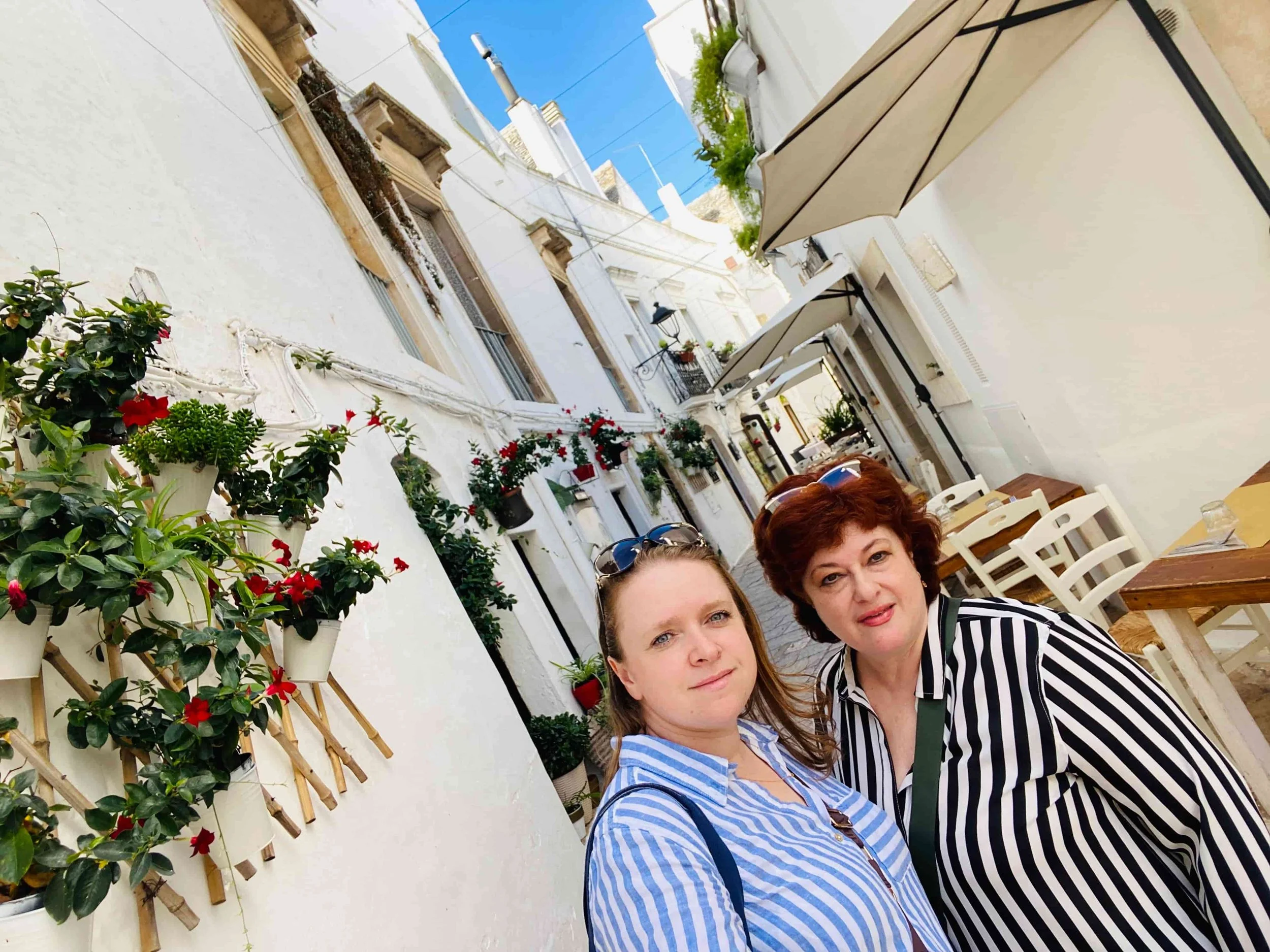
People who travel for food
The chocolate in Modica, the historical dinner in Vittoriosa, the Ortigia market, the cooking class and the Etna wines are five genuinely different food days, not the same meal in five towns.
Photo©: Anna Fishman / Olegana Travel Boutique
Anyone nervous about the Mediterranean in a language they do not speak.
English is an official language in Malta, and the Sicilian half is fully guided and transferred. Nothing about this trip requires you to work anything out.
Photo©: Anna Fishman / Olegana Travel Boutique
Where you’ll stay
On Malta, a seafront property north of Valletta, near enough for the city to be a short transfer and far enough that the evenings are calm. Breakfast is included and there is a spa worth an afternoon if the weather turns.
In southeastern Sicily, a converted historic building in or near Ragusa Ibla, in walking distance of dinner, which matters in a town built on a ridge.
In Taormina, a terraced hotel with the Ionian below and Etna in view, close enough to the old town to walk in and back after dinner. Breakfast is included.
Best time to visit Malta and Sicily
April, May, September and October. The clear window for both. Malta is warm enough to swim from May and still comfortable to walk Valletta in at midday, and Sicily in late September is at its best: the sea at its warmest after a long summer, the grape harvest on, and the towns back to belonging to the people who live in them. These months book earliest.
July and August. Hot on both islands, and on Malta genuinely so, with very little shade and stone that holds heat. The sea is wonderful and everything else is harder. If summer is the only time you can travel, I rebuild the days around early starts, boats and long indoor afternoons, and weight the trip toward the water.
November through March. Malta stays mild and open, which is unusual for the Mediterranean and makes it a real winter option: I have travelled there in winter and found the islands at their most civil, with Valletta and the Three Cities almost to myself. Sicily is cooler and wetter and some of the smaller coastal places close. For a winter version I would weight the trip toward Malta and the Baroque towns and drop the boat days.

Let's design your Malta and Sicily trip
.I'm Anna Fishman, and I built this route after traveling to Malta myself. Every itinerary I build starts with a conversation. Tell me what excites you and I'll take it from there.
“A world of knowledge and fun.”
- Kenneth N., Sicily
Frequently asked questions
-
Every itinerary I build is priced individually, because no two are the same. Once we have talked through your dates, your pace and the kind of hotels you want, a detailed quote follows the first call.
-
Yes, because the route only runs one way. Four days on Malta, six in Sicily, and a travel day home. Eight works if you cut one Sicilian base. What does not work is adding Palermo and western Sicily on top, which turns a relaxed trip into a driving holiday.
-
By fast ferry, in under two hours, and it is one of the reasons this itinerary works. It lands at Pozzallo in the southeastern corner, which is exactly where the Sicilian half begins, so there is no flight and no drive back down the island.
-
No. Everything is covered by private transfers and guided days. Malta's roads are narrow and busy and driving is on the left, and Sicilian towns like Ragusa Ibla and Ortigia are not places you want to be looking for parking.
-
Completely. This is a sample, not a package. A custom trip is what I actually do, and most clients keep three or four days from a sample and rebuild the rest around what matters to them.
-
The usual shape is to fly into Malta and home from Catania, so you never backtrack. There is seasonal nonstop service to Malta from the US, and seasonal nonstops to several Italian airports, but the routes and the months change from year to year. Check with your airline for current seasonal nonstops when you are ready to book, and I will build the itinerary around whatever routing works best for you.
-
I quote it separately through Travel Guard, and I recommend it on every trip of this length.
-
Six to nine months for April, May, September and October. Malta has a small number of genuinely good rooms and they go a long way out, and the better guides on both islands are booked early.
-
It is an official language alongside Maltese, a legacy of British rule, and it is spoken everywhere. Driving is on the left for the same reason. Malta is the easiest country in the Mediterranean to travel in if you speak only English.
-
Yes, and it is the extension I am asked for most. Rome is ninety minutes from Malta by air and most transatlantic routings pass through Italy anyway, so two or three nights in Rome at the front costs you almost nothing in travel time. It also gives you a soft landing before the islands. The alternative extension is at the other end: another two or three nights in Sicily lets you add Palermo and the west, which is a different Sicily again. Tell me on our call which appeals and I will build it in.