
Luxury Ireland family vacation: castles, islands and the Atlantic, 9 days
There is a passage tomb in the Boyne Valley built five thousand two hundred years ago, a thousand years before the pyramids at Giza, and once a year the rising midwinter sun runs the length of a stone corridor and lights the chamber at the back of it. Your ten year old will go in, come out, and be quiet for about four minutes, which if you have a ten year old you will recognise as an enormous compliment. This is the trip I love designing most.
This is not the Ireland coach tour with children permitted. Nine days, three hotels, and short driving legs on purpose. Two nights in Dublin to start, with the emigration museum that explains why your family left. Then west, past the national stud farm where the thoroughbreds are, to three nights in a castle with a moat and a drawbridge and towers your children are allowed to run up. From there the Atlantic: a ferry out to one of the Aran Islands, where you hire bikes and ride a road with no cars on it past a shipwreck rusting on the beach, and a surf lesson on a Clare beach where the instructors put six year olds on boards every day of the summer. You finish in Kinsale with a harbour, a star-shaped fort to climb over, and a wildlife park where the cheetahs are not behind glass.
I'm Anna Fishman, I travel with my own two, and I have learned the hard way which days work and which ones end in somebody crying in a car park. Every detail is handled: the transfers, the guides, the hotels, the reservations, the route. You just show up and live it. Picture yourself here. Tell me what you love, and I'll design the rest. Start with the planning form below.
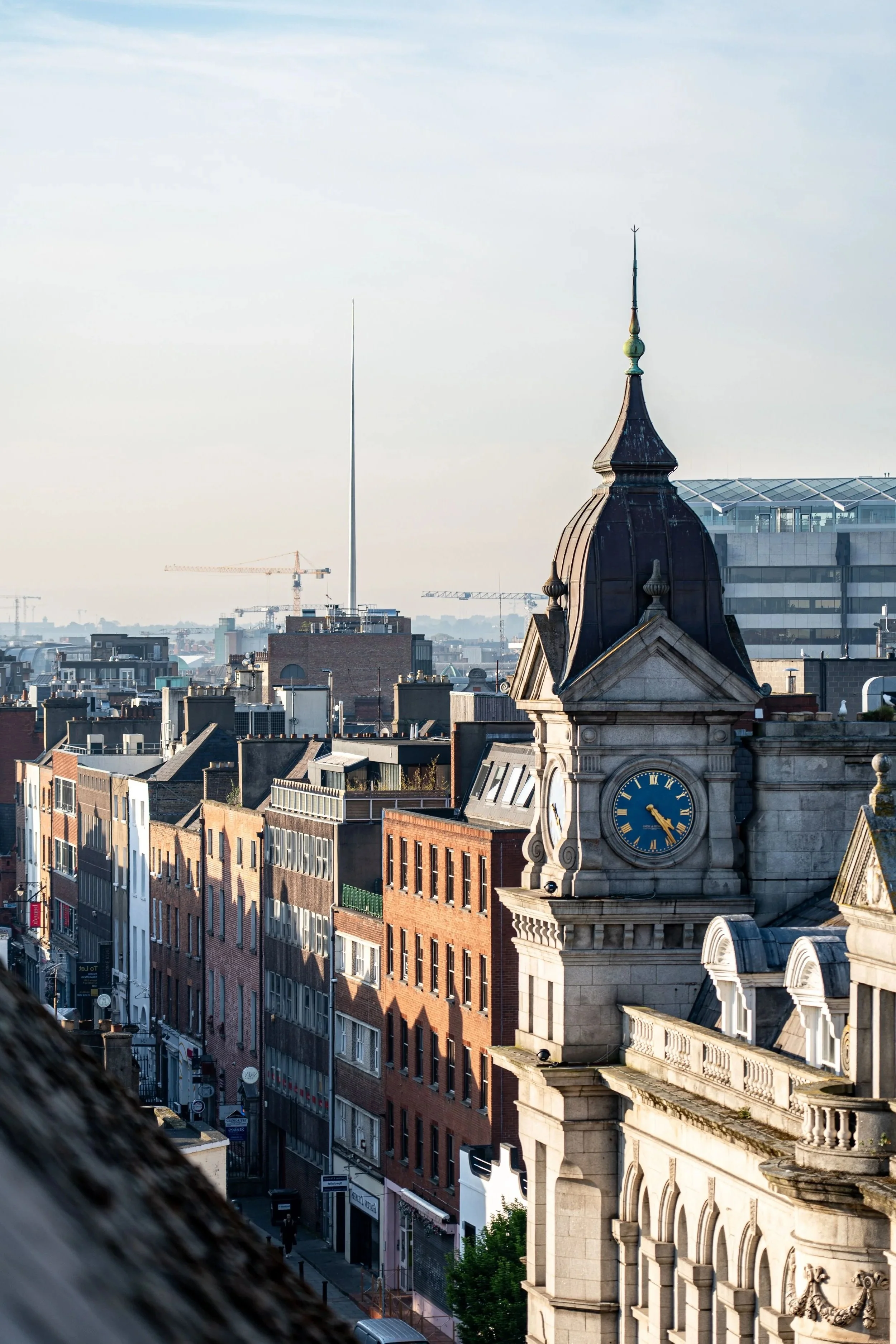
Photo: Scenic aerial view of Dublin, Ireland, at sunrise, featuring the historic clock tower of the Custom House and The Spire rising above the city skyline.
Photo©: Donovan Kelly / pexels
What’s included?
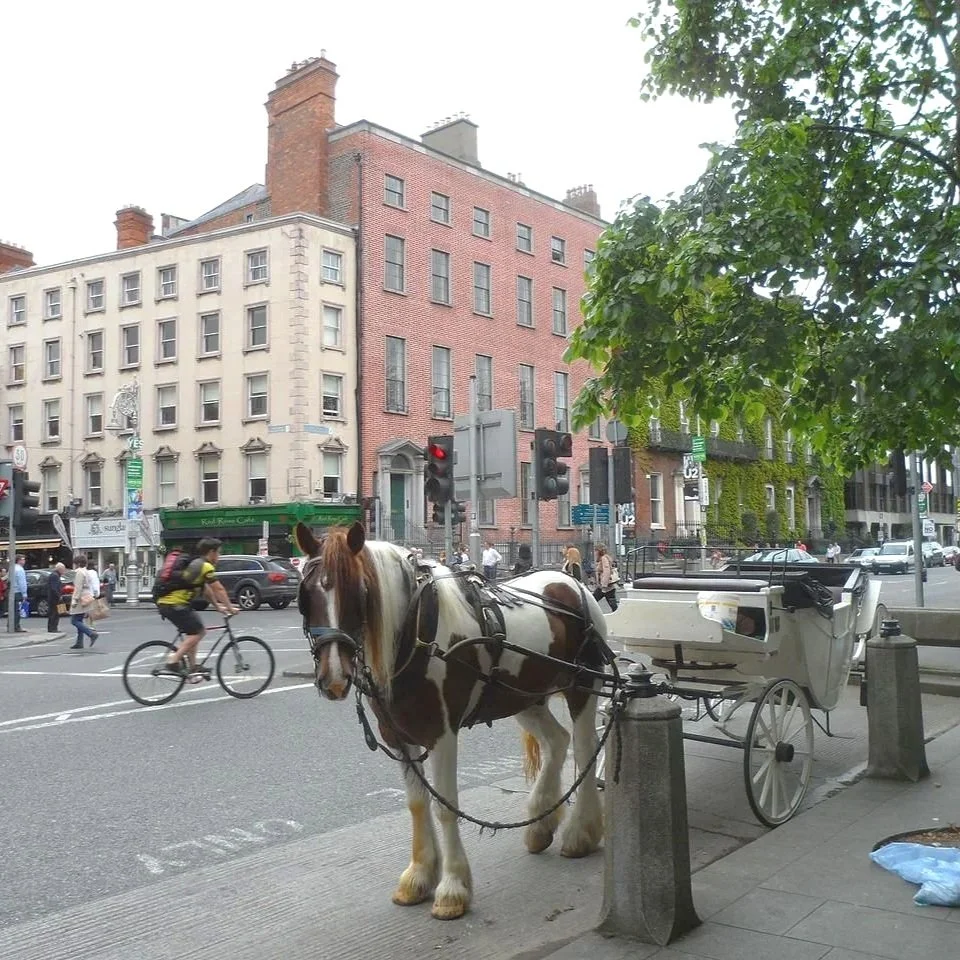
Photo: A traditional horse-drawn carriage on Lord Edward Street in Dublin, Ireland, reflecting the city’s historic charm and carriage-tour tradition.
Photo©: Anna Fishman / Olegana Travel Boutique
Included
Private vehicle with a dedicated driver-guide for six days of touring, plus private airport transfers on arrival and departure
8 nights of family accommodations with full Irish breakfast throughout, including three nights in a castle hotel
Guided tour of the passage tomb at Newgrange in the Boyne Valley, with entry timed to avoid the coach groups
Admission to EPIC, the Irish Emigration Museum, in Dublin
Admission to the Irish National Stud and Japanese Gardens in County Kildare
Admission to Bunratty Castle and Folk Park, including a private bodhran workshop for the family
Return ferry to the Aran Islands with bike hire for everybody
Group surf lesson on the Clare coast with wetsuits and boards, suitable for complete beginners
Falconry experience at the castle, with a hawk flown to the glove
Admission to Fota Wildlife Park in County Cork
Admission to Charles Fort in Kinsale
Curated restaurant recommendations and reservations throughout, chosen for places that actively want children
24/7 concierge support and emergency contact throughout the trip
Not included
International airfare, travel insurance (quoted separately through Travel Guard), meals at leisure, personal expenses, tips and gratuities, city tourist taxes payable directly at hotels.
Ready to start planning?
Tell me about your travelers and what matters most. I'll build from there.
What is there to do in Ireland with kids?
More than castles. Ireland works for families because the good days are outdoors and physical: a passage tomb older than the pyramids, a night in a castle with towers to run up, an island reached by ferry where you hire bikes and there are no cars, surfing the Atlantic with instructors used to beginners, and a wildlife park where the animals roam. Nine days covers it with only three hotels.
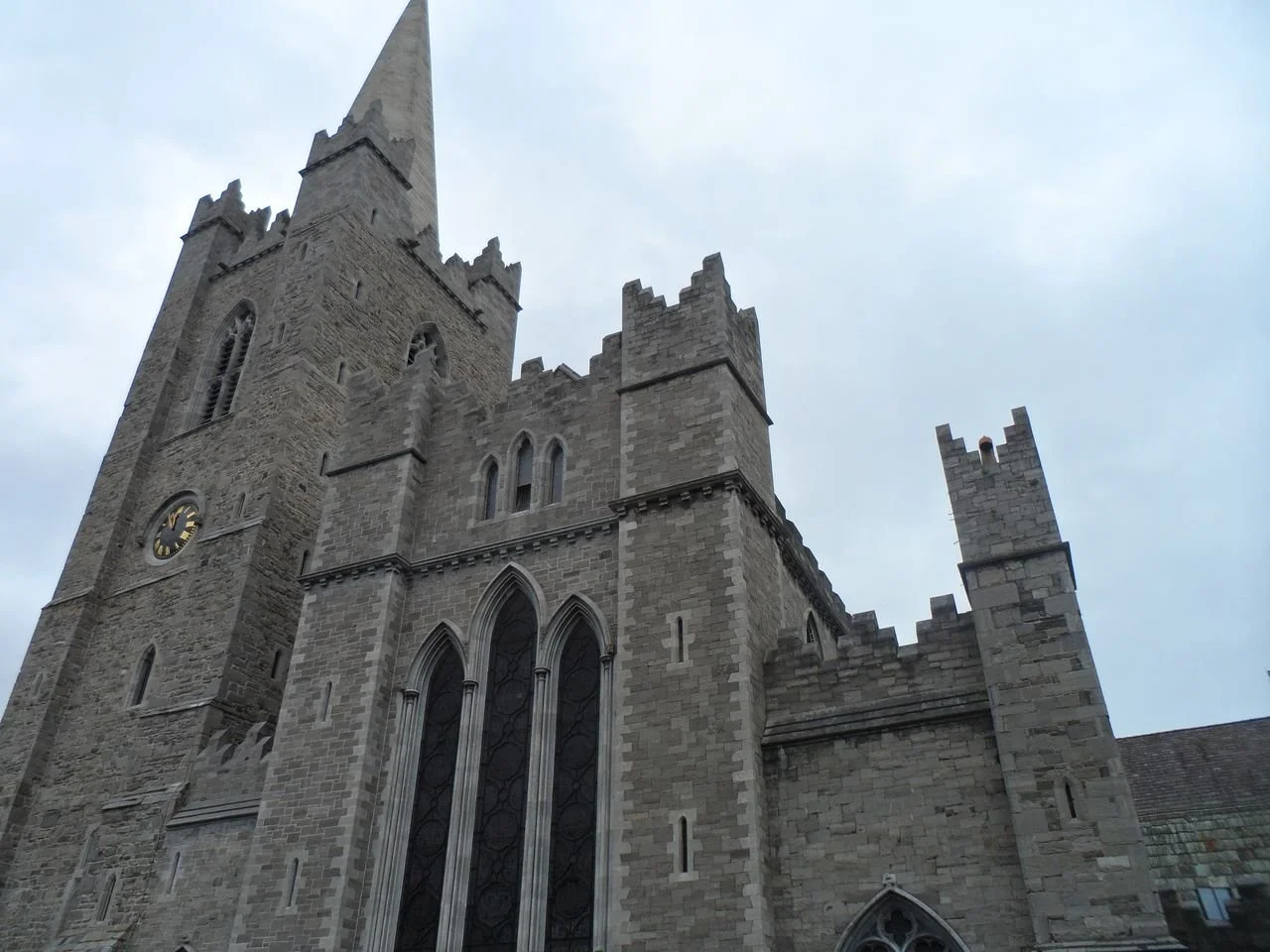
Photo: St. Patrick’s Cathedral in Dublin, Ireland, is a historic medieval Gothic landmark known for its impressive stone architecture, crenellated rooflines, and tall central spire.
Photo©: Anna Fishman / Olegana Travel Boutique
Your day-by-day itinerary
This sample itinerary was designed for families who want Ireland to be something their children do rather than something they look at. It's here to inspire, not to lock you in. You might pick a few pieces and let me build something different around them. Your trip is yours, and we'll customize every detail until it fits.
Photo©: Anna Fishman / Olegana Travel Boutique
Day 1
Dublin, and why your family left
Most flights from the US land in the morning and nobody has slept, so day one is short by design. Your driver meets you in the arrivals hall and you are at the hotel in half an hour.
In the afternoon, EPIC. It is in the vaults under an old warehouse on the docks, it is entirely interactive, and it is the single best museum in Ireland for children because there is almost nothing to read standing still. You get a passport stamped as you go through twenty galleries about why ten million people left this country and what happened to them. If your family came from Ireland, and the odds are decent, there is a genealogy centre in the same building where somebody will sit down with you and look.
Afterwards, walk along the Liffey and over the Ha'penny Bridge. Dinner early, somewhere unfussy, and everyone is asleep by nine whether they meant to be or not.
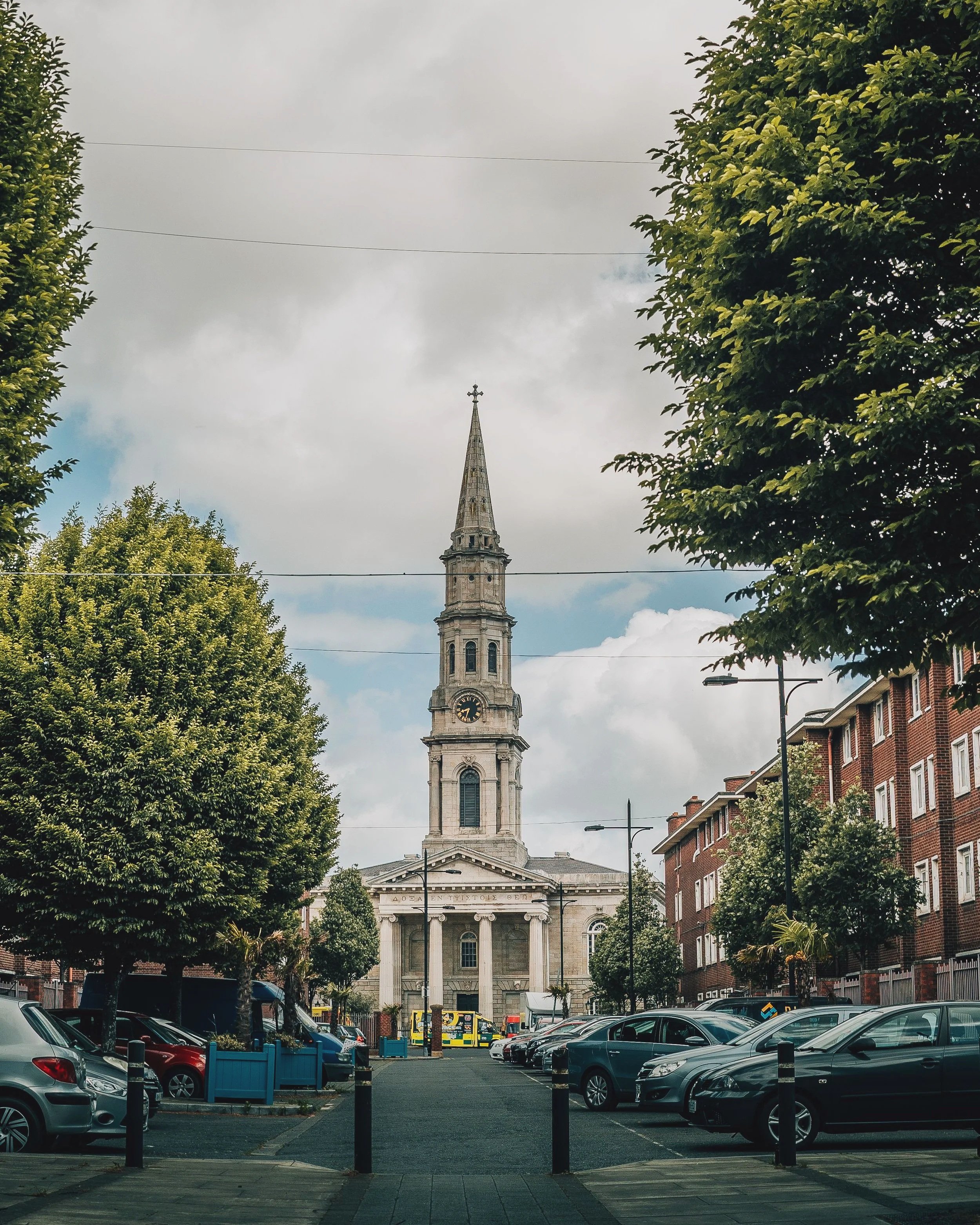
Photo: St. George’s Church on Hardwicke Place in Dublin, Ireland, is a historic church known for its elegant architecture and distinctive 200-foot spire.
Photo©: Lukas Medvedevas / pexels
Day 2
The Boyne Valley, five thousand years back
North out of Dublin for forty-five minutes into the Boyne Valley, which is green, quiet farmland with the most extraordinary archaeology in western Europe underneath it.
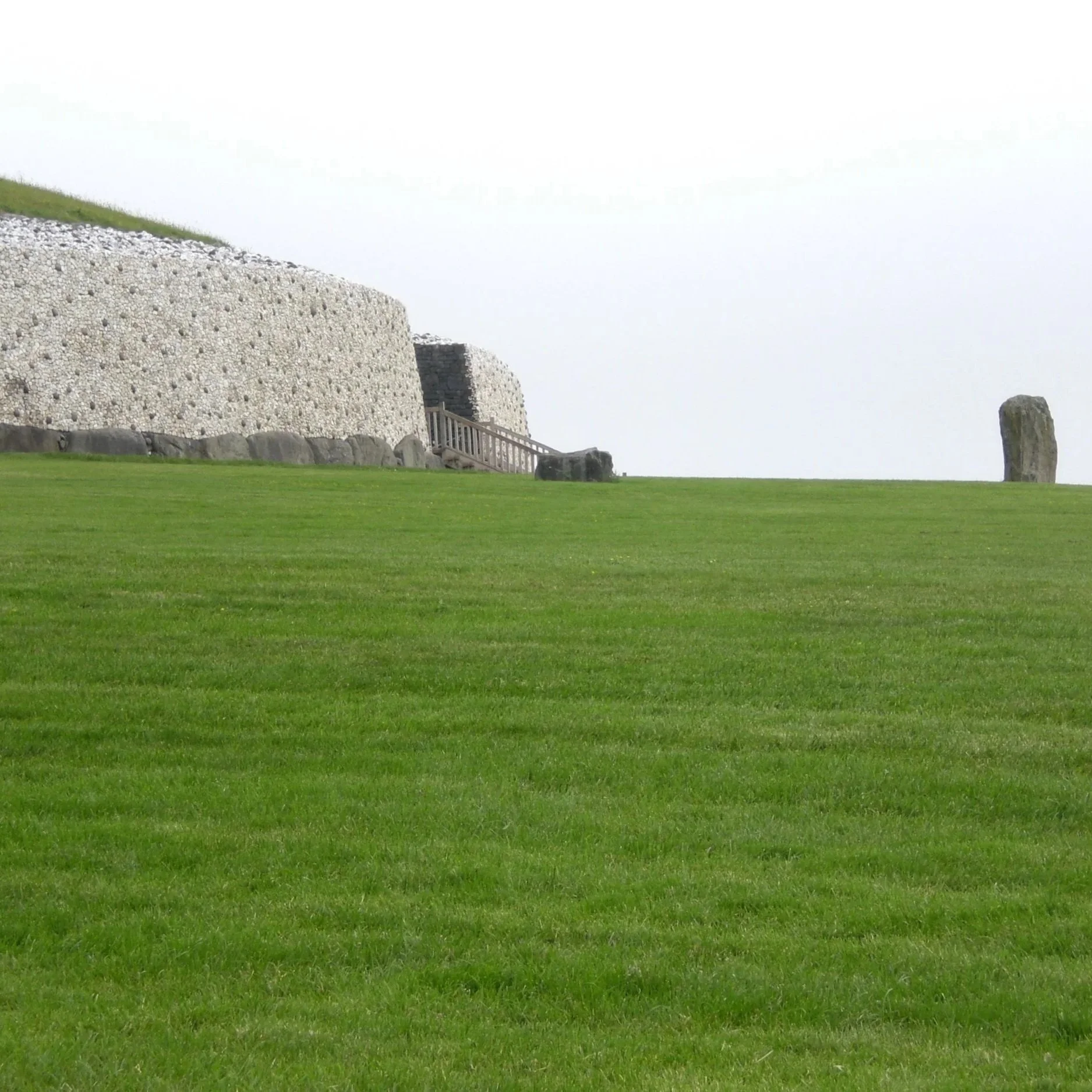
Newgrange is a passage tomb built around 3200 BC, older than Stonehenge and a thousand years older than the pyramids at Giza. You walk down a nineteen metre stone corridor into a chamber with a corbelled roof that has stayed watertight for five millennia, and then they turn the lights off and simulate the midwinter sunrise, which every year on the shortest days runs the full length of the passage and lights the back wall. Children go very quiet. So does everybody else.
Afterwards, Trim Castle down the road, the largest Norman castle in Ireland and the one they used for Braveheart. It is a ruin you are allowed to climb, which after a morning of being told not to touch things is exactly right.
Back to Dublin in the late afternoon with time to swim at the hotel before dinner.
Photo: Newgrange in County Meath, Ireland, is a prehistoric Neolithic passage tomb built around 3200 BC, famous for its ancient stone architecture and winter solstice alignment.
Photo©: fsHH / pixabay
Day 3
Horses, a folk park, and a castle to sleep in
Check out and head west. The first stop is the Irish National Stud in County Kildare, where the country's thoroughbred industry lives. You see the stallions, the foals if the season is right, and the equine museum with the skeleton of Arkle in it. Beside the paddocks are Japanese Gardens laid out in 1906, which is an odd thing to find in Kildare and completely lovely.
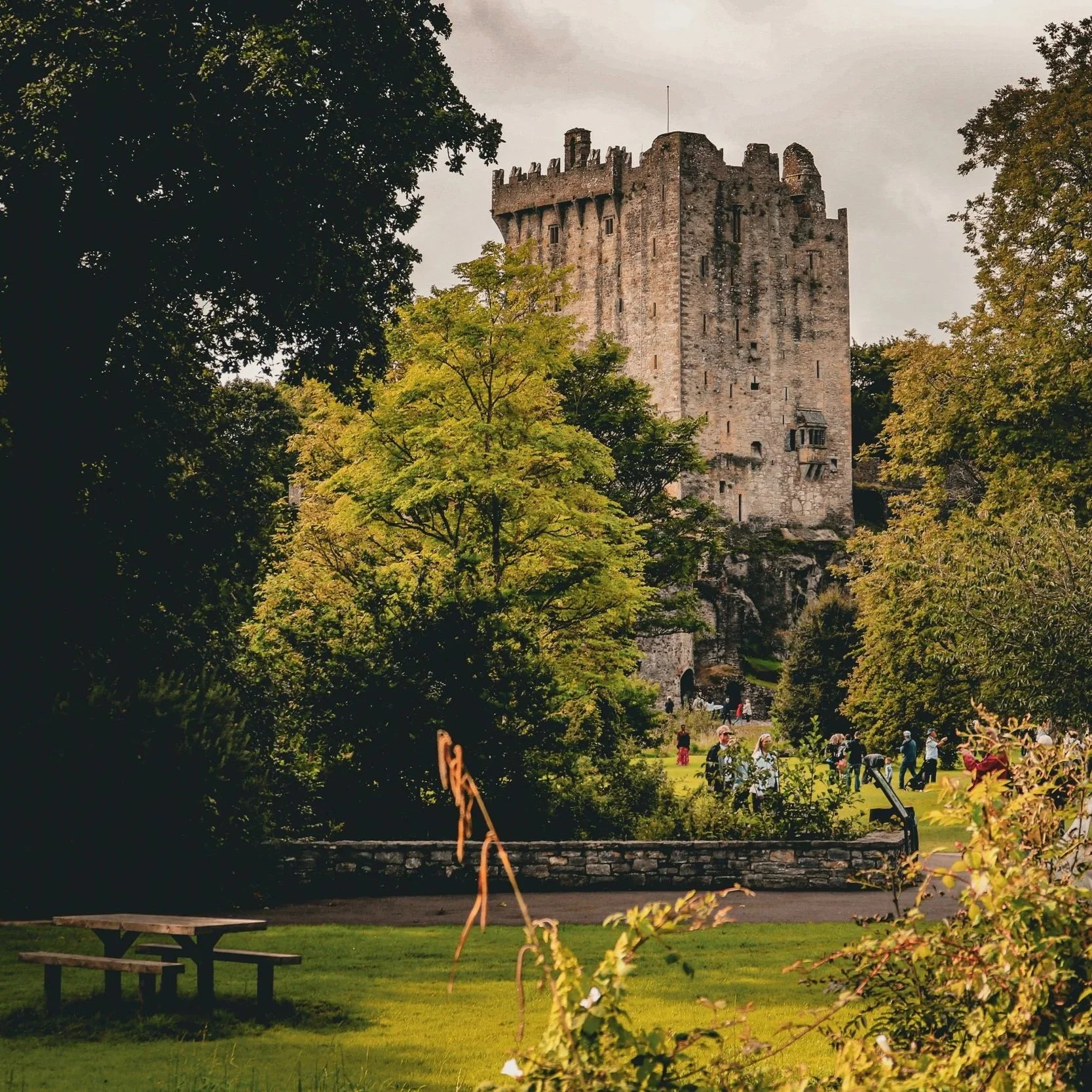
Then on to Bunratty in County Clare: a fifteenth century tower house furnished the way it actually was, with a great hall and a spiral stair and murder holes above the door, and a folk park of thirty rebuilt buildings around it where people are working the forge and baking soda bread over a fire.
In the afternoon, a private bodhran workshop. The bodhran is the Irish frame drum, it is played with a stick called a tipper, and an hour with somebody good is enough for a child to get a rhythm out of it. It is loud and they will be very pleased with themselves.
You check into the castle for three nights, and the first evening is spent finding out what is up every staircase.
Photo: Bunratty Castle in County Clare, Ireland, is a historic medieval fortress known for its impressive stone tower, battlements, and well-preserved architecture.
Photo©: Dahlia E. Akhaine / pexels
Day 4
An island with no cars
Down to the Clare coast in the morning for the ferry out to the Aran Islands, an hour on the water with a decent chance of dolphins alongside.
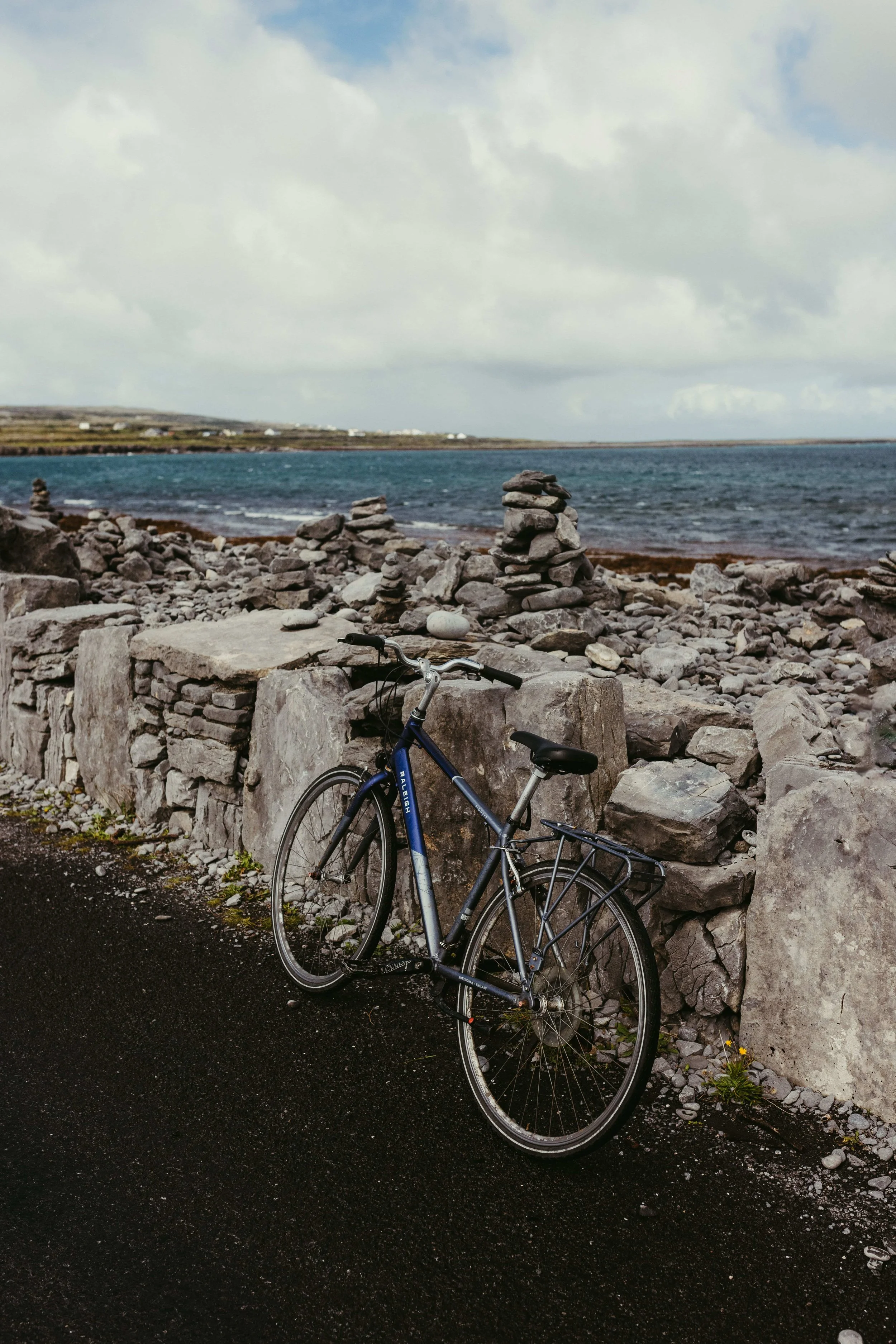
Inis Oirr is the smallest of the three, two miles across, and the way to do it is on bikes, which you collect at the pier. There are no cars to speak of. You ride a road between dry stone walls that have been there for centuries, past a church half buried in sand, up to a castle on a hill in the middle of the island with the whole Atlantic laid out around it.
On the eastern shore is the Plassey, a cargo ship driven onto the rocks in a storm in 1960 and pushed above the tide line, now rusting in a field. Every islander was rescued. Children can walk right up to it, which is the sort of thing that does not happen at home.
Lunch at the pier, swimming off the beach if anybody is brave, and the afternoon ferry back. Dinner at the castle, and everybody sleeps well.
Photo: Inis Mór (Inishmore) in the Aran Islands, County Galway, Ireland, is known for its rugged Atlantic coastline, traditional dry-stone walls, and scenic island landscapes..
Photo©: Jonathan Borba / pexels
Day 5
Surfing, and a hawk on the glove
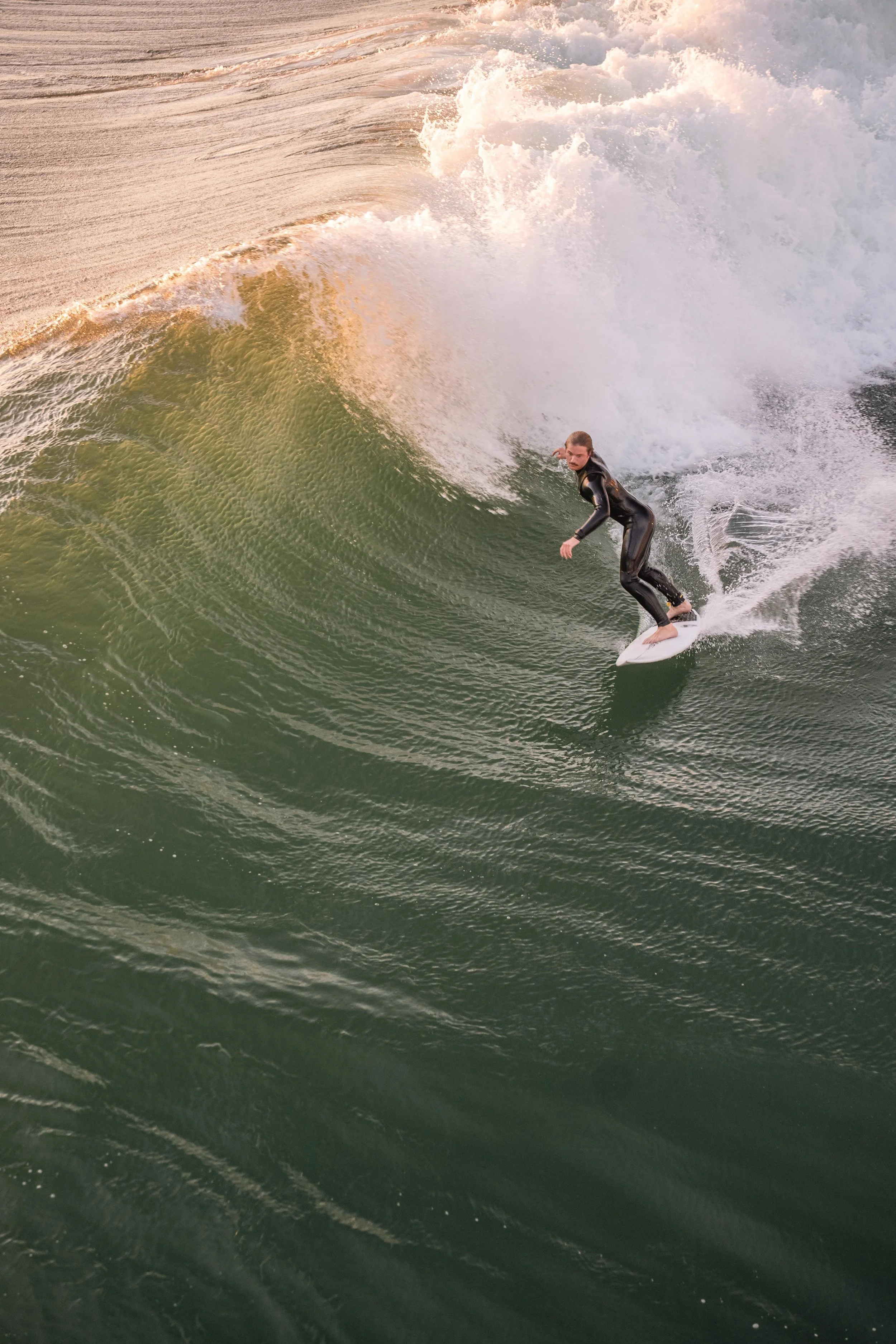
Ireland is a real surf destination and the Clare coast is where most people learn. The morning is a group lesson on a beach with a gentle break: wetsuits, soft boards, and instructors who put complete beginners up every day of the season. Most children stand within the first hour. Most parents do not, which the children enjoy considerably.
Lunch somewhere with chips and a fire to dry out beside.
In the afternoon, back at the castle, falconry. A hawk is flown to the glove and lands on your child's arm, which is heavier than they expect and closer than they have ever been to a bird of prey. The handlers are good with nervous children and there is no pressure on anybody to hold anything.
The rest of the day is unstructured. Castle grounds, a swim, a long dinner. This is usually the day parents tell me afterwards was their favourite, which I have stopped being surprised by.
Photo: Ireland’s Wild Atlantic Way is home to some of the country’s best surf spots, featuring scenic beaches, powerful waves, and rugged coastal landscapes.
Photo©: James Collington / pexels
Love what you're reading?
This is a sample. Tell me about your travel style and I'll build your Ireland trip from scratch.
Day 6
South to the harbour country
Check out and drive south, which takes most of the morning and is the longest leg of the trip at about two and a half hours.
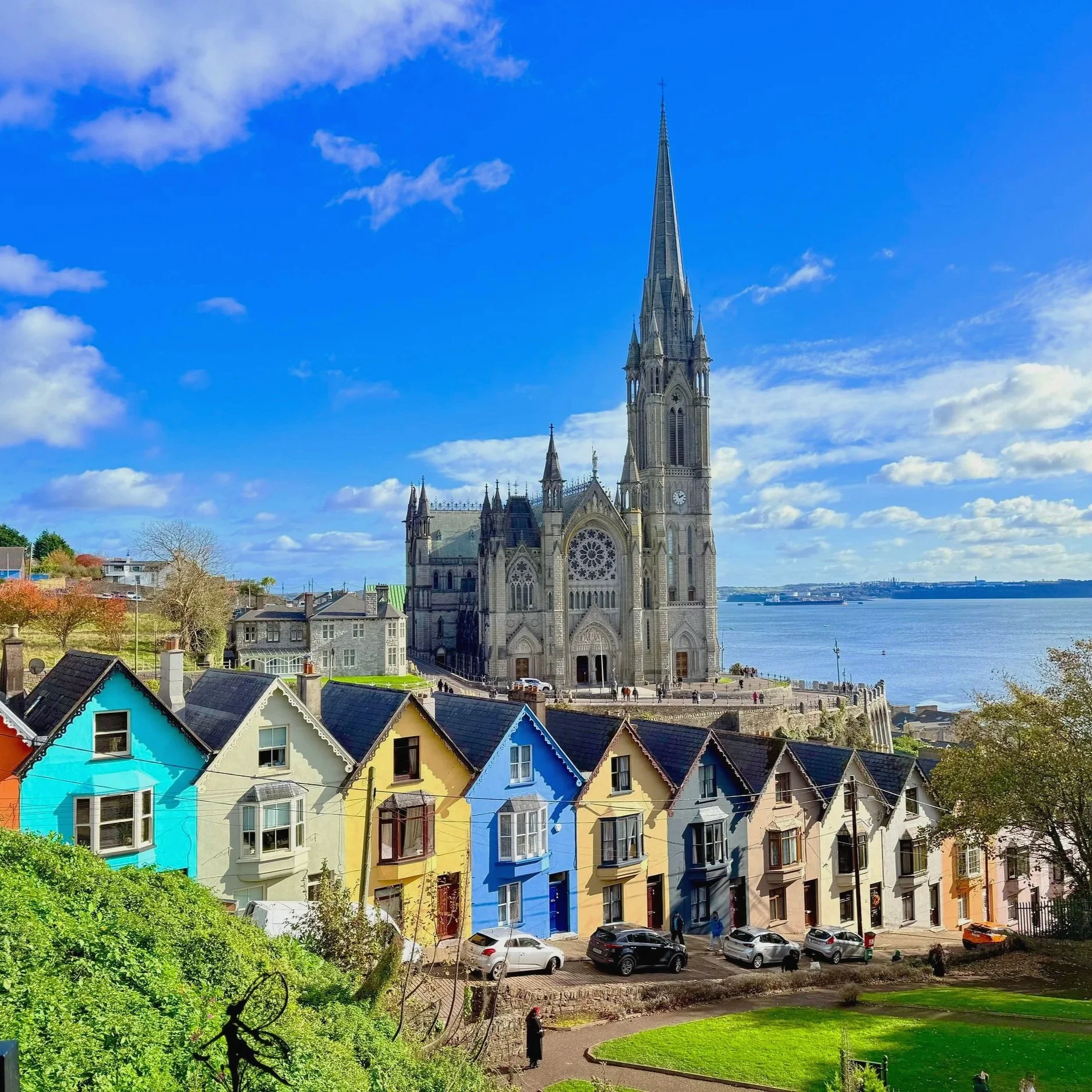
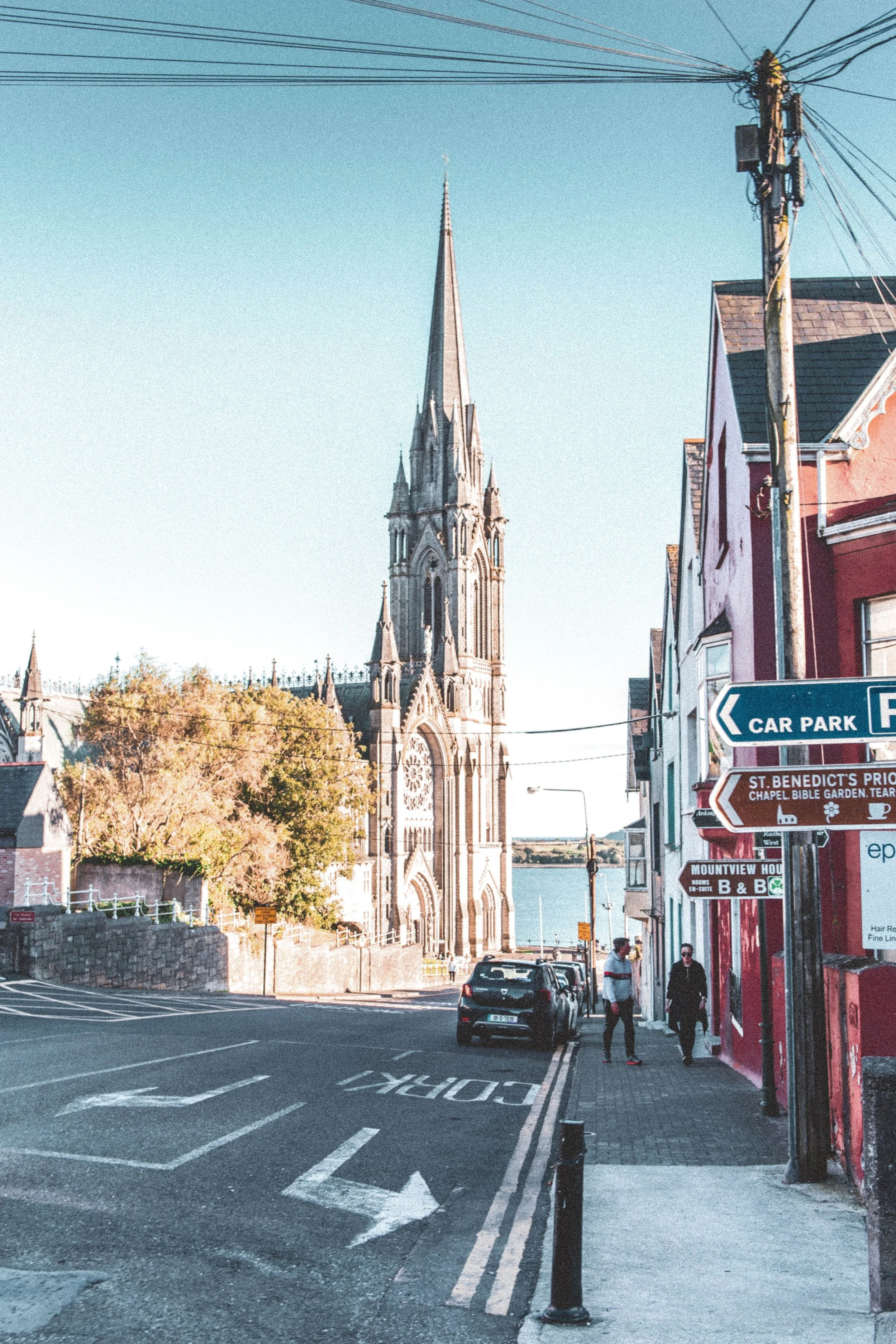
You break it at Cobh, a steep Victorian town on an island in Cork harbour with a cathedral on the hill above it. This was the last port the Titanic called at before she sank, and 123 passengers boarded here. It was also the point of departure for two and a half million emigrants. The heritage centre is in the old White Star Line ticket office on the quay, and after EPIC on day one it lands very differently: this is the actual pier they walked down.
Then twenty-five minutes on to Kinsale, a harbour town of narrow streets and houses painted colours that should clash and do not, with boats in the water and more good restaurants than a town this size can explain.
Three nights here, and the first evening is just walking around it.
Photo: Cobh in County Cork, Ireland, is a colorful harbor town overlooking Cork Harbour, known for its brightly painted hillside houses and the striking St. Colman’s Cathedral.
Photo©: Ekta Kh / pexels
Day 7
Cheetahs, and a fort to climb over
Ireland is a real surf destination and the Clare coast is where most people learn. The morning is a group lesson on a beach with a gentle break: wetsuits, soft boards, and instructors who put complete beginners up every day of the season. Most children stand within the first hour. Most parents do not, which the children enjoy considerably.
Lunch somewhere with chips and a fire to dry out beside.
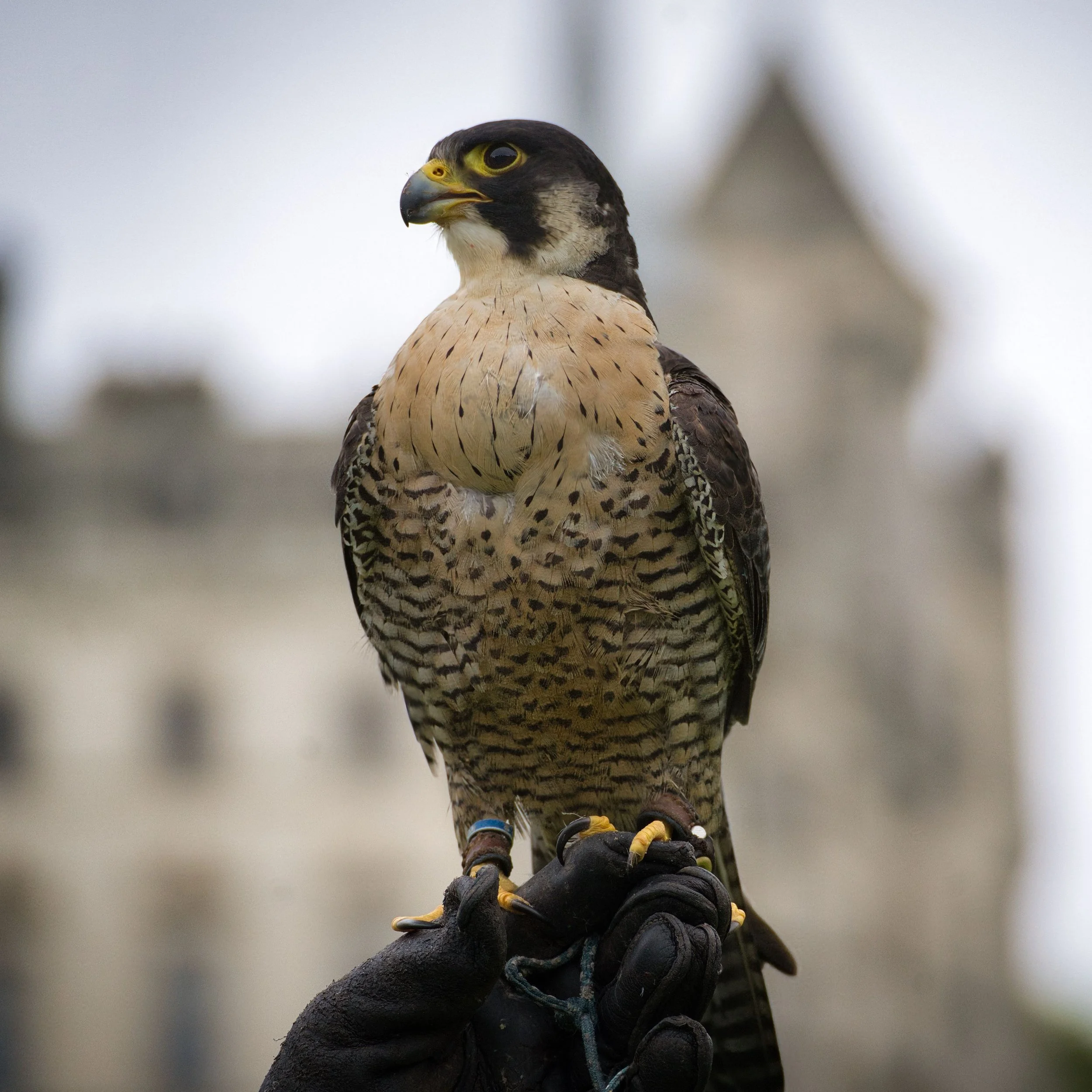
In the afternoon, back at the castle, falconry. A hawk is flown to the glove and lands on your child's arm, which is heavier than they expect and closer than they have ever been to a bird of prey. The handlers are good with nervous children and there is no pressure on anybody to hold anything.
The rest of the day is unstructured. Castle grounds, a swim, a long dinner. This is usually the day parents tell me afterwards was their favourite, which I have stopped being surprised by.
Photo: Falconry experience at a historic Irish castle, featuring a trained hawk and handlers showcasing traditional birds of prey.
Photo©: T6 Adventures / pexels
Day 8
A day with nothing in it
Every family trip needs one of these and most itineraries do not have one. The third night in Kinsale exists so that day eight can be whatever you need it to be by then.
Options, none of them obligatory. A harbour boat trip out past the fort. Kayaking on the Bandon estuary, which is flat and sheltered and fine for beginners. Sea fishing, where somebody will take you out for mackerel and your children will catch more than you do. The Old Head of Kinsale for the walk and the view. Or the town itself, which has a good bookshop, several ice cream places and a beach twenty minutes away.
Or nothing at all. Your driver has the day off, the hotel is comfortable, and nobody has to leave it.
People ask whether the Cliffs of Moher fit in somewhere on this trip, and I would rather be straight with you: not without wrecking a day. They are a long way north of here. If they matter to you, we add days rather than steal this one, and I'll show you how on our call.
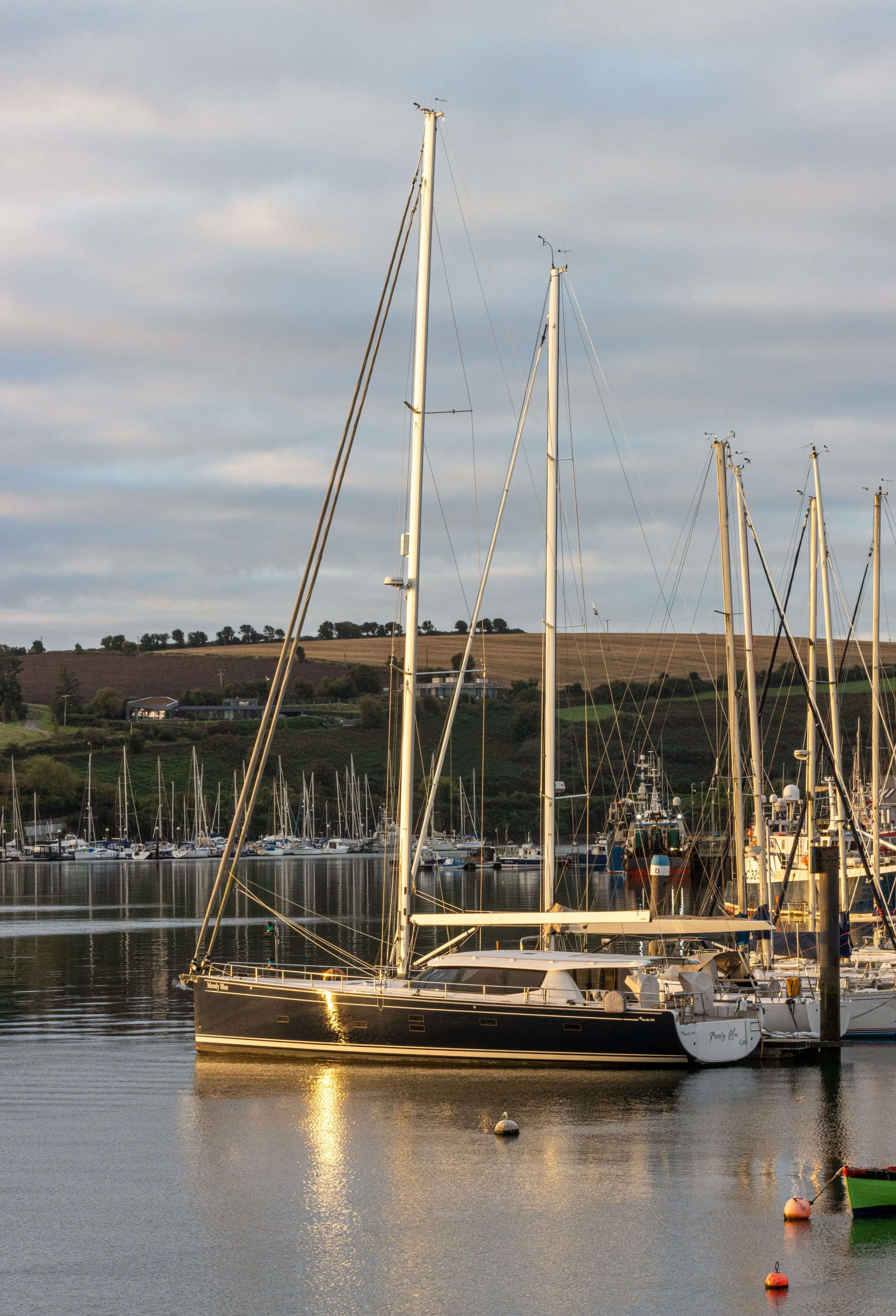
Photo: Beautiful sailboats moored in Kinsale Harbour, County Cork, Ireland, at sunset, with rolling hills in the background.
Photo©: Phil Evenden / pexels
Day 9
Home
A last breakfast and a private transfer to Cork Airport, which is twenty minutes away and small enough that nobody is stressed.
Or stay on. Kerry and the Dingle peninsula are two hours west, West Cork and the whale coast are an hour southwest, and either adds three or four days without doubling back.
Photo: St. Colman’s Cathedral in Cobh, County Cork, Ireland, is a striking Gothic Revival landmark overlooking the colorful harbor town.
Photo©: Craig Adderley / pexels
Who this trip is perfect for
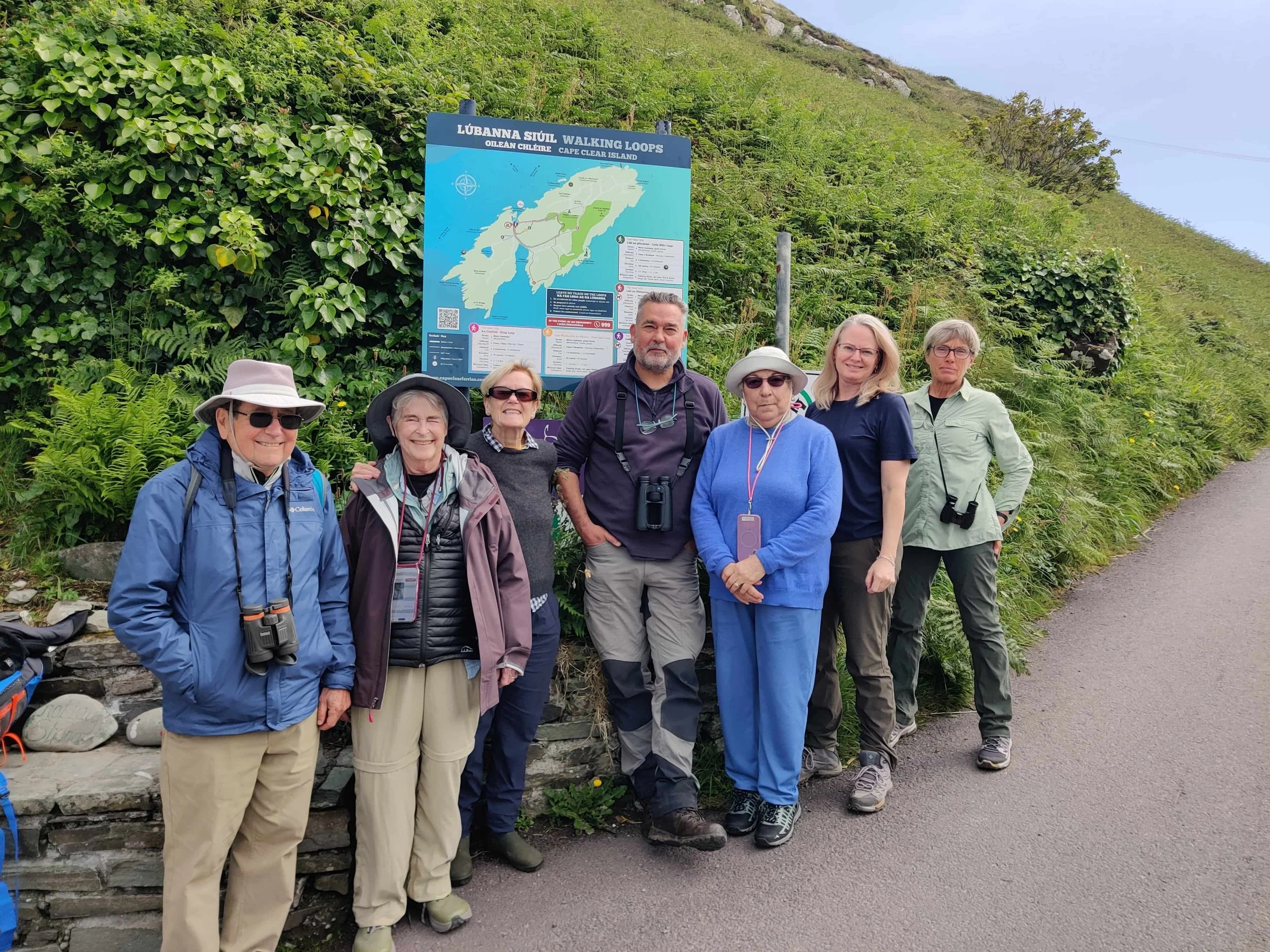
Families with children roughly six and up:
Younger than most Ireland itineraries can handle, because the days here are physical rather than architectural. A six year old can ride an island road, hold a hawk, stand on a surfboard and climb a fort. What they cannot do is four cathedrals in a day, and there are none on this trip.
Photo©: Tonti Family / Olegana Travel Boutique
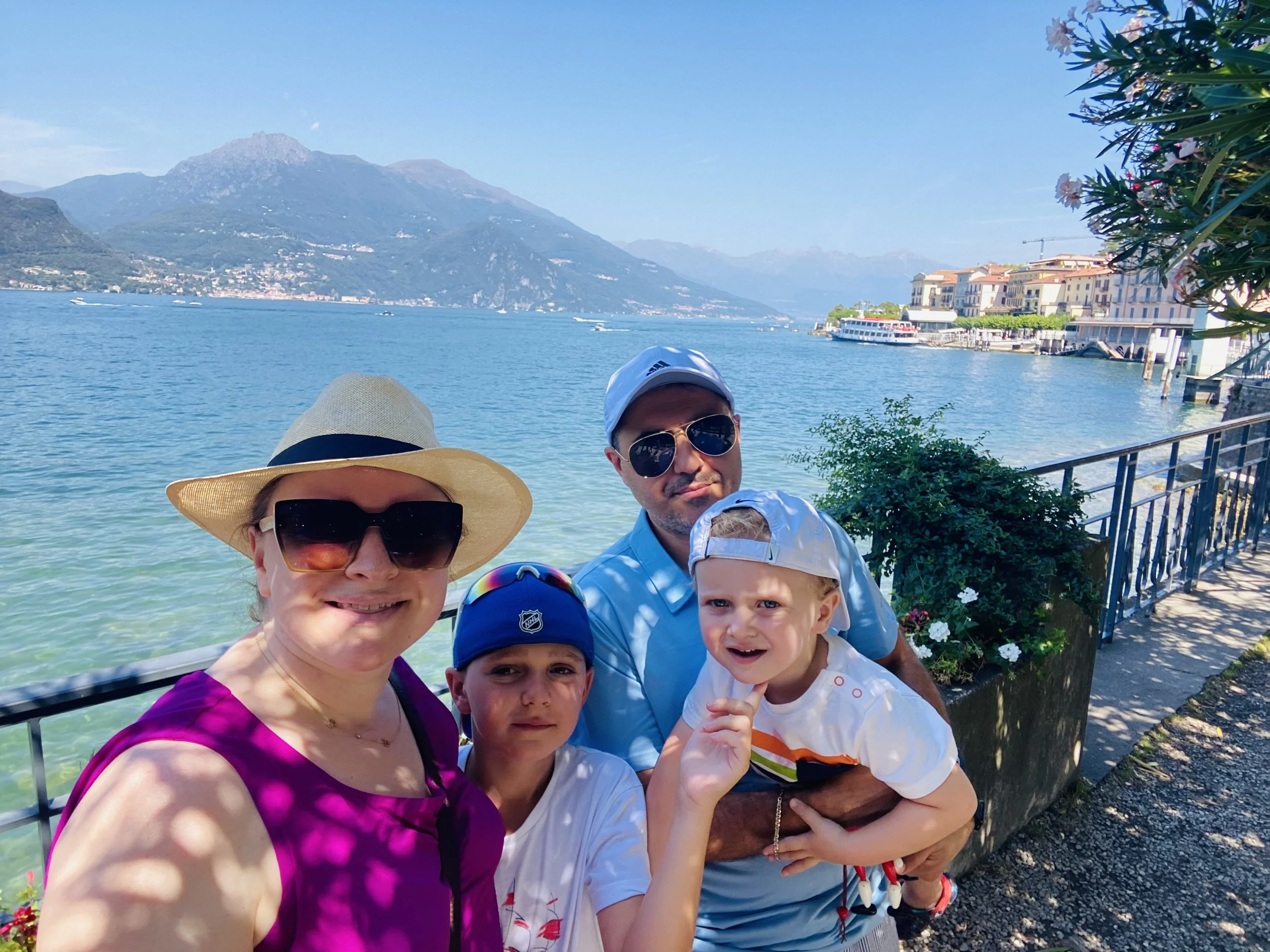
Families who have already done the famous version:
If you did Blarney and Killarney and the Cliffs on a previous trip, or your parents did and described it at length, this is the other Ireland. There is almost no overlap with the standard route and your children will come home with better stories.
Photo©: Anna Fishman / Olegana Travel Boutique
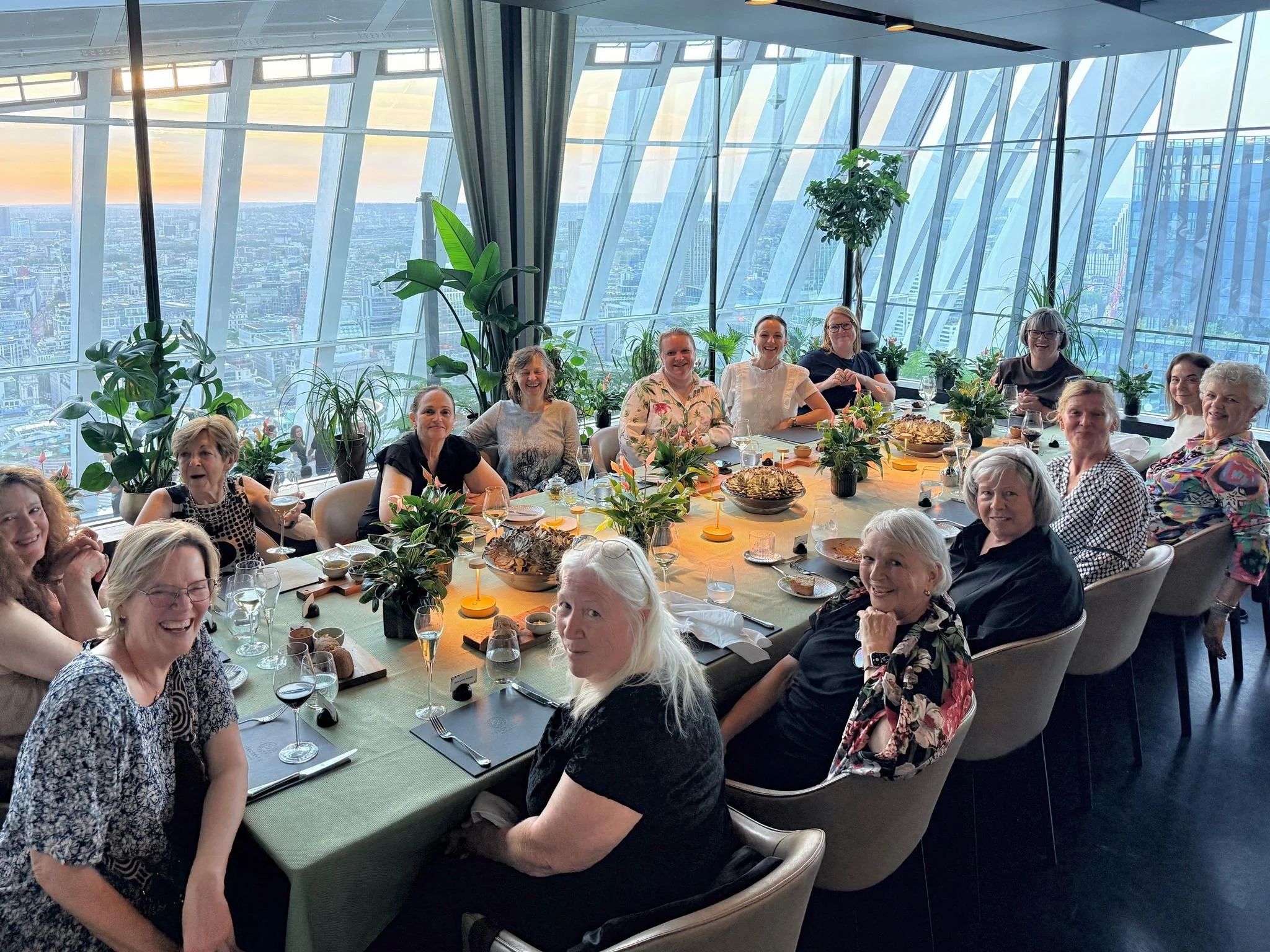
Multigenerational groups:
Grandparents do well here. The passage tomb, the stud farm, the folk park and the harbour town all work at any pace, and on the surf morning somebody can very happily sit on the beach with a coffee and watch. Three hotels in nine days means less luggage handling for everybody.
Photo©: Anna Fishman / Olegana Travel Boutique
Parents who would rather not drive:
Six days with a driver-guide who knows the roads, and three bases where you walk everywhere. Nobody navigates a lane in Clare while refereeing the back seat. It is custom trip design, so every day here can move.
Photo©: Anna Fishman / Olegana Travel Boutique
Where you’ll stay
Dublin, two nights. A boutique hotel in the city centre with family rooms and, ideally, a pool, because a swim on the first afternoon does more for jet lag than anything else. Breakfast included. The standout is the location: you can walk to dinner and back, which on night one matters more than any amenity.
County Clare, three nights. A castle hotel, and the real thing rather than a house with a turret: towers, a great hall, grounds and a drawbridge. Family rooms or interconnecting rooms. Breakfast included, and the standout is obvious, which is that your children get to say they slept in a castle for three nights and be entirely accurate about it.
Kinsale, three nights. A harbourside property in the old town with everything within a five minute walk of the front door. Breakfast included, and the standout is the position: after a week of driving, a base where nobody needs a car for three days is worth a great deal.
Best time to visit Ireland with children
June and early September. The best windows if your school calendar allows even a little flexibility. Long evenings that run past ten o'clock in June, water warm enough for a surf lesson, and the driest weather of the year, which in Ireland means it rains less rather than not at all. Early September has warmer sea than June and far fewer people. If you can travel either side of the peak, do.
July and August. Warm, busy and expensive, and for most families the only option that exists. Everything on this itinerary runs at full capacity: the Aran ferries, the surf schools and the wildlife park are all at their best. The catch is the castle. Family rooms in Irish castle hotels are a small pool and they sell out nine to twelve months ahead in high summer, so this is the trip to commit to early.
October through April. I would not build this one in winter. The Aran ferries reduce, the surf schools largely close, Newgrange books out entirely around the solstice and the daylight runs out by half past four. Ireland in winter is wonderful for adults and a hard sell to a nine year old in a wetsuit. Come in summer or shoulder season.

Let's design your Ireland trip.
Every itinerary I build starts with a conversation. Tell me what excites you and I'll take it from there.
Frequently asked questions
-
Every itinerary is priced individually, because the number moves with the season, the hotels, how many of you there are and what ages. A detailed quote follows our first call. On a trip like this the castle nights and the family room configuration drive the price more than anything else.
-
Roughly six and up, which is younger than most Ireland itineraries manage. The days are physical and outdoors, and there is very little standing still. Teenagers do well here too, particularly the surf morning and the island. There is no upper limit at all.
-
For this route, yes, comfortably, with three hotels and short driving legs. It does not cover Killarney, the Ring of Kerry, the Cliffs of Moher or Galway, which is deliberate rather than an oversight. If you want the famous circuit instead, that is a different itinerary and I have one.
-
No, and with children I would talk you out of it. Irish lanes are narrow, the wheel is on the other side, and nobody should be learning a roundabout in Clare while settling an argument in the back. A driver also means the transfer days become touring days rather than dead time.
-
Completely. This is a sample, not a package. Surfing can become kayaking or coasteering, the Aran day can become a different island, Newgrange can become Glendalough, and if your children are older we can make the whole thing more active. Tell me who is coming and what they are like.
-
Yes. The lesson is on a beach with a gentle break, the instructors put first-timers up every day through the season, and wetsuits and soft boards are provided. Most children stand within the first hour. Anyone who would rather not go in can stay on the beach and no one will mind.
-
Dublin in and Cork out is how this itinerary is built, and it saves you a long drive back across the country on the last day. Dublin has the most nonstop service from the US and US preclearance, so if you fly home from there instead you land as a domestic arrival with no queue.
-
Yes, quoted separately through Travel Guard. With a family booking I would treat it as part of the booking rather than an afterthought, particularly the trip cancellation cover.
-
For July or August, nine to twelve months, and the castle is the reason. Family rooms in the properties worth staying in are a small number and they go early. For June or September, six to nine months is usually enough.
-
Yes to all three. Four more days takes you west into Kerry and up to Clare for the Cliffs, and extra Dublin nights slot in at the start. If what you actually want is the classic circuit with children along, tell me on our call and I'll show you that route instead.